And I'm back folks, survived the almost 35,000 person crowd that was called Otakon and, well, that was certainly an experience! And expect a non-review post sometime in the next few days detailing a few changes around the blog since I'm moving again soon and moves always seem to leave this little blog a bit different.
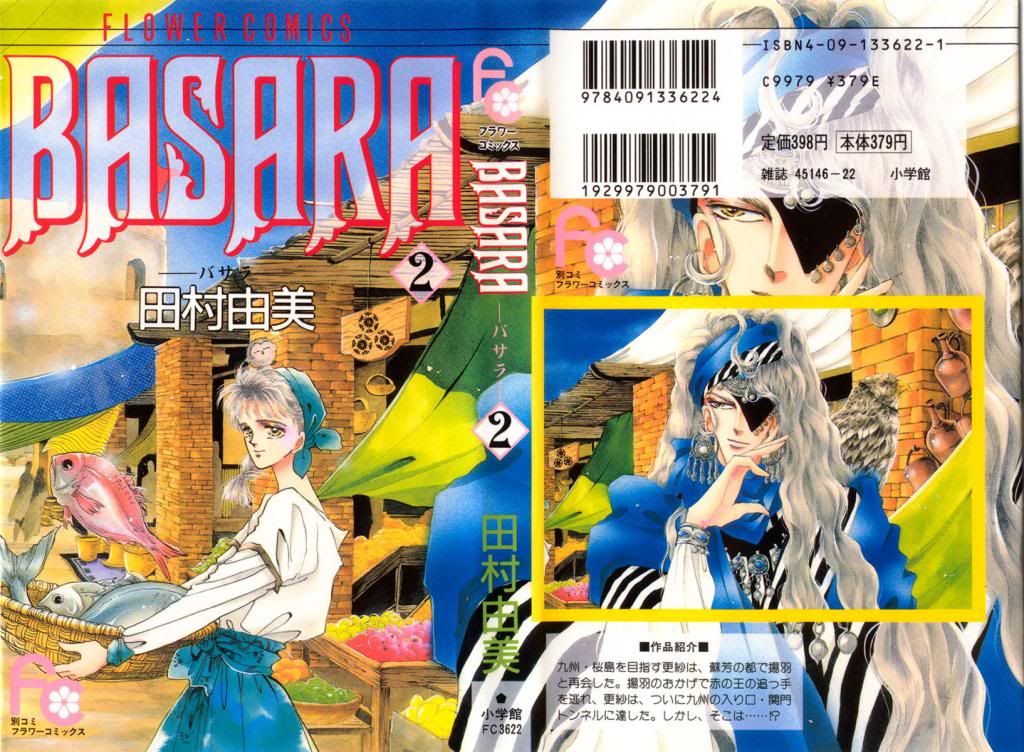
But enough about that, let me talk to you about amazingly late 1900s shojo for a few minutes. For some reason from the late 70s, maybe mid 80s, through the very early 2000s there was a lot of shojo which I term "epic fantasy shojo" where the focus was on sweeping stories, large casts, and the coming of age of female characters in tense, often political, situations with a bit of romance tossed in that rarely was the main driver in the story. I'm not sure what happened to those stories, I've seen YA fiction in the US that seems more similar to that manga than most shojo manga I can find these days yet these titles are so unknown outside of the really devoted manga fandom that I doubt there's any connection. And of those titles this is one of the best known and if I hadn't been hearing about it for literally years I probably would have passed it up when I cam across it at the not-so-local library. I mean, look at that font, Basara are you SURE you're only as old as I am because that font looks like it came straight out of the 80s, a classic example of just because the calendar has entered a different decade doesn't necessarily mean that design sensibilities have caught up yet.
Basara (volumes 1 through 5) by Yumi Tamura
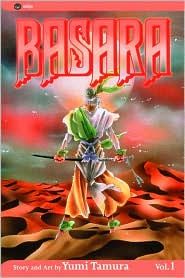
Summary: When Sarasa and her twin brother Tatara were born a prophet declared one of them to be "the child of destiny" and the village always assumed that this proclamation referred to Tatara. So did the king of their area of post-apocalyptic Japan, the Red King, it seems and Tatara is slain before he can even begin a rebellion to change Japan and so Sarasa takes up his name and begins her quest of revenge while discovering what a complicated place the world now is.
The Good: I make no secret that I adore stories with complex politics woven in and I love how the story has set up Sarasa/Tatara with their goal to take down some clearly corrupt kings, including the Red King, to make life better for all and yet has also shown her and the reader that the Red King's land is far better than the rest of Japan with the implication that the reason rebellions like the one her village planned have been crushed so brutally is because if they succeed the other kings will move in and make that area even worse. It's a world where there appear to be completely cruel and one hundred percent sadistic villains yet no true heroes or right thing to do, a fun set-up for readers who enjoy watching their protagonists fight for a good ending. The cast, much like the setting, expands rapidly but so far I haven't had any trouble telling the characters apart and the story remarkably enough even managed to sell me on it's star-crossed lovers aspect. Normally I become frustrated by that, especially when it's between two characters who are sworn enemies as is the case here, but the way that Sarasa and Shuri's relationship begins and grows feels as natural as it could under the circumstances and even though I know it will almost certainly end in tears I'm continuing to hope for the best. Finally, it's amazing how much has already happened in five volumes of this story when you consider that the entire story is twenty-seven volumes long. It's well paced now and if it continues at this pace then it's literally an epic and I can't wait to read the rest regardless.
The Bad: I almost feel like Sarasa is gathering allies too easily in the story, she's not a shonen protagonist after all, but I recall a line (sadly I can't seem to find it at the moment) that said that while Sarasa should seek out the groups which have the three other swords that were made along with the one she inherited the swords aren't magical, it's to find the people who go with them that matters. So yes this seems to be too simple until you remember what kind of world these characters live in and what they stand to gain by allying themselves with their best chance at creating a better world for themselves, although the fact that this usually comes after a battle means I'm not going to give up that comparison anytime soon.
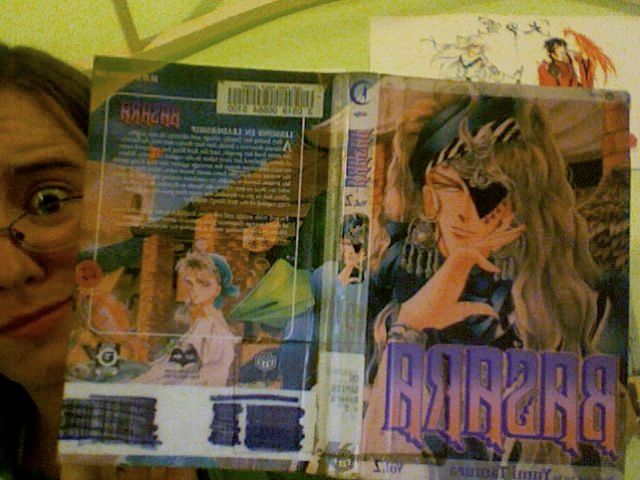
The Art: As previously alluded to, even though this manga started in 1991 it still has a bit of an 80s look to it, especially when you remember that the shojo manga from the 80s and the 90s don't look that different anyway. It's not a pretty manga as even the editor admits in their column in the back of the first volume, the characters have oddly elongated cheekbones, hair that seems to puff without hairspray, and rather unfashionable clothes as well. But it does have nice detail work and I was able to keep the characters straight much easier than I expected to and everything is laid out nicely as well, the art is just styled in an out-dated way. But I am curious about one thing Viz did, what the heck happened to the cover of volume two? Here's what the original Japanese cover looked like, here's what the cover of the volume I got out of the library I got looked like (the manga inside is unflipped). Apologies for the lighting because it does not truly get across just how damn pink this cover is, while some of it can be from aging over 10 years, and all of these volumes look a bit faded, I doubt that's the only reason why. Although, looking at these Japanese covers at least explains where the truly strange title font comes from, I had been questioning the sanity of designers in the early 2000s who were going for a font like that.
In short, if my library had more than the first five volumes I would have checked out and read those by now as well (funny enough, I'm not the only blogger to have this problem recently and according to Ash yes, this is one of those series with out of print volumes that are hideously priced). I actually got rather excited at Viz's panel at Otakon since when they were talking about their digital manga I swear they mentioned Basara yet when I checked online afterwords it's not on their site. Hopefully this means that it will be up soon, since they've put up a lot of the other "epic shojo fantasy" manga (Red River, From Far Away, Please Save My Earth although that's technically sci-fi) they must have at least tried to get the digital rights for this one as well.
Reviews of books, manga, anime, tv shows, movies, and webcomics. If it has a plot then I have something to say about it.
Friday, August 16, 2013
Monday, August 5, 2013
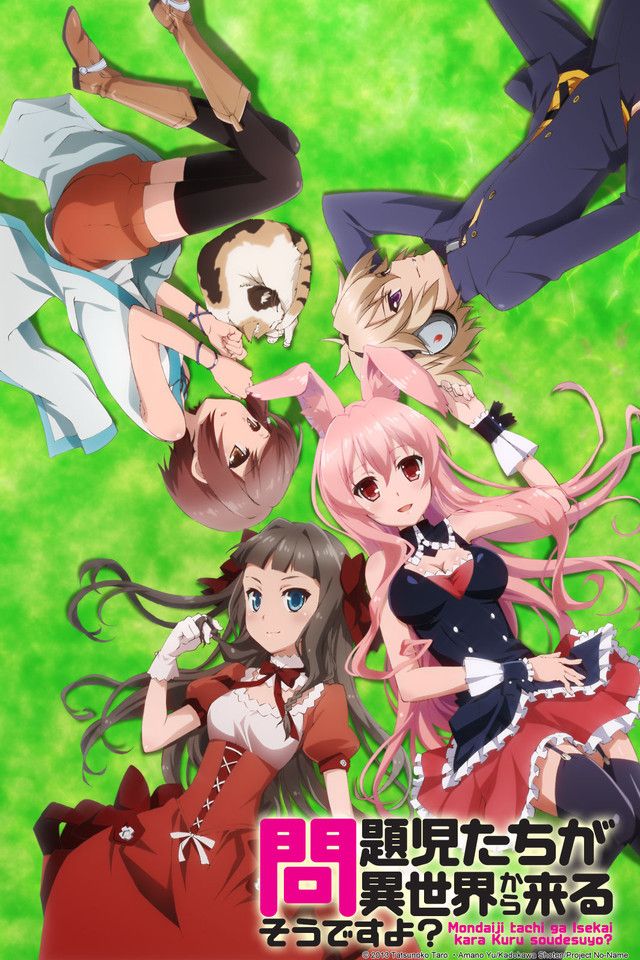
Anime Review: Problem Children are Coming from Another World aren't they?
First as a head's up, given that Otakon is this weekend I'm not even going to try and get reviews up so the next review after this will be a comic review on 16th, just going to go ahead and take a whole turn off (also to give me a little more time to prep for my upcoming move, expect a post on that in the next couple of weeks).
Some people might remember, if they read the footnotes, that a friend and I tried out quite a few currently airing/from the past winter season shows and after this we agreed that this was better than expected which was what I had heard from other places as well. So when I needed something quick to watch, and after trying a few things I thought I would like and didn't, well, why not?
Problem Children are Coming from Another World aren't they? (Mondaiji taichi ga Isekai kara Kuru soudesuyo?)
Summary: In the world of the Little Garden those with special gifts (magic) compete in games for glory, fun, and for the sake of their community. One little community is failing badly and summons three children, each from a different world, who are bored of their lives to come play and fight for them and that plan ends up working much better than you'd expect.
The Good: There are a lot of different subgenres underneath the fantasy flag these days; high fantasy, low fantasy, urban fantasy, dungeons and dragons-eque fantasy, that odd blend of science fiction and fantasy you sometimes find and so on. This show fits into an odd subgenre that I usually only find in anime/manga/light novels, it’s like dungeons and dragons-esque fantasy with it’s approach to monsters and how the world is structure (ie, it feels a bit flat, cardboard like as if the characters are just players in a tabletop game) yet it’s a little different in it’s approach, even for the characters this is literally just a game. I’ve seen some shows like this or ones that seem to stand on the line before and it’s not my favorite approach to fantasy, I feel like a lot of times they use it as an excuse for lazy setting building and easy comedy but this show actually manages to pull it off much better than usual and made me smile. The characters aren't very well fleshed out but some of them develop a little bit and even though the three leads each fall into a standard archtype, the quite one, the rich girl, the punk boy, they do defy their stereotypes more than you'd think. That's what made the series work for me, it's quite generic in some ways but different enough that I didn't feel bored by it.
The Bad: I shall be blunt, while part of the last arc made sense the game the characters had to solve made not much sense at all (heck, for people who don't often read translations of light novels, that kind of plotting and logic is what you find in a lot of them, guessing I can't just blame that stuff on the fan-translators anymore). I'm positive there was a better way to set up that story without having it contradict itself, that was just incredibly frustrating. And even though I said I liked the story enough for being rather generic, yes I would have loved it if the story had been less so, if the characters had been fleshed out into having real backstories, not just a collection of tropes thrown together.
The Production Values: Can someone please explain to me why when an anime has a lot of special effects on screen the entire picture seems to dim? I've seen it in other shows but not as often as this show, it got rather distracting after a bit. Other than that, the show really doesn't do anything different artistically or musically wise (although the opening did grow on me more than I expected and the I laughed the first time I saw the ending), same as the rest of the story.
So, for being the best generic fantasy show that doesn't take itself seriously that I've seen I'll give it 3.5 out of 5 stars, might watch a second season (although looking at it's first volume sales that looks pretty unlikey) but wouldn't really recommend it or plan on buying it. For those who want to see it crunchyroll is streaming it.
Labels:
anime-2013,
fantasy
Sunday, August 4, 2013
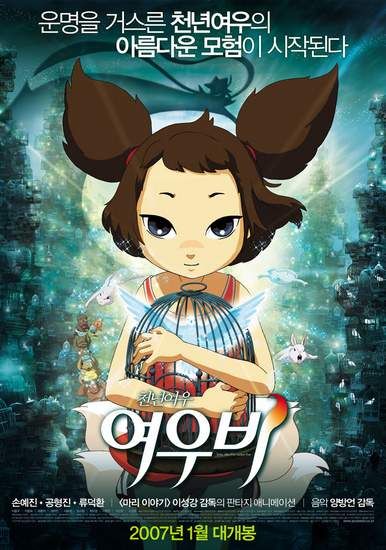
Movie Review: Yobi: The Five Tailed Fox
If the main character's name wasn't a tip-off then I shall mention that this isn't an anime but rather a Korean movie, apparently foxes are tricksters in every culture where, well, foxes naturally live. I vaguely remember hearing about the movie and then hearing lack-luster reviews of it a short time later but when I learned recently that it was streaming on Netflix I decided to give it a shot anyway.
Yobi: The Five Tailed Fox
Summary: Yobi is a fox who lives with a group of aliens who crash landed on Earth 100 years ago (they haven't had much success repairing their spaceship) and becomes curious about the students at a local school when one of the aliens gets accidentally made into a pet by some of them and ends up trying to emulate them and be human herself.
The Good: There were a couple of cool ideas in the film, such as the afterlife scenes, and I'm not sure if these ideas came from Korean mythology/legends or if they were entirely the work of this film but things such as that and the shadow were rather neat. I suppose kids might like this movie, it was certainly random enough at times to be unintentionally funny, but if you're above the age of 12 then your chances of liking this film are strongly diminished.
The Bad: Looking back on the story, I have no idea why there even were aliens in this story at all. They don't add anything to it emotion wise, plot wise (or even plot-device wise), or comedy-wise for me and that's more than a little problem. The subplot with the hunter also came out of nowhere, while it was hinted at that someone was hunting down the foxes the first scene with him in it was just so left field that I wondered if I had missed an earlier scene that set it up, it felt like poor structuring to me. I also had some problems with the ending, not because it's open-ended and vague, that I would have been fine with, but because it seems to contradict itself with it's final sequence of events. Overall however I just found this story a bit dull, it's about Yobi and she does change some, although for her changing means "falling in love/seeing why she would want to become human" which isn't very deep or really interesting character development, and none of the side characters do which makes all of their involvement in the story, not just the aliens, feel a bit pointless and flat in the end.
The Production Values: At times the art and animation looked okay and at other times it went careening down into uncanny valley (the specific moment I'm thinking of is one of the kids doing a comedy routine he really likes which involves a lot of movement and the CGI just makes it creepy). On a slightly weird note I thought that Yobi had a bandage on her noise whenever she was human because of some weird shading, although her overall design was rather cute.
In the end I'm going to give this movie 2.5 out of 5 stars (good lord I feel like I've given a lot of those lately) since it looks odd at times (in a way that's not stylistic but rather "we didn't have the budget/skill to make the CGI look better"), the plot was a bit rambly and had a lot of unnecessary parts to it. Don't think I'll ever rewatch it, don't really recommend but if you really like weird CGI I can try and find that comedy routine again because that was truly bizarre.
Yobi: The Five Tailed Fox
Summary: Yobi is a fox who lives with a group of aliens who crash landed on Earth 100 years ago (they haven't had much success repairing their spaceship) and becomes curious about the students at a local school when one of the aliens gets accidentally made into a pet by some of them and ends up trying to emulate them and be human herself.
The Good: There were a couple of cool ideas in the film, such as the afterlife scenes, and I'm not sure if these ideas came from Korean mythology/legends or if they were entirely the work of this film but things such as that and the shadow were rather neat. I suppose kids might like this movie, it was certainly random enough at times to be unintentionally funny, but if you're above the age of 12 then your chances of liking this film are strongly diminished.
The Bad: Looking back on the story, I have no idea why there even were aliens in this story at all. They don't add anything to it emotion wise, plot wise (or even plot-device wise), or comedy-wise for me and that's more than a little problem. The subplot with the hunter also came out of nowhere, while it was hinted at that someone was hunting down the foxes the first scene with him in it was just so left field that I wondered if I had missed an earlier scene that set it up, it felt like poor structuring to me. I also had some problems with the ending, not because it's open-ended and vague, that I would have been fine with, but because it seems to contradict itself with it's final sequence of events. Overall however I just found this story a bit dull, it's about Yobi and she does change some, although for her changing means "falling in love/seeing why she would want to become human" which isn't very deep or really interesting character development, and none of the side characters do which makes all of their involvement in the story, not just the aliens, feel a bit pointless and flat in the end.
The Production Values: At times the art and animation looked okay and at other times it went careening down into uncanny valley (the specific moment I'm thinking of is one of the kids doing a comedy routine he really likes which involves a lot of movement and the CGI just makes it creepy). On a slightly weird note I thought that Yobi had a bandage on her noise whenever she was human because of some weird shading, although her overall design was rather cute.
In the end I'm going to give this movie 2.5 out of 5 stars (good lord I feel like I've given a lot of those lately) since it looks odd at times (in a way that's not stylistic but rather "we didn't have the budget/skill to make the CGI look better"), the plot was a bit rambly and had a lot of unnecessary parts to it. Don't think I'll ever rewatch it, don't really recommend but if you really like weird CGI I can try and find that comedy routine again because that was truly bizarre.
Labels:
fantasy,
kids film,
korean animation
Saturday, August 3, 2013
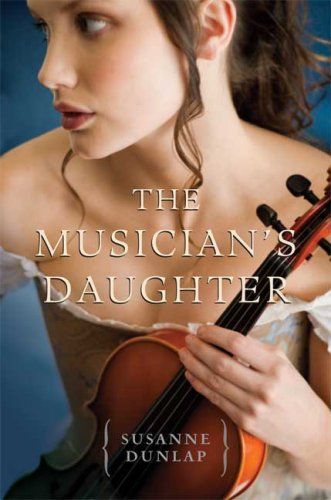
Book Review: The Musicians Daughter
For those who don't follow my twitter or tumblr (which I suspect it a large number of people) the past couple of times when I've gone to the library I've just grabbed a ton of books, quite possibly more than I'll have a chance to read this summer! And whenever I do this there will be a number of books in my pile, once I've gotten past the top of the pile with all the books I've wanted to read for a while, where I look at them and go "huh, this could be interesting but I'm not completely sure why I picked this up." Sometimes I end up really liking these books and other times, well, they fail to leave an impression.
The Musician's Daughter by Susanne Dunlap
Summary: Theresa Maria's father is a court musician in 18th century Vienna and when he's murdered one night she realizes that there was much more to him than that. She then sets out, questioning everyone she knows, about why her father died and what happened to his precious violin in the process?
The Good: This is certainly a setting I haven't seen before, there have been many times when I've seen people complain that so many books (usually fantasy, which this isn't) are set in Europe and I feel like they're being too generous. Austria lies in the middle of Europe and even then that's too far away for many stories to be set, literature is in some ways fascinatingly limited and it's sad that even a setting like this which I've at least heard of from my history classes is almost exotic (especially since they didn't use as much as I think they should have). And on that note I found the underlying plot, regarding freedom for the serfs and land for the Romani, interesting and want to read more (nonfiction) about all of that which is for me what I hope to get out of every historical fiction I read, a renewed interest in perusing history especially history which I'm unfamiliar with.
The Bad: I'm not exactly sure how a book that had intrigue, action, and multiple little climaxes managed it but I found this book just a bit dull. Perhaps it's because I also found Theresa Maria to be a bit of a bland protagonist, yes she was smart enough to be able to keep up with (and was largely unsurprised by) the political machinations that have crept into her life and brave enough to try and save those close to her but she like most of the rest of the book just failed to leave an impression on me. The pacing did feel a little off as well, that there were too many events happening in such a short span of time to feel believable and perhaps if some of the plotting had been simplified to build up the world and Theresa Maria more that would have made the book stronger.
In the end I can only give this book 2.5 out of 5 stars since it was really that dull, even if I want to read more about the time period because I want to read about that since I've never read about it before, not because of how it was portrayed in the book.
The Musician's Daughter by Susanne Dunlap
Summary: Theresa Maria's father is a court musician in 18th century Vienna and when he's murdered one night she realizes that there was much more to him than that. She then sets out, questioning everyone she knows, about why her father died and what happened to his precious violin in the process?
The Good: This is certainly a setting I haven't seen before, there have been many times when I've seen people complain that so many books (usually fantasy, which this isn't) are set in Europe and I feel like they're being too generous. Austria lies in the middle of Europe and even then that's too far away for many stories to be set, literature is in some ways fascinatingly limited and it's sad that even a setting like this which I've at least heard of from my history classes is almost exotic (especially since they didn't use as much as I think they should have). And on that note I found the underlying plot, regarding freedom for the serfs and land for the Romani, interesting and want to read more (nonfiction) about all of that which is for me what I hope to get out of every historical fiction I read, a renewed interest in perusing history especially history which I'm unfamiliar with.
The Bad: I'm not exactly sure how a book that had intrigue, action, and multiple little climaxes managed it but I found this book just a bit dull. Perhaps it's because I also found Theresa Maria to be a bit of a bland protagonist, yes she was smart enough to be able to keep up with (and was largely unsurprised by) the political machinations that have crept into her life and brave enough to try and save those close to her but she like most of the rest of the book just failed to leave an impression on me. The pacing did feel a little off as well, that there were too many events happening in such a short span of time to feel believable and perhaps if some of the plotting had been simplified to build up the world and Theresa Maria more that would have made the book stronger.
In the end I can only give this book 2.5 out of 5 stars since it was really that dull, even if I want to read more about the time period because I want to read about that since I've never read about it before, not because of how it was portrayed in the book.
Labels:
1700s,
Austria,
book,
europe,
historical fiction,
susanne dunlap,
young adult
Friday, August 2, 2013
Comic Review: Market Day
This was a bit of a short book I grabbed from the not-so-local library and when I started reading it I was worried that it would prove too short to write a review about, too short to even tell a story. But after reading this I'm sure that there was enough in that story to write a review after all, abet a short one.
Market Day by James Sturm
Summary: Mendleman is a simple Jewish rug-maker whose least favorite day of the week is going to the market to sell his wares. This week he's even without his wife and that one day shows just how much your day can change, from the joyful to the sorrowful, and how much a person can change with them.
The Good: This book may be short but it's the perfect length to tell it's story and for the first time in a while I found myself truly connecting with a character. Mendleman won me over with him describing how he creates his rugs, where his inspiration flows from and how he always pushes himself to make better and more beautiful art and that made even my heart ache when he finds that he needs to find a new buyer for his rugs. And then my heart kept aching and slowly breaking for him as the story continued on and on.
The Bad: I do wonder what happened next, what happened after Mendleman woke up that morning and had to continue on with his life, although I think that the story ended at the perfect place as is. I don't have much to criticize, maybe it should have moved faster in one or two paces or held a moment longer in others, in the end this was a very well constructed story which also had as much emotional impact as you could from such a short book.
The Art: The art wasn't exactly plain or simple, it didn't overwhelm the page and the rest of the story which I felt like was a good move and I also felt like it was a good match for the rest of the story. I felt like the feeling it gave off, this wide illusion of space in so many of it's panels, felt very well with Mendleman's thoughts, both his great hopes and fears just being engulfed by the world he lived in.
I'm giving this book 4.5 out of 5 stars, partially because I'm not sure I would ever give a story five, perfect stars, but I connected more with this story than I have with most stories I've read lately and I feel like this book was able to portray a feeling that so many of the books I had to read tried to do but in a way that I could finally understand (or perhaps it's that I'm not also at an age to understand, while a teen could certainly read it I feel like an adult or older teen is going to get the most out of this story).
Market Day by James Sturm
Summary: Mendleman is a simple Jewish rug-maker whose least favorite day of the week is going to the market to sell his wares. This week he's even without his wife and that one day shows just how much your day can change, from the joyful to the sorrowful, and how much a person can change with them.
The Good: This book may be short but it's the perfect length to tell it's story and for the first time in a while I found myself truly connecting with a character. Mendleman won me over with him describing how he creates his rugs, where his inspiration flows from and how he always pushes himself to make better and more beautiful art and that made even my heart ache when he finds that he needs to find a new buyer for his rugs. And then my heart kept aching and slowly breaking for him as the story continued on and on.
The Bad: I do wonder what happened next, what happened after Mendleman woke up that morning and had to continue on with his life, although I think that the story ended at the perfect place as is. I don't have much to criticize, maybe it should have moved faster in one or two paces or held a moment longer in others, in the end this was a very well constructed story which also had as much emotional impact as you could from such a short book.
The Art: The art wasn't exactly plain or simple, it didn't overwhelm the page and the rest of the story which I felt like was a good move and I also felt like it was a good match for the rest of the story. I felt like the feeling it gave off, this wide illusion of space in so many of it's panels, felt very well with Mendleman's thoughts, both his great hopes and fears just being engulfed by the world he lived in.
I'm giving this book 4.5 out of 5 stars, partially because I'm not sure I would ever give a story five, perfect stars, but I connected more with this story than I have with most stories I've read lately and I feel like this book was able to portray a feeling that so many of the books I had to read tried to do but in a way that I could finally understand (or perhaps it's that I'm not also at an age to understand, while a teen could certainly read it I feel like an adult or older teen is going to get the most out of this story).
Subscribe to:
Posts (Atom)