And I'm back folks, survived the almost 35,000 person crowd that was called Otakon and, well, that was certainly an experience! And expect a non-review post sometime in the next few days detailing a few changes around the blog since I'm moving again soon and moves always seem to leave this little blog a bit different.
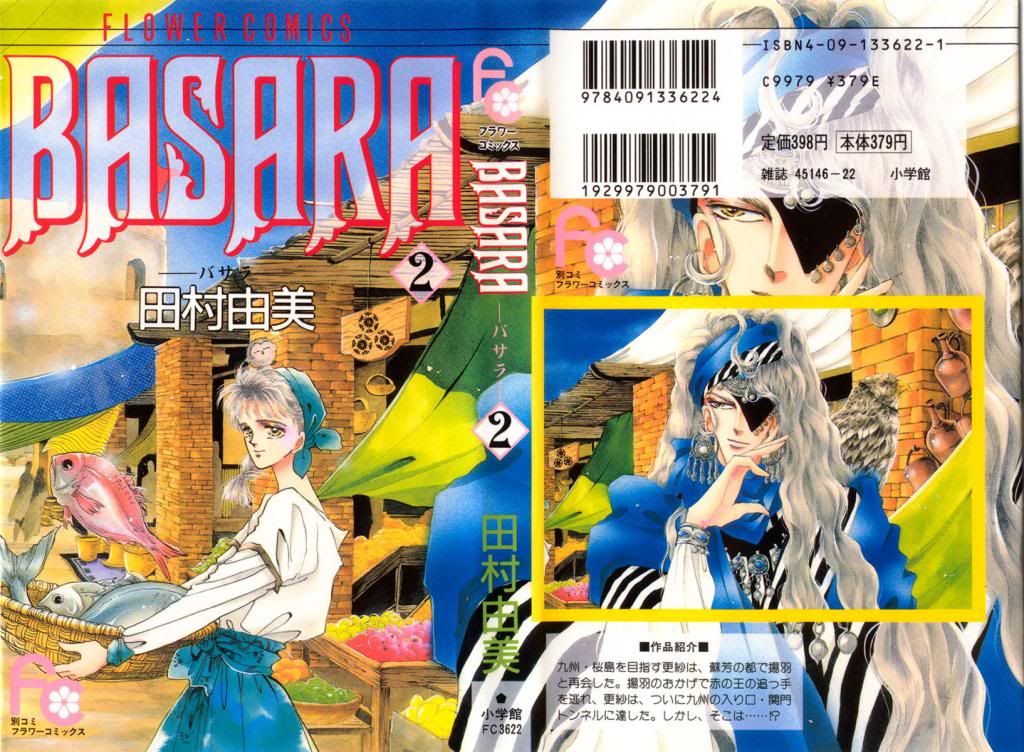
But enough about that, let me talk to you about amazingly late 1900s shojo for a few minutes. For some reason from the late 70s, maybe mid 80s, through the very early 2000s there was a lot of shojo which I term "epic fantasy shojo" where the focus was on sweeping stories, large casts, and the coming of age of female characters in tense, often political, situations with a bit of romance tossed in that rarely was the main driver in the story. I'm not sure what happened to those stories, I've seen YA fiction in the US that seems more similar to that manga than most shojo manga I can find these days yet these titles are so unknown outside of the really devoted manga fandom that I doubt there's any connection. And of those titles this is one of the best known and if I hadn't been hearing about it for literally years I probably would have passed it up when I cam across it at the not-so-local library. I mean, look at that font, Basara are you SURE you're only as old as I am because that font looks like it came straight out of the 80s, a classic example of just because the calendar has entered a different decade doesn't necessarily mean that design sensibilities have caught up yet.
Basara (volumes 1 through 5) by Yumi Tamura
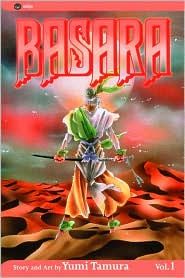
Summary: When Sarasa and her twin brother Tatara were born a prophet declared one of them to be "the child of destiny" and the village always assumed that this proclamation referred to Tatara. So did the king of their area of post-apocalyptic Japan, the Red King, it seems and Tatara is slain before he can even begin a rebellion to change Japan and so Sarasa takes up his name and begins her quest of revenge while discovering what a complicated place the world now is.
The Good: I make no secret that I adore stories with complex politics woven in and I love how the story has set up Sarasa/Tatara with their goal to take down some clearly corrupt kings, including the Red King, to make life better for all and yet has also shown her and the reader that the Red King's land is far better than the rest of Japan with the implication that the reason rebellions like the one her village planned have been crushed so brutally is because if they succeed the other kings will move in and make that area even worse. It's a world where there appear to be completely cruel and one hundred percent sadistic villains yet no true heroes or right thing to do, a fun set-up for readers who enjoy watching their protagonists fight for a good ending. The cast, much like the setting, expands rapidly but so far I haven't had any trouble telling the characters apart and the story remarkably enough even managed to sell me on it's star-crossed lovers aspect. Normally I become frustrated by that, especially when it's between two characters who are sworn enemies as is the case here, but the way that Sarasa and Shuri's relationship begins and grows feels as natural as it could under the circumstances and even though I know it will almost certainly end in tears I'm continuing to hope for the best. Finally, it's amazing how much has already happened in five volumes of this story when you consider that the entire story is twenty-seven volumes long. It's well paced now and if it continues at this pace then it's literally an epic and I can't wait to read the rest regardless.
The Bad: I almost feel like Sarasa is gathering allies too easily in the story, she's not a shonen protagonist after all, but I recall a line (sadly I can't seem to find it at the moment) that said that while Sarasa should seek out the groups which have the three other swords that were made along with the one she inherited the swords aren't magical, it's to find the people who go with them that matters. So yes this seems to be too simple until you remember what kind of world these characters live in and what they stand to gain by allying themselves with their best chance at creating a better world for themselves, although the fact that this usually comes after a battle means I'm not going to give up that comparison anytime soon.
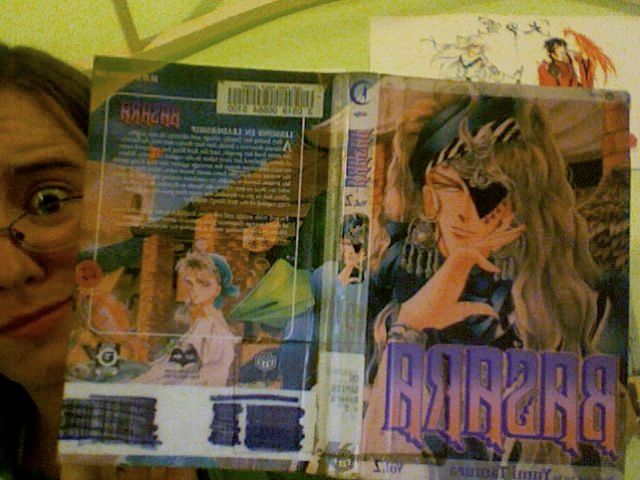
The Art: As previously alluded to, even though this manga started in 1991 it still has a bit of an 80s look to it, especially when you remember that the shojo manga from the 80s and the 90s don't look that different anyway. It's not a pretty manga as even the editor admits in their column in the back of the first volume, the characters have oddly elongated cheekbones, hair that seems to puff without hairspray, and rather unfashionable clothes as well. But it does have nice detail work and I was able to keep the characters straight much easier than I expected to and everything is laid out nicely as well, the art is just styled in an out-dated way. But I am curious about one thing Viz did, what the heck happened to the cover of volume two? Here's what the original Japanese cover looked like, here's what the cover of the volume I got out of the library I got looked like (the manga inside is unflipped). Apologies for the lighting because it does not truly get across just how damn pink this cover is, while some of it can be from aging over 10 years, and all of these volumes look a bit faded, I doubt that's the only reason why. Although, looking at these Japanese covers at least explains where the truly strange title font comes from, I had been questioning the sanity of designers in the early 2000s who were going for a font like that.
In short, if my library had more than the first five volumes I would have checked out and read those by now as well (funny enough, I'm not the only blogger to have this problem recently and according to Ash yes, this is one of those series with out of print volumes that are hideously priced). I actually got rather excited at Viz's panel at Otakon since when they were talking about their digital manga I swear they mentioned Basara yet when I checked online afterwords it's not on their site. Hopefully this means that it will be up soon, since they've put up a lot of the other "epic shojo fantasy" manga (Red River, From Far Away, Please Save My Earth although that's technically sci-fi) they must have at least tried to get the digital rights for this one as well.
Reviews of books, manga, anime, tv shows, movies, and webcomics. If it has a plot then I have something to say about it.
Showing posts with label epic. Show all posts
Friday, August 16, 2013
Saturday, December 8, 2012
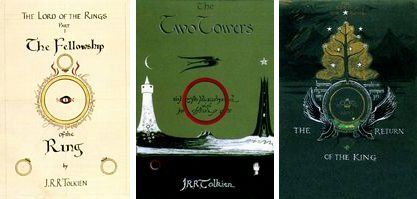
Book Review: The Lord of the Rings Trilogy
Initially I was going to have a separate post for The Fellowship of the Ring, The Two Towers, and The Return of the King but I realized that even if I post two book reviews a week in December I still wouldn't have time to do all of those and everything else. So I'm still going two book reviews a week in December (well, theoretically anyway, going to have some major catching up to do once exams are done) but I did decided to cram all three of these books into one post. Plus, I think that most people think of these books together, not individually anyway and it's a bit hard to say "well I hope they do this" when I've not only heard the stories before but seen the movies. So I guess this makes this review a bit more introspective than normal, oh well!
Lord of the Rings by J.R.R. Tolkien
Summary: Bilbo Baggins is growing old and decides that it's time for him to vanish from Hobbiton and leave most of his worldly possessions to his nephew Frodo including a certain ring. The years begin to pass and their old friend Gandalf makes a startling and scary discovery, Bilbo's ring of invisibility is in fact the long-lost ring of power that belonged to the dark lord Sauron who has slowly been gaining in strength since around when Bilbo was adventuring. So a council is called and they decide that there is only one thing that can be done, to send Frodo along with a company of others into Mordor to destroy the ring rather than risk Sauron finding it again and in an attempt to destroy him forever.
The Good: It was rather interesting to re-read these books since I remembered thinking in the past that you could draw some parallels to the real war that was going on as Tolkien read those but I had forgotten just how brutal the Scouring of the Shire part was (probably because it wasn't in the movies and I saw those marginally more recently than the books) and that made it a lot easier to understand Frodo's fate/choice in the end. Before I had never quite understood why he did what he did but after rereading that part I get it now and I think it also marks very well this end of a mythological third age that the books talk about. And I really liked all of the meta-commentary on the history/timeframe that these books are set in, Tolkien borrowed heavily from Norse mythology for a lot of his setting and since I don't come across that much fiction which does that makes this (in a very odd way) make it feel fresher than a lot of the epic fantasy I've read.
The Bad: I had forgotten this but in the second and third books (when the fellowship is split in two) the entire first half of the book focuses on one group and the second on the other which feels rather disjoined and I'm glad they changed that for the movies. I can see why Tolkien did that but whenever there is a story with a lot of different viewpoints I always prefer quickly switching back and forth between the people/groups rather than seeing how an entire event plays out for one group and then switching over to the other group to see how it went for them. I also wish some things in the setting had been fleshed out more (there was a one-off line about how orcs were inferior copies of either elves or ents which I thought was cool but wasn't ever touched on again) but maybe things like that appeared in some of his other writings later.
On a funny note, starting with the first book the stories kept referencing an appendix and I figured this was part of the whole literary agent hypothesis which the book sometimes indulged in and never went looking for it. That is until I was flipping through the final book to see how many pages were left and realized there was over 100 pages of notes and dates for these things, oops, shall have to find time to read those later on. And I think that after all of this I need to finally make an effort and read the Simarilon especially since I really liked how Tolkien has set up this rather epic (in the classical sense of the word) setting and I'd like to explore more of it.
Lord of the Rings by J.R.R. Tolkien
Summary: Bilbo Baggins is growing old and decides that it's time for him to vanish from Hobbiton and leave most of his worldly possessions to his nephew Frodo including a certain ring. The years begin to pass and their old friend Gandalf makes a startling and scary discovery, Bilbo's ring of invisibility is in fact the long-lost ring of power that belonged to the dark lord Sauron who has slowly been gaining in strength since around when Bilbo was adventuring. So a council is called and they decide that there is only one thing that can be done, to send Frodo along with a company of others into Mordor to destroy the ring rather than risk Sauron finding it again and in an attempt to destroy him forever.
The Good: It was rather interesting to re-read these books since I remembered thinking in the past that you could draw some parallels to the real war that was going on as Tolkien read those but I had forgotten just how brutal the Scouring of the Shire part was (probably because it wasn't in the movies and I saw those marginally more recently than the books) and that made it a lot easier to understand Frodo's fate/choice in the end. Before I had never quite understood why he did what he did but after rereading that part I get it now and I think it also marks very well this end of a mythological third age that the books talk about. And I really liked all of the meta-commentary on the history/timeframe that these books are set in, Tolkien borrowed heavily from Norse mythology for a lot of his setting and since I don't come across that much fiction which does that makes this (in a very odd way) make it feel fresher than a lot of the epic fantasy I've read.
The Bad: I had forgotten this but in the second and third books (when the fellowship is split in two) the entire first half of the book focuses on one group and the second on the other which feels rather disjoined and I'm glad they changed that for the movies. I can see why Tolkien did that but whenever there is a story with a lot of different viewpoints I always prefer quickly switching back and forth between the people/groups rather than seeing how an entire event plays out for one group and then switching over to the other group to see how it went for them. I also wish some things in the setting had been fleshed out more (there was a one-off line about how orcs were inferior copies of either elves or ents which I thought was cool but wasn't ever touched on again) but maybe things like that appeared in some of his other writings later.
On a funny note, starting with the first book the stories kept referencing an appendix and I figured this was part of the whole literary agent hypothesis which the book sometimes indulged in and never went looking for it. That is until I was flipping through the final book to see how many pages were left and realized there was over 100 pages of notes and dates for these things, oops, shall have to find time to read those later on. And I think that after all of this I need to finally make an effort and read the Simarilon especially since I really liked how Tolkien has set up this rather epic (in the classical sense of the word) setting and I'd like to explore more of it.
Labels:
epic,
fantasy,
j.r.r. tolkien,
mythology,
quest
Monday, March 12, 2012
Webcomic Review Month 2012: Gaia and Godseeker
Starting this week I'm also going to be posting updates on Wednesday otherwise the month will be over before I get to everything (and really need to start writing up reviews for everything else I have backlogged, I've got at least eight things already) so hopefully everyone can remember to come over more often (or just come and find two updates on Friday, that works too). The reviews from last year.
Gaia by Puri "Powree" Andini and Oliver Knörzer
Recently there have been growing tensions between the nations of Midgard, a long powerful country, and Cania where our protagonist Ilais Oter and his friends go to school to study magic and martial arts. But there is more to life than just school and sometimes that life can be rather deadly....
A younger comic but since it seems to be both moving and updating at a brisk pace, has already established a conflict and has introduced a number of characters I'm going to take the plunge and recommend it anyway. The original concept was for a video game, not a comic, and while that can be seen in areas it's actually not a bad thing (I can see a few things going on in the background which I guess would have been side quests in the game and I think that right now they just add a bit of character and make the comic a bit more fun). At this point it's a bit hard to tell where the story is going but I'm hoping it's a grand, world-saving adventure like the synopsis hints at.
Gaia is also published in German and fans are welcome to submit translations of the page beneath each page.
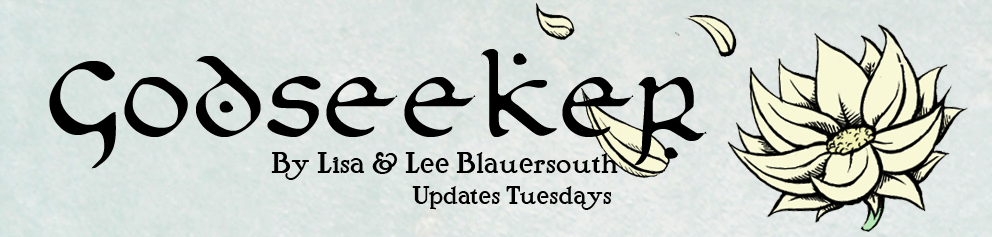
Godseeker by Lisa and Lee Blauersouth
I can't think of many other stories set in the stone age* and I rather like that the story has such a distinctive setting. I do however see a number of stories with gods in them yet it's unusual to see stories where the gods are active, central characters like Sombath is here and it's interesting to see how mortal she seems here (not in the sense that the Greek and Roman gods were with their decadence and imperfections but in the sense that Sombath is not all knowing and must seek out the truth about what really happened with her and the other gods). I also really like the artwork, there's a real variety of body types and everything, from the clothes to the setting, look natural. The story also has the feel of an old world epic, one where the characters challenge the gods themselves, and I can't wait to find out what is really going on behind the scenes.
*other than the Clan of the Cave Bear books which I will NOT be talking about again, oi.
Gaia by Puri "Powree" Andini and Oliver Knörzer
Recently there have been growing tensions between the nations of Midgard, a long powerful country, and Cania where our protagonist Ilais Oter and his friends go to school to study magic and martial arts. But there is more to life than just school and sometimes that life can be rather deadly....
A younger comic but since it seems to be both moving and updating at a brisk pace, has already established a conflict and has introduced a number of characters I'm going to take the plunge and recommend it anyway. The original concept was for a video game, not a comic, and while that can be seen in areas it's actually not a bad thing (I can see a few things going on in the background which I guess would have been side quests in the game and I think that right now they just add a bit of character and make the comic a bit more fun). At this point it's a bit hard to tell where the story is going but I'm hoping it's a grand, world-saving adventure like the synopsis hints at.
Gaia is also published in German and fans are welcome to submit translations of the page beneath each page.
Godseeker by Lisa and Lee Blauersouth
Long before modern history the gods created the world and humans who would worship them also came into existence. Time passed and now the fertility goddess Sombath has been called to Earth again only to discover that her powers are weak, her priest is trying to manipulate her and that something has happened to her memories as well. She does remember enough to realize that something happened differently from the myths told so she and the girl who called her, Myna, set off to find the truth.
I can't think of many other stories set in the stone age* and I rather like that the story has such a distinctive setting. I do however see a number of stories with gods in them yet it's unusual to see stories where the gods are active, central characters like Sombath is here and it's interesting to see how mortal she seems here (not in the sense that the Greek and Roman gods were with their decadence and imperfections but in the sense that Sombath is not all knowing and must seek out the truth about what really happened with her and the other gods). I also really like the artwork, there's a real variety of body types and everything, from the clothes to the setting, look natural. The story also has the feel of an old world epic, one where the characters challenge the gods themselves, and I can't wait to find out what is really going on behind the scenes.
*other than the Clan of the Cave Bear books which I will NOT be talking about again, oi.
Subscribe to:
Posts (Atom)