Showing posts with label comic book. Show all posts

Wednesday, October 21, 2015

Comic Review: Ms Marvel (volumes 2 and 3)

So this week's anime review is Gatchaman Crowds Insight which is a complicated thing to talk about so I'm taking my time and will get it up later in the week, that's why that one is late. Honestly even if I tried to rush it I don't know if I could get a coherent post out earlier because that show just requires a lot of thought, not impulsive button-pushing.

And this review is also later than I'd like, not only because my review backlog is large but because I didn't realize my library was getting new books in this series until I saw volume 3 appear on the shelves and then started looking for volume two. Wohoops, at least I know now that I should start looking for volume four soon!


Ms. Marvel volumes 2 and 3 written by G. Willon Wilson and illustrated by Jacob Wyatt, Adrian Alphona, Takeshi Miyazawa, and Elmo Bondoc


Wednesday, September 23, 2015

Comic Review: A Boy and A Girl

Man I have such a big backlog of comics to review, usually I don't have this problem! Let's chalk it up to the DC libraries recently being excellent in aquiring books, although I do need to message them and say "hi, for some reason all of these manga are listed under two different spellings of the authors name so it's really hard to see what you have!" I have been informed by library friends that no, This Should Not Be Happening, it feels especially since manga have copyright pages with the official spelling of the manga-ka's name in them just like every other comic.....

A Boy and a Girl Written by Jamie S Rich, illustrated by Natalie Nourigat


Thursday, December 4, 2014

Comic Review: The Shadow Hero

I heard Gene Luen Yang talk about this book at Small Press Expo 2013 and it sounded like a pretty cool idea, take an older comic which had never gotten off the ground and indulge in some fan theories by redoing it as a Chinese-American superhero for sure and just making a good story out of it. I didn't expect my library to get it but over the past few months I've started seeing more newer manga titles out there and my theory that my branch suddenly has a very savvy librarian was confirmed when I saw a "Sad that Naruto is over? Try these!" display in the window. I was walking out and glanced back over only to see this book there, doubled back, checked that these books were actually available to check out, and then headed home with one more book in an already too-full book bag, hope some other people got something good out of that display as well!


The Shadow Hero written by Gene Luen Yang and illustrated by Sonny Liew


Wednesday, October 29, 2014

Comic Review: Hana Doki Kira

I waffled over reviewing this anthology or not since I don't want to be excessively mean-spirited to a fan project and I know that it's highly unlikely that the creators of these stories will see this review and then keep it in mind the next time they plan something (like you would for a critique). And yet, this was a project I had high hopes for and this book really just didn't pan out for me and I would like to articulate precisely why this was since I do think these are correctable mistakes and not all of them are the fault of the artists.


Hana Doki Kira


Friday, January 24, 2014

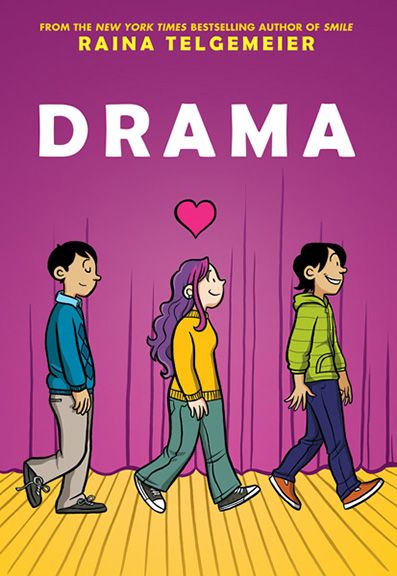
Comic Review: Drama

Despite the fact that I had heard good things about Smile by Raina Telgemeier it took me a number of years to actually get around to reading it, and of course once I did I rather liked it! And then I just repeated the process by taking quite a while to track down Drama, even though I had heard good things about it and even heard Telgemeier speak about it at Small Press Expo this past fall. I guess my only excuse is that when you only get your books from the library you don't develop the habit of checking out their catalog immediately to find new books, they just aren't designed very well to keep people up to date with what new-ish things they have.

Drama by Raina Telgemeier 


Saturday, August 24, 2013

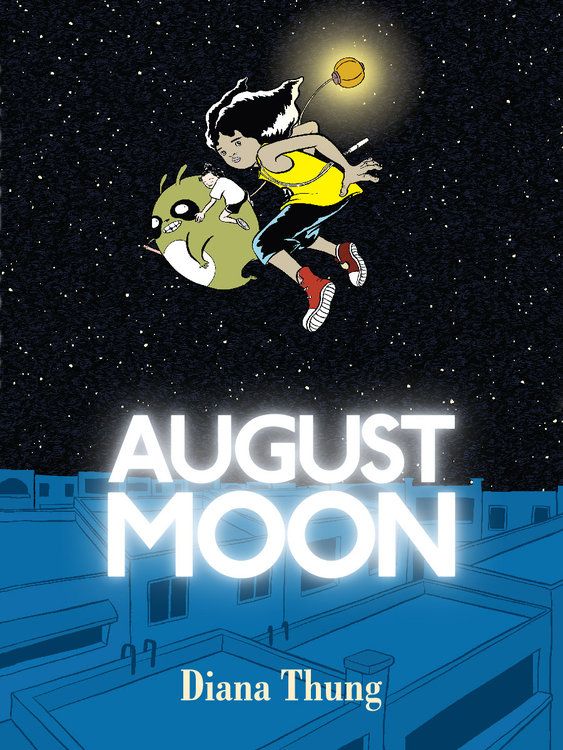
Comic Review: August Moon

For those who haven't seen the post below this, I'm going to start putting as on NI (provided that Google approves me, just hoping that I don't have to code them all in myself) so if anyone sees anything inappropriate, makes noise, etc, take a screenshot and let me know please!

I didn't realize it until I picked up the book from my pile to read but I looked at the cover and went "hmm, that animal looks like Totoro" was was relieved to see someone else (I believe on the back cover) mention Totoro as well. I felt like it was too big a visual similarity for anime/manga fans at least to not notice but still didn't want to be the first person to bring it up, as if I was accusing it of copying and truly this story has nothing in common with that film other than that one character design.

August Moon by Diana Thung


Summary: Fi and her dad live just outside the town of Calico and when they stay there for a bit while her father tries to identify a strange new creature found in the town she gets caught up in both the local legend of Soul Fires and a plot by an outside organization to bulldoze the town's beloved forest.

The Good: The story plays out at a good pace and despite a few scenes of violence and death I think it's more than fine to let the middle school crowd read (it's funny since even though it's listed as grades 9 and up I feel like it was written more to a 6-8th grade audience, especially since Fi at least is 11). And, well, there's certainly nothing terrible with it, I'm sure plenty of people will like it but I just didn't find anything about it amazing.

The Bad: I just didn't see anything special about this story, none of the character's grabbed me, the plot wasn't anything new or anything old done extraordinarily well, and I just didn't feel a sense of whimsy that I had expected when I read the synopsis and saw the cover. I didn't like Fi or Jaden as much as the story wanted me to (in retrospect, Jaden reminds me a lot of Hajime from the currently airing anime Gatchaman Crowds, an eccentric who really does know what's going on and what to do about it but is terrible at communicating, he's even worse than Hajime is) and since I didn't like any of those individual aspects of the story it's no wonder that the whole thing didn't gel for me.

The Art: It feels odd to say this about an English comic book instead of a manga but the character designs were just simple enough that I read a bit into the book, stopped, flipped back, and then realized there were two point of view characters instead of just one. I can't remember why now I initially got them confused, it could have been that I expected one POV character instead of two and that's how I started reading it, but I think that does mean that the designs should have been a tad more distinct. Or perhaps it just needed to use some shading, this is yet another comic that goes for the just black and white approach which I'm starting to dislike a bit, I just feel like it makes everything look a bit too simple and scenes which are supposed to look stunning to the character, and therefore create an emotional response in the reader, just don't accomplish that at all.


So, two out of five stars here for being a bit bland and unimaginative, even though I say that a middle schooler could read it I don't think I'll be recommending it anytime soon.

Friday, August 2, 2013

Comic Review: Market Day

This was a bit of a short book I grabbed from the not-so-local library and when I started reading it I was worried that it would prove too short to write a review about, too short to even tell a story. But after reading this I'm sure that there was enough in that story to write a review after all, abet a short one.

Market Day by James Sturm


Summary: Mendleman is a simple Jewish rug-maker whose least favorite day of the week is going to the market to sell his wares. This week he's even without his wife and that one day shows just how much your day can change, from the joyful to the sorrowful, and how much a person can change with them.

The Good: This book may be short but it's the perfect length to tell it's story and for the first time in a while I found myself truly connecting with a character. Mendleman won me over with him describing how he creates his rugs, where his inspiration flows from and how he always pushes himself to make better and more beautiful art and that made even my heart ache when he finds that he needs to find a new buyer for his rugs. And then my heart kept aching and slowly breaking for him as the story continued on and on. 

The Bad: I do wonder what happened next, what happened after Mendleman woke up that morning and had to continue on with his life, although I think that the story ended at the perfect place as is. I don't have much to criticize, maybe it should have moved faster in one or two paces or held a moment longer in others, in the end this was a very well constructed story which also had as much emotional impact as you could from such a short book.

The Art: The art wasn't exactly plain or simple, it didn't overwhelm the page and the rest of the story which I felt like was a good move and I also felt like it was a good match for the rest of the story. I felt like the feeling it gave off, this wide illusion of space in so many of it's panels, felt very well with Mendleman's thoughts, both his great hopes and fears just being engulfed by the world he lived in.


I'm giving this book 4.5 out of 5 stars, partially because I'm not sure I would ever give a story five, perfect stars, but I connected more with this story than I have with most stories I've read lately and I feel like this book was able to portray a feeling that so many of the books I had to read tried to do but in a way that I could finally understand (or perhaps it's that I'm not also at an age to understand, while a teen could certainly read it I feel like an adult or older teen is going to get the most out of this story).

Friday, July 19, 2013

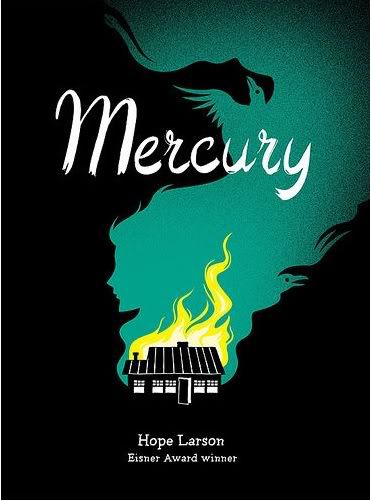
Comic Review: Mercury

As a heads up, starting tomorrow I'm going to be out of town for a week and while I should still have wifi allowing me to post regular updates if they don't go up, well, assume that that didn't work out the way I had hoped. In any case, this was yet another grab from the not-so-local library, I think at this rate I'm going to achieve my goal of having read everything that interests me in their comic section by the end of summer after all!

Mercury by Hope Larson


Summary: In 2009 Tara is living with extended family after her and her mother's ancestral home burned down. In 1859 Josey is living in said home and her family is being tempted with the promise of a gold mine on their property. Since if there's one thing this family needs, and wants, in both time periods it's money yet this gold may bring more problems than it solves. 

The Good: While The Sight (not that the book ever explicitly names it as much) feels a bit gimmicky in Tara's story I liked how it was integrated into Josey's, actually I liked Josey's story more than Tara's in the end since it felt a little more complete and the character's seemed a tad more fleshed out. Although I do wish the story had been able to expand on the other supernatural elements that popped up later, they're so brief that I do wish the story had either expanded on them or just left them out all together (which would have been worse since they then pop up again in Tara's story).

The Bad: Both of the halves in this book, the past and the present are perfectly fine stories  with beginnings, middles, and ends yet I just don't think they work that well together. Either story could have easily stood on it's own yet putting them together hasn't given Mercury any deeper meaning or made it structurally any better. In the end I wish that the story had chosen to focus on just one story instead and gone a bit deeper, such as Tara's relationship with her mother which I felt was so superficial that I had a hard time believing it was even causing conflict. Finally, I found it rather odd that the story needed to have so many asterisks for Canadian slang instead of just putting them in a glossary or simply taking them out. Just about all of them I would have been able to figure out through the dialogue anyway and it was more distracting than useful to see "loonie* *a one dollar coin is called a loonie for the loon on the back" instead of just "dollar" or even "loonie, you can pay me back". 

The Art: I'm starting to realize that I'm just not as fond of the stark, black and white only with thick outlines style of art I've been coming across a lot lately since I just find it a little boring and, well, I don't want to read boring looking comic books. That aside, I also found the paneling layout a bit boring as well since it only uses rectangles and squares and I don't recall it even making the squares larger or smaller for dramatic effect. I read a lot of manga and webcomics where the creators go wild and try all kinds of layouts to get the look they want and while not everyone does that I seem to find more people in those two mediums than I do in US/Canadian produced comics which puzzles me since plenty of those webcomic artists are in the US/Canada. So in the end, while the art was solid and I could certainly follow the flow of the story it just didn't interest me and that's bad when something that's literally half of the story bores me.


In the end I can only give this 2.5 out of 5 stars and raised eyebrows over the fact that the cover proclaims that this was an Eisner Award Winner. While certainly not terrible I just didn't see anything in the story that I thought would elevate it up to what I would expect out of an Eisner winner, makes me wonder what the other nominees were that year (2010 I believe).

Friday, July 5, 2013

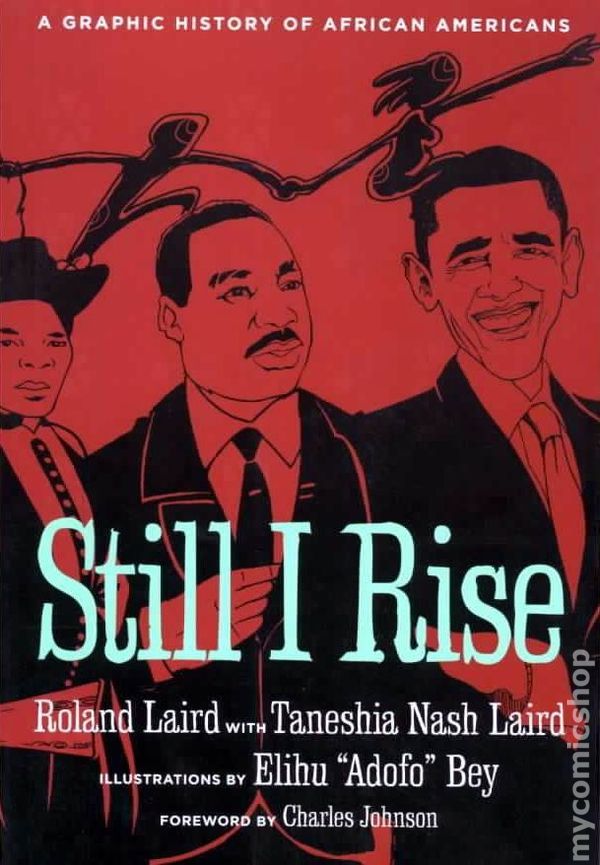
Comic Review: Still I Rise

I picked this book up at my local library not sure if I would like it, much less have anything to say to constitute a review on it, but reminded myself that even if I didn't like it I was practically guaranteed to walk away from it knowing more about American history than when I started. Over the years I've become more and more frustrated with the history classes I've had yet despite that I don't actually go out and try to read a lot of non-fiction history books on my own, something I think I need to change even if most of them, unlike this one, won't leave me with much to talk about here.


Still I Rise by Roland Laird and Taneshia Nash Laird, illustrated by Elihu "Adofo" Bey


Summary: Taking it's title from Maya Angelou's poem of the same name, this comic shows  how Africans first came to the Americas and their long struggle to be recognized as Americans will the same rights and minds as everyone else.

The Good: I most certainly walked away from this book with more knowledge than I did going in, which was incredibly thorough for a roughly 200 page book. It also managed to convey something that none of my history classes ever had, this was a constant struggle for rights and freedom, not something that cropped up every now and again but something that was always in the background. In some ways I'm not surprised, my history classes were a bit selective and we tended to study periods, not look at history as a whole, but it's still sad that it's taken me so many years to actually put that into words. And this book didn't just talk about the African-Americans who were politically involved in trying to obtain rights, it also focused on the scientists, the inventors, the artists which was great since it showed that they were (and still are) a complex group of individuals, not just a group of people who can be boiled down to a single issue.

The Bad: I found this book a little much to read in one sitting or even two, it's surprisingly dense, and really wish it had been split into chapters or such since I had a hard time figuring out where a good stopping place was and really needed a few. I also wish that more of the people in the book had been labeled, I was able to guess at which parts were "made-up" conversations to convey a point and which ones were likely real quotes and, even though I could type them into google and see what comes up, I do wish the people had simply been labeled instead. Finally, while I did like the fact that the story had two narrators connecting and explaining all the events (whom I assume were representations of the two authors) at the very end their conversations felt less polished, like I was reading an unscripted argument between two people instead of, well, an argument with two sides that need to be presented. This only happened at the very end, I started wondering if tensions were just boiling over, but other than that I really did like having two, visible, narrators instead of one.

The Art: The art is, well, not in a style I like and I found it to be sloppy at times. Flipping back through it it's hard to articulate what I felt like when I was reading but a lot of the people look rough and caricaturist to the point where I had a hard time telling if someone was new or if we had seen them before and in a couple of places it looks like Bey just didn't have some particular technical skills. I'm ignoring the last 10 or so pages since they were drawn about 10 years later (the book was originally published in 1997 and then republished in 2009), although there is unfortunately a stark stylistic difference between the two and that's also where the aforementioned arguing between the narrators also happens. I do think that it was a good idea to make this story a comic instead of a prose book, it fits the pacing much better, but I do wonder if Bey had some trouble with the deadlines since the art seems to become even cruder and more "off model" the closer it gets to the end and that did bug me as I read it.


The amount of history in this book and the relative readability of it (I wasn't kidding about how dense it was) I'm giving this four stars out of five and really glad that I took it home and read it after all.

Saturday, May 25, 2013

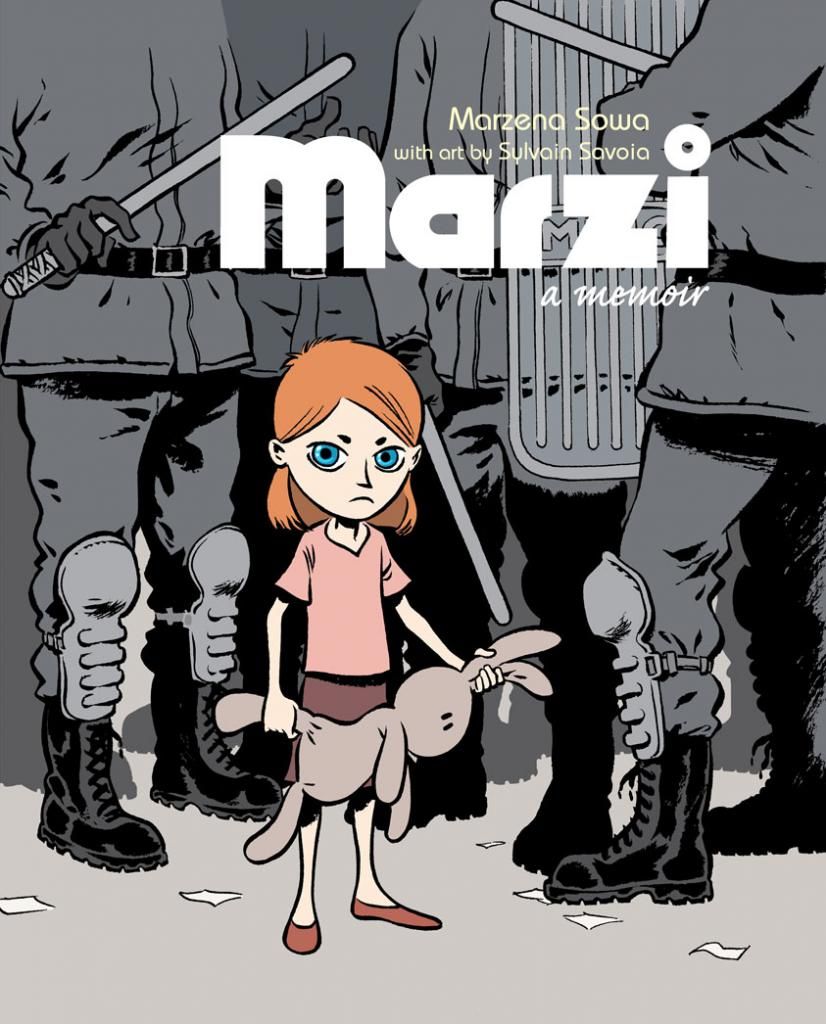
Comic Review: Marzi: A Memoir

Sorry about the late post folks, had some personal drama last night which left me too mentally exhausted to think straight enough to write a review, think I'd better try to build up a buffer of reviews again considering how often this seems to be happening lately. As for the book, is it just me or are about a third of all comic books found in libraries memoirs? I feel like if you were to look at all comics out there they would make up a much smaller percentage of total comic books but libraries just really love their comic books that they can pass off as education I guess? I do know more about Communist Poland than when I started reading this, but really that's more commentary on how the American History/Social Studies classes work (ie, if you get past the Civil War in American or World History you've got a pretty speedy and awesome teacher) than commentary on how good this story was per say.


Marzi: A Memoir by Marzena Sowa and illustrated by Sylvain Savoia


Summary: Marzi was born in communist Poland and while many parts of her childhood are reminiscent of the lives of children worldwide there were many aspects of her life where the Soviet Union's isolation affected her and even from a young age she noticed the rumblings of unhappiness in all the adults around her.

The Good: Sowa was thankfully an interesting child and it seems a very observant one, she manages to easily convey the anxiety and frustrations of the adults around while talking about her own experiences. I had been a bit worried about how well the story would be able to blend the two parts since Sowa is a decade too young to be really involved in any strikes or marches but instead the story proves to be a great example of why it's so crucial to establish your setting, it affects literally every part of your characters' lives. 

The Bad: I did have a bit of a hard time following the flow of time in this book, I think it's all chronological but a lack of any solid dates, the differences between Sowa's childhood and mine (ie, if it had been an American child I could have drawn clues from what was going on in their lives but couldn't really do so here), plus the very human characters (ie, who change very slowly and sometimes erratically) left me feeling a bit lost about the order of things (heck, that erractic character growth could have been because the story was out of order, I simply would have liked a few dates so I could keep everything straight). I also felt like the story ended in a weird place, did they suddenly realize they had hit their page count? Did nothing else noteworthy happen in Sowa's childhood? I can sort of see why the story ended where it did, with Sowa having discovered the magic of storytelling (which would then make it all thematic and a bit meta) but overall there were just a few odd problems with the flow of the story.

The Art: I was a bit surprised when looking back through the book but there is a noticeable difference between the first few pages and the last few, I used to books done by professional illustrators who have gotten past that point early in their art where they improve rapidly. In any case, the art is more complex than it first appears, the backgrounds have a fair amount of detail, the characters look distinct, and I think the rather flat, biege color scheme prevalent throughout, without any highlights or shadows, fits the mood well here. I am a bit confused why Sowa has bright orange hair here yet dark hair in the photos at the end but, thinking about what I just said, perhaps that was so she would stand out even more from the beige scenery, that would make a lot of sense. 


So, a solid 3 out of 5 stars and, while I have no desire to own or reread this book I am a bit more interested in communist Eastern Europe after World War II and would certainly recommend this to people who have read other comic memoirs and enjoyed them.

Saturday, May 4, 2013

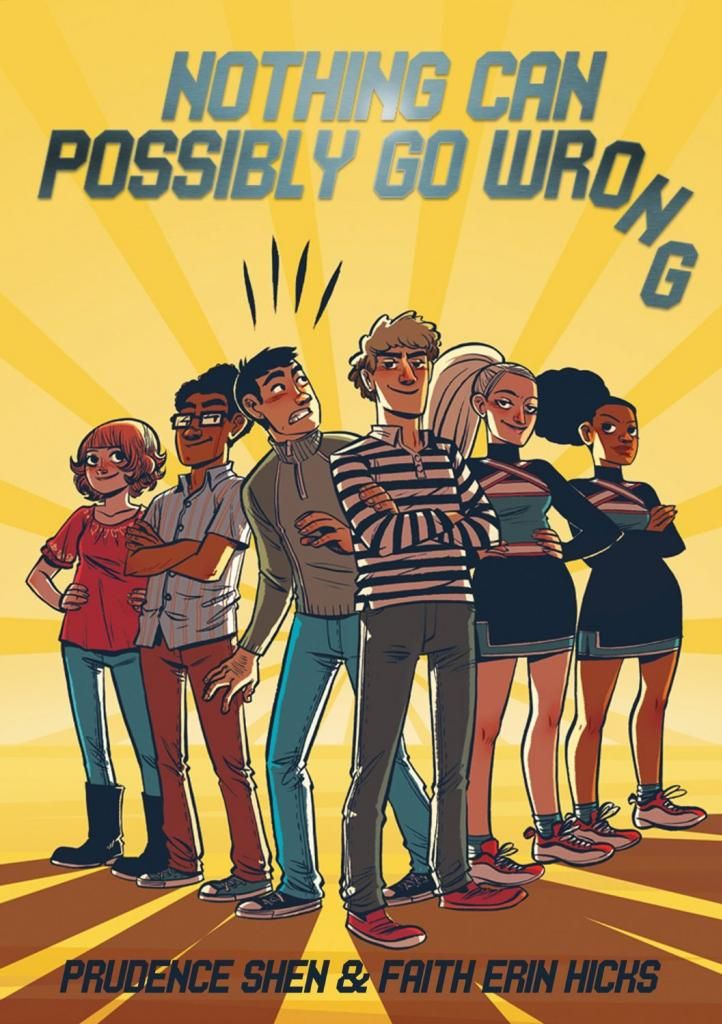
Comic Review: Nothing Can Possibly Go Wrong

Phew, I actually did not know if I was going to be able to review this title until last night when the last page was posted, talk about down to the wire! Especially since, like last year's Friends With Boys the full version of this comic is only going to be online for a short while longer (until the 7th, I suspect a part of it will remain up as a preview) so I really wanted to tell people about this as soon as I could. I mentioned Friends With Boys for a reason there, this is Faith Erin Hick's newest (I think?) work, although this time it's a sorta-kinda collaboration with the author Prudence Shen. What happened was that several years back Prudence Shen wrote a book, shopped it around, and an agent who had worked with Faith before read it and then bought the rights with the intent to develop it into a graphic novel instead which is something I'm sure must have happened before but I can't actually recall hearing another case like it. This did make me a little hesitant going in, since I seem to like Faith's work when she's writing and drawing it but not just drawing it, but it seems like a combination of Shen's writing and how Faith adapted it just worked for me.


Nothing Could Possibly Go Wrong by Prudence Shen and Faith Erin Hicks


Summary: Charlie was having a fairly good start to the school year, even if his girlfriend (Holly, the head cheerleader) suddenly broke up with him, and things go downhill quickly when his friend Nate starts a fight with the cheerleaders over misplaced school funding that both groups want and Charlie finds himself in the middle of a bizarre scuffle that involves student body elections, family drama, and a robot rumble. 

The Good: As noted earlier, Shen wrote the original novel but Faith adapted it to work as a graphic novel style (and sized) story and I would have never guessed that since it's such a good fit. The author notes on various pages note that there was only one major change to the story (a scene near the end and I completely agree with the change) so I guess this means I should keep an eye out for Shen's other works as well. As for the actual story, much like Friends I was pleasantly surprised to see that Charlie is dealing with divorced parents because, well, I've been there and once I started looking I noticed that most YA books that had a protagonist with divorced parents either glossed over it or it happened so many years ago that the protagonist was okay with it. Here it's still a very raw part of Charlie's life and I really wish I had had this story a few years earlier. Other than that, the character felt fleshed out, I really like the choice to portray Holly the cheerleader as cool and distant instead of bitchy and all the major players get enough fleshing out to feel like real characters by the end. 

The Bad: The ending felt a little rocky to me but that could be because again I wasn't sure when it was going to finish and really wanted it to be soon so I could actually review it, I'm sure it reads much better when all read at once. Likewise, while the pacing felt fine more or less I'm sure the robot fight scenes will flow much better when people aren't reading them page by page and that's a really tricky kind of pacing for people to master and considering that this was created to be a print book I would have been incredibly impressed if the book's pacing flowed well both ways. 

The Art: The art is rather nice, the characters look distinct from each other with a variety of body shapes, faces, noses, and no two hair styles look alike, and all of the many action scenes look fine. There are a few pages where it's a bit hard to follow what the robots are doing but I think that's because I'm less experienced with robot fights so in a way I don't know what to expect and that makes it harder to figure out what happened (versus say a fistfight which I've seen plenty of in movies over the years and that gives me the context to figure out what's going on in a comic book fistfight*). So anyway, by and large the art is rather nice and very solid with just one or two rough patches, the paneling is pretty nice as well.


A fun read and while I haven't ordered a copy yet (because finances, guys moving out on your own is TERRIFYING) but I highly recommend people who enjoyed it to do so and then to post in the preorder campaign page so that they can unlock even more tiers/prizes in their special campaign. More about everything, and the comic itself, can be found over here and remember that the whole thing will be online only until the 7th so if you want to try it now is the time!


*unless you're Sailor Moon but that was two weeks ago)

Friday, April 12, 2013

Comic Book Review: Cat Burglar Black

Getting back into the swing of things here with another book from the North American publisher First Second. As I think my reviews on their past books has shown they're really a hit or miss publishing house for me, either I like their stuff or hate it and it doesn't even matter who the actual creator is! So I came across this one at my school library and hoped it would be another hit and, well, it didn't work quite like that.


Cat Burglar Black by Richard Sala


Summary: K has had an unhappy life, orphaned at a young age she was raised in an orphanage where all the kids were taught how to steal and punished when they wouldn't so she's happy to finally have left that life behind and to be starting at a new boarding school. But her bad luck seems to follow her since her new school also has plans for her which she's less than pleased about. 

The Good: K is a pretty likable lead character and the three girls she befriends are fairly likable as well. And the setting works well for the story, there are hints and details the suggest that the school and the town are even more sinister than the reader initially guesses and I liked that. Apparently Sala's other works also have that element of sinisterness to them and I don't think this story would work at all if it didn't have those little details sprinkled throughout.

The Bad: There are stories that are "family friendly" which are simple enough for a child to follow but have a depth to them that adults can enjoy and there are "for kids" stories which are so simple that they feel flat. This book falls into the later category, it rushes through the story so quickly that it's hard to feel bad about anything that happens to the side characters or even K, there's just no downtime for the reader to process what just happened (I seem to recall complaining about this in Sailor Moon recently as well). As a result of that, and the ending which felt a bit off tone/moodwise, this story didn't leave a good impression on me and I don't think I'll be recommending it.  

The Art: After reading a bit of the book I had a niggling feeling that something looked off about it and finally figured out what it was, every single page was laid out the exact same way, either four square frames (in a 2 by 2 configuration) over a large panel or a large panel over those square frames, I can't remember exactly which. Regardless, obviously I like comics that are innovative and creative in their use of panels and how it makes the story flow (I like manga after all and half the time you can't figure out which order to read the panels in) so this isn't my style and honestly I just don't think that such a formulaic approach to the art works. You might be able to pull this off in some story, perhaps, but a story should be told in comic form because the visual aspects adds to the story and when it's so rigidly defined does it really add anything? Add that to what I was already feeling about the writing and this layout makes the whole story feel rather amateurish and as if Sala needed to wait a few more years to further refine this idea before creating it.


So, 2 or 2.5 out of 5 for this one, won't be recommending to really anyone, if anyone really needs good graphic novels for girls ages 8-12 I'm sure I can come up with some better recommendations than this one.

Friday, October 12, 2012

Comic Review: Serenity: Those Left Behind

I saw Firefly a few years ago, enjoyed it, and then watched Serenity and didn't enjoy it. I knew either shortly before or after I saw the movie that, if things had gone according to plan, that plot would have formed the climax of the second season and, given that I'm not sure the show technically finished it's first season, that explained why there was a bit of a disconnect between the two. I also knew that there was a short comic series connecting the two a little better and had read summaries for it before I saw the movie, still didn't help me  but it wasn't until I picked up a flatmate's the Firefly comic book that was laying around my apartment until I actually got a chance to read to read it. As far as I can tell, volume one   is one complete story and there is at least one, possibly, two more volumes in the same vein, although the summaries I read only covered volume one.


Serenity: Those Left Behind by Joss Whedon, Brett Mathews, and Will Conrad


Summary: Things are the same as usual on Serenity, the crew is down on their luck and has a job to pull off but things don't quite go as planned. But multiple old foes are after them this time so things are about to get a bit tricky.

The Good: One thing that bugged me about the movie was how not only was Inara no longer flying on the Serenity (which came up in the last episode of the show) but Book wasn't either, something that happens here instead so I'm glad to see that addressed. All of the characters got at least a tiny bit of screen time (although it didn't feel like any of them got enough) and even from those little bits of character interaction I could see how and why the characters had changed from the end of the first season to Serenity.

The Bad: Wow was that short, I'm glad to hear that there's at least one more volume in this series since otherwise this doesn't really help bridge Firefly and Serenity at all, there's barely enough story for a full episode in here. Normally I'd be more annoyed at how you have to not only watch the show and movie but also have to read supplementary material to know the full story but, since I know that the story was never meant to be told like that, I'll give them some slack. 

The Art: The art looks basically the way it does on the cover, more realistic than cartoony and it's easy enough to tell which character is which, something I was a bit worried about. It's in full color and it looks just fine. It's not my favorite style of art but, since Firefly was originally a story told in a visual medium, I think that it works much better as a comic than as a novel and the art does work perfectly fine and flows well too.


Sorry for the short review, I have a head cold which is making it a bit hard to think straight right now (the typos I've had to edit out were quite amusing) but honestly with a story this short (Amazon lists this book at 96 pages long and at least 15 of those pages were conceptual sketches/musing for the original series) there's not much else to say. If you liked Firefly read this, if you're new to the franchise, go back to the tv show and see that first, and if I can find the other book(s?) I'll read those as well. I'd also really like to read the comic book about Shepherd Book someday, especially since this story alluded to a bit of his past, but unless I find it at a library or suddenly gain quite a bit of money it's not that high on my list of things to search out. 

Saturday, August 4, 2012

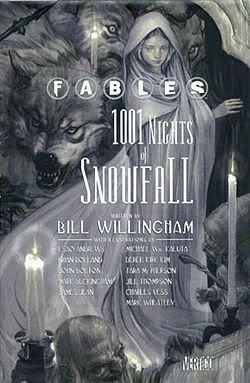
Comic Review: Fables, 1001 Nights of Snowfall

I've heard about the Fables series over the years but never had a chance to read them and I've been a bit too intimidated to blind buy them at the bookstore, there were always so many different issues and I had no idea where to start. But when I picked up this book at the local college library the very first page was an introduction for new readers and explained that this book was set before the story proper. Well, that takes care of all of my inital problems, so how did the book itself fare?

Fables: 1001 Nights of Snowfall by Bill Willingham and illustrated by James Jean and Charles Vess

  
Summary: Fables is a world where all fairy tales come from a common place and have escaped The Adversary by coming to our world and living in a small, close knit community in America. But not long after their escape, and before the story proper begins, Snow White travels to the Arabian section of their fairy tale land to warn of The Adversary and offer them a place in their new life. She accidentally becomes the queen of King Shahryar who plans to kill her at sunrise since he no longer trusts women. In order to prolong her life, Snow White begins to tell him tales of the old world and has many tales to tell.

The Good: By the end of this volume I had not only a good feel for how this story was paced but also of the backstory leading up to the main tale and the history of what seem to several major characters. It was a great introduction to the series, perfectly bringing in exposition while not overwhelming the entire story, the stories themselves were interesting, and Willingham tied it all together very well in the end. I was glad to see at least a mention of fairy tales that weren't European based (since I have seen many of these "all legends are real" mash-ups over the years but usually "all stories" ends up meaning "just European, with a focus on Western European, tales") and that inclusion is the biggest reason that I am just a bit curious about the rest of the series.

The Bad: Years ago I read a very good adaptation of 1001 Nights (Shadow Spinner by Susan Fletcher, a middle grade book) and ever since I've been rather biased when it comes to retellings and I didn't find the overall story here quite as gripping as that one. There wasn't anything wrong with Snow White or her own story, it just wasn't as amazing and I was kinda miffed that Scheherazade only had a paragraph of screen time. I felt like there were one or two parts that would have made more sense if I had been familiar with the rest of the series (like the part with The Big Bad Wolf) but that only happened a few times. 

The Art: Amazon only lists two illustrators for this volume which I really hope is right since it seemed like there were more than two art styles in the book. Rather surprisingly for me I liked most, although not all, of the art in the book*  and, given that the book was composed of many smaller stories within a larger one, I didn't find the art shifts jarring and they made sense. All of the stories were also very easy to follow paneling wise which seems a bit like a silly thing to mention but I have come across so many stories where you can tell the artist is an amateur because they don't understand how an eye looks at the page. Here there were no problems at all and it made reading this much easier and go much faster.


So, will I track down more volumes of Fables after this? Probably not actually, the series is still on-going, huge, like I said earlier I don't have easy access to it, and it seems to have much greater variety of artists and I didn't really like the art in the volumes I've flipped through before. Despite their best efforts here, which were fantastic, it's a bit of an intimidating series to get into, so for the moment I'll stick with all the other series I already follow that revolve around the "all stories are true" premise.


*surprising only because I don't seem to like the art style in most American comics books, which isn't for any particular reason I've been able to figure out but there are just a few stylistic things I come across in American comic books (verses manga/manhaw/webcomics)  that I've disliked since elementary school, years before I read any other comics.

Friday, June 22, 2012

Comic Review: Cautionary Fables and Fairy Tales

Back in 2011 I remembered hearing about Womanthology (a comic anthology that was going to be filled with comics only by female creators) and, while I found the idea interesting, after learning that the creators weren't getting paid from the kickstarter (I think all the money was going to printing with the leftovers being donated to charity) I wasn't really keen on supporting it. So when I saw this one where I was already a fan of some of the creators and they said that they were getting paid for the work here I decided to put my money where my mouth was instead of putting my foot in my mouth. I wasn't sure if I should review this or not at first however since it seemed odd to review something everyone else can't buy but I have since found out that you can still purchase a copy of this anthology, you can go to this page for more information for where to buy. Anyway, this will be more of a summary/general thoughts on the anthology since each story is rather short and it's a bit hard to review short things. But hopefully it'll still be a good overview of the anthology and give people an idea if they want to get a copy for themselves or not.

Cautionary Fables and Fairy Tales (anthology featuring Kate Ashwin, Kory Bing, Mary Cagle, KC Green, Kel McDonald, Joe Pimenta, Katie and Steve Shanahan, and Lin Visel)


An anthology featuring eight stories from nine different comic artists, all based off of classical fairy tales with some being better known than others, most never before published in print or online.

About half of the anthology featured stories I was already familiar with (such as Jack and the Beanstalk and Rapnuzel), and the other stories were completely new to me (Bisclarvet, The Nixie of the Mill Pond)which made for a nice balance. The only story I really disliked was K.C. Green’s The Singing Bone and the story wasn’t bad, I simply don’t like the way they do storytelling and their art style, it’s just a matter of personal preference. On the other end of the spectrum, Bisclarvet (by Kel McDonald) was my favorite of the group and felt like something I could have seen on Jim Henson’s The Storyteller since it was paced so well and told a very tidy story with no details left unused. There was a nice variety of stories, some sort, some long, a completely silent one, some comedy, and a whole range of art styles. I think all of that makes it a rather successful anthology and, while I might re-read it on a regular basis, I am happy that I supported the kickstarter for it.

Friday, June 15, 2012

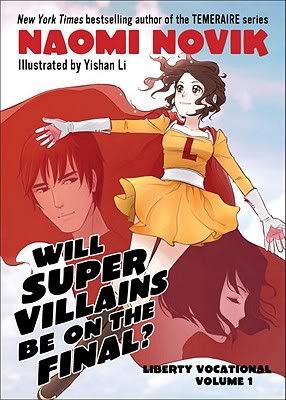
Comic Review: Will Supervillians be on the final?

....oh come on, with a title like that how could I NOT pick this one up? When I first came across this, via a review on ANN, I thought that the title made the story sound like a train-wreck waiting to happen, especially when I found out that the author was the same author of the "Napoleonic War with dragons" series. Also, I've noticed over the years that I tend to like less/think aren't done as well stories that have a prose writer at the helm with an artist or comic adaptations of a book. Granted, I know that DC and Marvel don't always (often?) have someone who both writes the story and draws the comic and their stories seem to work (well, sometimes) and I have seen many collaborative webcomics that have one person who is the primary writer and another who does all the art but in those cases the result generally feels like a cohesive work. Here, well it's not so much that the story doesn't feel cohesive, rather, I'm not entirely sure why this story was told in comic form at all (although I can't see it working any better as an all prose work either...)

Will Super Villains Be On the Final? Written by Naomi Novik, illustrated by Yishan Li
  
Summary: Leah Taymore is nearly at the end of her rope, with prodigious super powers she's been enrolled in the college for superheroes two years early but with all of her (orchestrated by a villain of course) bad luck it doesn't seem like she'll be able to remain. Will she somehow be able to stay, save the day, and get the guy?

The Good: Leah isn't a terribly well-rounded character but she's likable enough and despite her powers and hardships doesn't feel like a Mary Sue. I also liked two of the side characters, twins who are the resident advisers for Leah's floor managed to get more fleshed out than I expected and I found myself wishing that they had more screen time (especially the girl of the pair). The story also concluded better than I expected, it's clear that there is much more to it than just this volume but it ended at a good place.

The Bad: A classic episode/chapter in a school story is to have the characters go to a philosophy class, have the teacher propose a question about morals (which doesn't have a "right" answer) that is strangely relevant to the plot, and then have the characters mull over it. This time this scenario is partially explained by the fact that the philosophy teacher is the villain but the question was so dumb I nearly threw the book across the room. It's a question dealing with events that happened before the story so I won't get into details but believe me when I say that it wouldn't have generated much debate in my high school classes let alone my college ones and nothing makes a writer appear dumb when they try to pull off something "clever" like this and fail. And this whole story feels like someone was trying to be clever with a new idea (never mind the fact that the idea of "school for superheroes" has already been done plenty of times before) but didn't have any new ideas to bring to the table to make it work. Also, I can't tell if some of the guy characters (and apologies that I'm not using names here, I honestly cannot find them online and forgot to write them down) were out of character at times or if the artist actually drew the wrong one which is a first for me. Also, co-ed bathrooms, really? Sure I've been in dorms that have a small, gender-neutral bathroom so there can be mixing of the sexes, but the idea that the only bathroom for an entire floor (which appeared too small, I've been in dorms with only one huge bathroom for 40+ people) that is mixed gender was a pretty stupid detail.

The Art: Another complaint I have with these collaborative works is that the art more often than not is just boring. By which I mean, sure the art is there and I saw over 100 pages of it but don't expect me to recognize the artist if I saw their work again, the art didn't feel like it had any style to it at all, rather that the publisher said "we need a comic with generic, 'manga-inspired' art" and that was it*. Interestingly enough there were a few pages in the back with original sketches and prompts for what the characters should look like which were kinda interesting but most so for Leah's roommate. The prompt calls for her to have a more chubby, best-friend look, and I wouldn't have described her as anything except average weight/build. Perhaps that idea was scrapped but it did make me think of all the talks and writings I've seen about re-enforcing the idea that only thin is beautiful, both because the best friend, not the star and the second most important female character, was supposed to be not thin and that if that's their definition of "not thin" then they have a sadly screwed up definition.


The story did turn out better than I expected (probably because my expectations weren't high, think a few inches above the floor) but still had enough weird, dumb details and didn't do anything new/interesing with material I've seen before that I have no intention of recommending it to anyone. No idea if there will be more books forthcoming, the publishing date was last year but Amazon doesn't seem to list a volume two (also worth noting is that you can get new and used copies online for just one cent, never a good sign) and I really have to wonder why Del Ray financed this project in the first place.  


*ironically enough, did a quick search on Amazon and it turns out Yishan Li has done a number of "how to draw manga" books before. 

Friday, June 8, 2012

Comic Review: The Promise part one

As promised, more Avatar: the last airbender stuff! The Legend of Korra takes place 70 years after the original series and in a completely different setting so the creators (Bryan Konietzko and Michael Dante DiMartino) decided to create a short, three volume comic to show how the new setting was established and hopefully wrap up a few plot threads from the original series that were never resolved but that's for another review. Sadly not all of the books came out before the series premiered, the second volume came out just a few days ago, and it's going to be a while before I get to the second book but for the moment, here's how the first volume shapes up. As a note, this review is a bit more spoilery than normal but, considering how a lot of stuff in here can already be inferred from Korra/the Republic City game on the Nick site there's not much I can do about that.

Avatar: The Last Airbender The Promise Part One written by Gene Luen Yang and illustrated by Gurihiru (lettered by Michael Heisler)

Summary: It's been a year since Aang defeated Firelord Ozai and agreement has been reached between the Fire Nation and the Earth Kingdom for all fire nation colonists to return to their ancestral homes to help change the world back to what it was 100 years ago. But the world has permanently changed in those 100 years and the new conflicts have arisen, ones that don't have any easy solutions to them. 

The Good: Much like the anime Last Exile: Fam of the Silver Wing from earlier in the year, The Promise tackles a question that doesn't appear as much in non-historical/realistic fiction, at what point do "immigrants" become "natives", much like one of the problems that plagues modern day Israel. Korra watchers know what the solution here is but it'll be interesting to see how the characters manage to come to it. The comics also incorperate a number of plotlines that were left hanging at the end of the tv series (such as whatever happened to the Earth King after his last appearance in the comics and perhaps, finally! closure about Zuko's mother) and starts bringing in plots that will connect to Korra (such as Toph's earthbending school which would later become where she trains the first metal bending cops). This mini-series has a lot of ground to cover but it making good progress in dealing with everything.

The Bad: It may be dealing with everything but goodness is it short and fast paced. It's only about 70 pages long, it took me under 20 minutes to read the whole thing, and much like Korra is means the characterization feels a bit rushed. I felt like some parts (such as Aang's decision that he must kill Zuko after all) felt almost random they were so rushed and, even though I have always been an ardant Kataang shipper, I'll admit that Katara and Aang calling each other "sweetie" and such did seem incredibly out of place with the language previously used in the series*. I was a bit underwhelmed overall by the volume but hopefully the next two will make up for that.

The Art: The book was drawn by a team of Japanese artists called Gurihiru (which as some people have pointed out could technically make this manga, I think of it as a comic since the original creators are American as I believe Gene Luen Yang is as well) and they do a pretty good idea sticking to the original art style of the series. It helps that over the years I've seen a number of other ATLA comics (all of which I believe have been collected in The Lost Adventures) so I don't mind that the style was slightly different from the tv show. I'm a bit surprised how well the pages flowed together, sure the comic didn't use a lot of elaborate panel layouts but the artists were still working left to right instead of right to left and having that kind of flexibility is rather impressive.


Again like LE:Fam, I really wish this in-between comic had been fully released before the start of Korra since so far nothing in here has spoiled Korra (indeed it's been the other way around) but it is doing a fairly good job filling in the gaps and I hope it does improve from here. It'll be a while I suspect before I get the second volume (just due to me needing to budget even more carefully than usual) but I do plan on buying the second and third volumes as well (and the third won't be out until September I believe).


*it also kept reminding me of River Song from Doctor Who but that one is my own fault. 

Friday, May 4, 2012

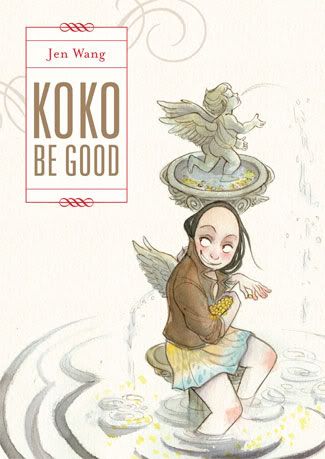
Comic Review: Koko Be Good

Another book that I came across at the library, interestingly enough even though I've heard good things about this publisher (First Second) for a few years now it's only been within the past year that I've started finding their books at the libraries as such (which I will take as a good sign that the libraries are now starting to pay attention to them and will get more of their releases). Maybe I should keep an eye out for them in bookstores too, although the ones I go to barely have any non-superhero Western comics.....

Koko Be Good by Jen Wang


Summary: Jon hasn't quite figured out to do with his life but when his girlfriend offers him a chance to come with her to Peru and do missionary work there he decides that this sounds like a good thing to do. Koko on the other hand doesn't do "good" things until she runs into Jon one night and, envious of how collected he seems to be, decides that she'll try to be good as well. But figuring out what you want to do and trying to do good are both hard tasks, especially if you haven't quite figured out who you are.

The Good: There are hundreds, thousands of coming of age stories (I consider it to be a genre unto itself) and it's really hard for me to get excited or interested in those stories after seeing so many (even though, given where I am in my life I should easily be able to sympathize with them). This story is one of the better examples I've seen in the genre and I think part of the reason it worked was because it felt a little more low-key than usual. While Koko is over the top in trying to create a new identity to be happy, Jon is much more low key and knows from the start that he isn't sure of what he wants to do, he's just going along and willing to try something he knows might not work out in the end. I think it was good that his girlfriend was a major influence in him, the scenes where she cautions him about going along with her (showing that even she isn't totally sure this is what she wants to do) really helped flesh them both out and it was great to not see another instance where one half of the relationship is completely confident and sure of themselves and drags the other half along, here with both sides hesitating felt a lot more true to life. I was surprised that Koko's friend Faron was developed as much as he was as well, originally I had thought he was going to be just a foil to Koko but in the end Wang showed us a chapter in his coming of age story as well and I'm amazed she was able to fit three such stories into one so smoothly.

The Bad: While I liked Jon a lot and was surprised by how much I liked Faron in the end as well Koko just never grew on me. I never understood her motivation to "become good" (I know that it was supposed to be that she was envious of Jon's life and tried to emulate him but the story only told that, never showed it) so all of her attempts to do good just felt awkward to me (they were supposed to feel awkward but they also managed to feel awkward in a way I don't think Wang intended). I was also leery at bits that Jon would dump his girlfriend and go for Koko (since the rule is that if you have two straight characters of opposite genders in a story they're gonna fall for each other) and, while that didn't quite happen, there was some chemistry between them that I didn't understand. In short, despite the fact the book is named after her and her adventures I just never understood half of what Koko did and, while the story wouldn't have worked if she wasn't present at all, half the time I didn't see the need for her.

The Art: Like the cover, the art is colored in various soft sepia tones and I absolutely loved how it looked. I liked the art style a lot as well, it had a lot of energy and the pages flowed well, but the coloring was what sold me on the book. It really reflects the mood of the story, even with all it's action it's rather introspective and calm and the best thing a visual work can do is to enhance and add to the mood already created by the story which it succeeds at marvelously here. Like I said, the art really sold me on the book and it makes me want to go and pick up my own copy as well, I don't know if I would have had the same reaction if the art had been any different.


I was very pleased with this book, especially since I just picked it up on a whim since I was in that section of the library anyway, and I'll be keeping an eye out for a copy of it in a store near me. It doesn't appear that Jen Wang has published any other books (aside from being in a volume or two of Flight and honestly it seems like every indie comic artist in the US has been in there at one point or another) but I'm going to also try to keep an eye out for their future works and see what they do next.     

Friday, April 13, 2012

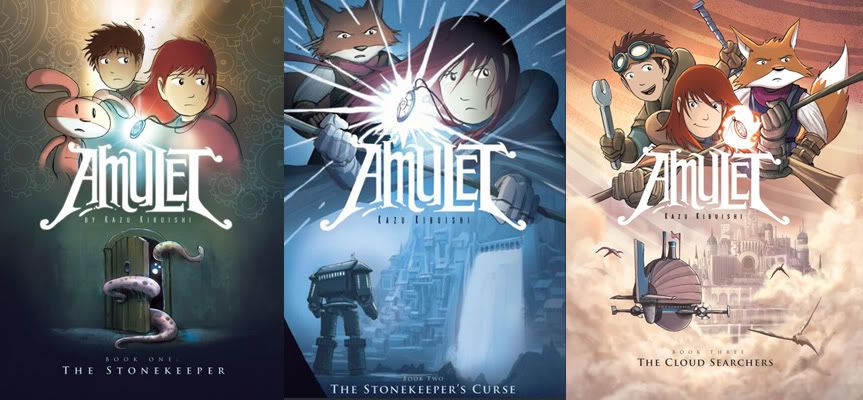
Comic Review: Amulet (volumes 1-4)

A few years back when I was working in the local library I found the first volume in this series, read it, and didn't think much of it. Looking at the publication dates I don't think there were any other volumes out at the time to change my mind but over the years I've seen plenty of praise for the series, the kind of exhuberent praise that makes me squirm in my seat and go "how could something I found so average be so extraordinary to others, did it really improve later on or such?" Differences in taste could easily account for that difference but I was really puzzled and, after finding all four books staring at me in the local library (book five should come out this fall, I'm thinking the series won't be much longer than six volumes) I decided to give it a second go and try to figure out what all the buzz was about.

Amulet by Kazu Kibuishi (volumes one through four)

Summary: After a tragedy rocks their family, Emily along with her brother Navin and mother move to the old family home in the countryside to start a new chapter in their lives. They weren't expecting this new chapter to be so adventurous however as Emily inherits her Silas' amulet which gives her both great powers and unexpected responsibilities in the world of Alledia where they quickly become embroiled in an old war with enemies lurking everywhere.

The Good: While I still don't get quite all the hype I see for these books they are certainly well-written with an interesting plot. While Emily and her family are vital to trying to save Alledia she acts more as a catalyst than a promised savior which I like, it makes it much easier to take her role in all of this seriously. I also like how her brother Navin has also had sometime in the spotlight, initally I was worried he would be overshadowed because Amulet truly is Emily's story but his development (as well as that of a number of side characters) has been well placed and adds to the story. 

The Bad: It's a bit of an odd complaint but even after four books I still feel like we haven't gotten to know and understand Emily all that well, I feel like Navin has gotten much more character development (possibly because Navin has more downtime and Emily has been so busy there's no time for quiet, character establishing scenes). I do dislike how their mother is written however, it is hard to write capable adult characters in children's literature but the mother here just comes off as a bit too flat, someone to spout advice that doesn't even end up working in the end. Also a bit frustrated at the villain introduced in the fourth volume, everything was paced so quickly I had to re-read the story to figure out what happened and I didn't see a motivation or a reason for another villain at all. Despite all of that I am curious to see what happens next in the story, not so curious as to actively seek it out but rather enough that if I come across it at the library at some point I'll check it out. 

The Art: The comics are in full art and, while the art isn't going to blow your socks off it has progressed nicely and gets better and better with each book. The settings look nice and distinct, the pages flow well and all the characters look different from each other. The art hasn't blown me away but it's not underwhelming either so I have no complaints with it.

It's mostly for superficial reasons but the early parts of this story still remind me strongly of The Spiderwick Chronicles which is also probably because they're both middle grade, also probably why this story didn't grip me as much. I'd easily recommend these books (both series) to my younger step-sister but probably not to my college aged comic reading friends.  

Sunday, February 26, 2012

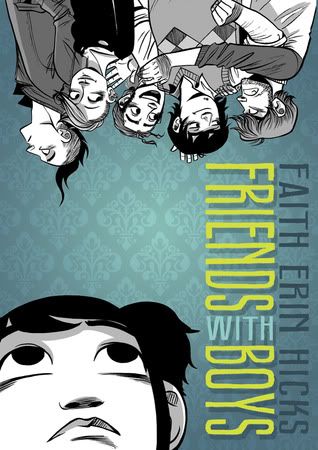
Comic Review: Friends with Boys

No I didn't run out of movies/tv shows to review again, I decided the circumstances were right to break with my normal schedule for today. Starting Thursday the 1st I'm going to keep my normal Sunday, Monday, Friday, Saturday update schedule but, like last March, I'm going to spend the entire month reviewing webcomics instead and initially this comic was going to be talked about then. Then I found out this was less of a webcomic and more of a graphic novel that was being put online in it's entirety as a preview and that all but the first 16 pages were going to be taken down in a week and a half so I really couldn't wait until April to actually review this. So in light of all of that, plus my next tv review was going to be the first season of Life on Mars and really didn't want a month plus gap in the reviews between seasons, I'm just going to be different today and talk about Friends with Boys.

As mentioned above, the comic is actually a graphic novel that has just been put up online as a preview of sorts for the physical copy (which comes out any day now) and was done by Faith Erin Hicks whose works I've reviewed a few times before here. Unlike the last one I talked about, Brain Camp, she not only did all the artwork but also came up with the story much like her other work I've seen, The War at Ellsmere, and I was curious how that would work. I was a bit cautious about trying this one out because of the hype surrounding it (sadly I just don't seem to like a lot of webcomics that have a lot of hype surrounding them, not sure why but it just seems to be the case) but now I would like to add to the hype and say yes, this was really pretty good.

Friends With Boys by Faith Erin Hicks
    
Summary: Maggie, like her three older brothers, has been home-schooled all her life and is now starting her freshman year in high school in the local public school system which makes it even more terrifying than high school normally is. But while it was her parent's and her brothers' decision to go to a public high school instead of continuing with home-schooling Maggie doesn't have that choice, her mother has recently left (it's implied that it's partially the stress of having to home-school four kids) which has left an understandably big gap in her life. So Maggie must deal with all of this, make friends with the people whom her family doesn't like and figure out what the deal is with a local ghost that likes to haunt her. 

The Good: Ever since my parents separated when I was 16 I've been keeping a close eye out for books that deal well with that wonderful situation and Friends with Boys does a better job than most stories I've seen. My situation and Maggie's are really different but that raw feeling of unhappiness that sometimes seems like it's consuming your entire life is pretty accurate and I wasn't surprised to see that Hicks based quite a few things in the story off of her own life. Some of the high school bits seemed a bit off to me but since I went to a small, private high school and I didn't see anyone else complaining about that I think that's just me and that the setting also holds up well. Maggie was a fun main character, her brothers felt like brothers, and the story also felt like it was paced just right.  

The Bad: I was hoping for a slightly more substantial ending but, since life sometimes doesn't exactly resolve itself but rather simply continues, it works (and it helps that Hicks herself said she was expecting a different resolution as well and was surprised that this was what fit the best). It was rather frustrating that Maggie's father, who seemed like a sane, reasonable parent in his initial appearances, seems to be suddenly grasping the idiot ball at the climax where he refuses to listen her and judges others on their looks, especially since in his initial scene he was having to change his appearance because of how other would judge the new sheriff if he had long hair. That little bit ended up bothering me a lot more than the entire climax (since I can at least sympathize that when your world is that that confusing that you are going to do stupid stuff, although Maggie's actions were pushing that a bit). 

The Art: It's interesting to compare the art here to the art in her currently on-going webcomic, The Adventures of Superhero Girl, since it's clear from the character designs that this is the same artist but there's a lot more detail work, the backgrounds are more complex and there's a lot more shading. I like how her style looks here*, the character designs are distinctive and a little quirky looking, as I said there's a lot of nice details everywhere you look, and in general I prefer pen and ink shading to using a lot of screen tones**. It looks cartoony but in a very natural-ish way, not as if Hicks set out to draw things in a "cartoon style" but that this is her normal style which is simply cartoon influenced. I do think the drawing of Maggie on the cover looks a bit odd, probably because an upward looking angle on most people simply isn't flattering, but other than that I didn't have any problems with the art at all.

So, my favorite work by Faith Erin Hicks and I'll be sure to grab a physical copy sometime. Like I said, for the next week and a half it's still up online and I would really encourage everyone to check it out and see how you like it. Oh and if you do check it out make sure to look at the author's comments under the pages, Hicks has a lot of great blog posts about working in comics, why Fullmetal Alchemist is an awesome manga, and on homeschooling. I believe those blog posts will stay up after the rest of the comic goes down and I really encourage people to look at those as well. 


*and in ASG but that's for later in the week
** I blame reading too much shojo for that one, I've just seen so many series that abuse the screentones that it often comes out looking cheap to me.