Showing posts with label nonfiction. Show all posts

Friday, July 5, 2013

Comic Review: Still I Rise

I picked this book up at my local library not sure if I would like it, much less have anything to say to constitute a review on it, but reminded myself that even if I didn't like it I was practically guaranteed to walk away from it knowing more about American history than when I started. Over the years I've become more and more frustrated with the history classes I've had yet despite that I don't actually go out and try to read a lot of non-fiction history books on my own, something I think I need to change even if most of them, unlike this one, won't leave me with much to talk about here.


Still I Rise by Roland Laird and Taneshia Nash Laird, illustrated by Elihu "Adofo" Bey
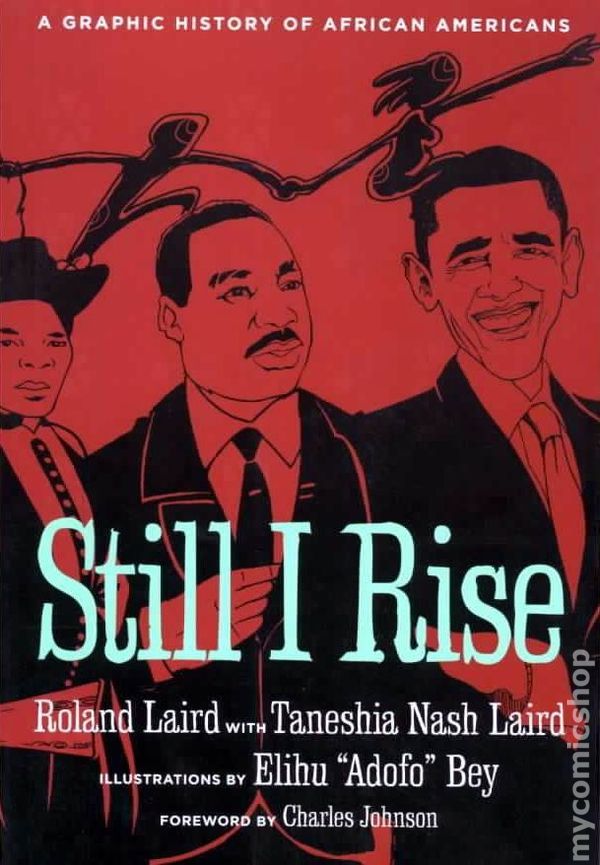

Summary: Taking it's title from Maya Angelou's poem of the same name, this comic shows  how Africans first came to the Americas and their long struggle to be recognized as Americans will the same rights and minds as everyone else.

The Good: I most certainly walked away from this book with more knowledge than I did going in, which was incredibly thorough for a roughly 200 page book. It also managed to convey something that none of my history classes ever had, this was a constant struggle for rights and freedom, not something that cropped up every now and again but something that was always in the background. In some ways I'm not surprised, my history classes were a bit selective and we tended to study periods, not look at history as a whole, but it's still sad that it's taken me so many years to actually put that into words. And this book didn't just talk about the African-Americans who were politically involved in trying to obtain rights, it also focused on the scientists, the inventors, the artists which was great since it showed that they were (and still are) a complex group of individuals, not just a group of people who can be boiled down to a single issue.

The Bad: I found this book a little much to read in one sitting or even two, it's surprisingly dense, and really wish it had been split into chapters or such since I had a hard time figuring out where a good stopping place was and really needed a few. I also wish that more of the people in the book had been labeled, I was able to guess at which parts were "made-up" conversations to convey a point and which ones were likely real quotes and, even though I could type them into google and see what comes up, I do wish the people had simply been labeled instead. Finally, while I did like the fact that the story had two narrators connecting and explaining all the events (whom I assume were representations of the two authors) at the very end their conversations felt less polished, like I was reading an unscripted argument between two people instead of, well, an argument with two sides that need to be presented. This only happened at the very end, I started wondering if tensions were just boiling over, but other than that I really did like having two, visible, narrators instead of one.

The Art: The art is, well, not in a style I like and I found it to be sloppy at times. Flipping back through it it's hard to articulate what I felt like when I was reading but a lot of the people look rough and caricaturist to the point where I had a hard time telling if someone was new or if we had seen them before and in a couple of places it looks like Bey just didn't have some particular technical skills. I'm ignoring the last 10 or so pages since they were drawn about 10 years later (the book was originally published in 1997 and then republished in 2009), although there is unfortunately a stark stylistic difference between the two and that's also where the aforementioned arguing between the narrators also happens. I do think that it was a good idea to make this story a comic instead of a prose book, it fits the pacing much better, but I do wonder if Bey had some trouble with the deadlines since the art seems to become even cruder and more "off model" the closer it gets to the end and that did bug me as I read it.


The amount of history in this book and the relative readability of it (I wasn't kidding about how dense it was) I'm giving this four stars out of five and really glad that I took it home and read it after all.

Monday, March 4, 2013

Webcomic Review Month 2013: Chaos Life and Cooking Up Comics

Nope, didn't skip B, just didn't have any comics for that this year that were far enough along in their stories for me to feel comfortable reviewing but next year I should have some! And as another quick note, apparently the rest of the universe also thinks that March is a fantastic time to talk about webcomics and Comic Mix is holding their annual tournament bracket involving webcomics. I think I saw some complaints about it last year (the usual popularity contest/people spamming the polls stuff, although sweet Jesus you can technically buy votes this year) but at the very least it's a great way to find new webcomics, they're starting with 300(!!) this year, so go give that a look!


Chaos Life by A. Stiffler


A semi-autobiographical, but often exaggerated, comic about the life of A. Stiffler and her wife.

I don't read as many autobiographical comics as I used to these days since, well, if they go on for years and years you just get a little bored by them (I certainly don't want people to go through tons of drama but some people are just better than others at humorizing their lives) so perhaps it works in my favor that Chaos Life has a bit of an erratic update schedule. Of course the fact that this comic appeals to my sense of humor, more than a bit whacky and Stiffler makes fun of herself just as much as anything else in the comic.

Chaos Life updates a bit erratically, usually once a week,  but can be found over here and they have plenty of ways to let you know when it has updated, no print edition as of writing..


Cooking Up Comics by Alisa Harris


Weekly recipes in comic form!

I was a little hesistant to talk about this comic, while I do talk about autobio comics, which are non-fiction, this almost seemed a bit too non-fictiony for my blog. And then I remembered that I review whatever I want and that I want more people to read these recipes so of course I should talk about it! The recipes are all easy to follow, her illustrations and written directions are quite clear, although I'll admit that I haven't used any of the recipes yet since I've been too busy since I discovered the site (she also posts a lot of vegan recipes which I'm less interested in but I know that's a big plus for other people). But she has a wide variety of recipes (all handily laid out in a single page and arranged by type no less!) so if you enjoy cooking at all peruse the site a bit and see if anything catches your eye!

Cooking up Comics updates every Wednesday, although it looks like it might currently be running guest strips right now instead of the regular comics and it sounds like the comic will end and be collected into a book in the next year or two.


2012 "B" Comics
2011 "B" Comics

2012 "C" Comics
2011 "C" Comics 

Wednesday, February 6, 2013

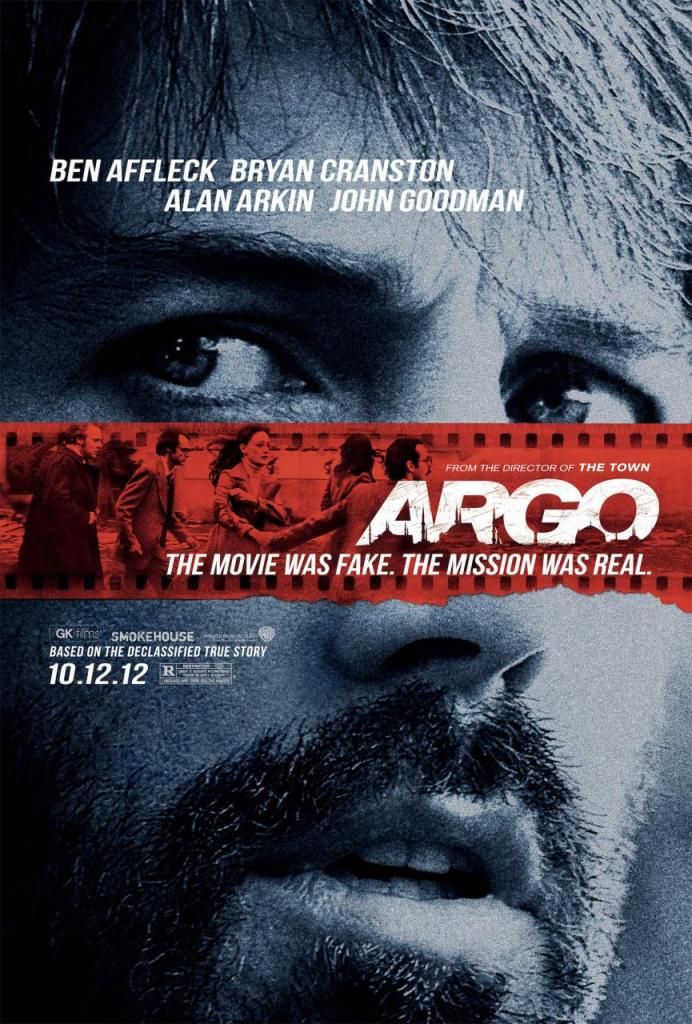
Movie Review: Argo

Back this past summer or so I stumbled across this article on Wired.com talking about how during the Iranian Hostage Crisis there had been some other Americans who had gotten out of the embassy and managed to escape well before the rest of the hostages (who were still alive) were released (according to wikipedia the screenplay was actually based on that article, need a source on that though). Shortly afterwords I saw an ad for a movie called Argo and thought what a funny coincidence and it took me an embarrassingly long time to make the connection (I should've at least noticed that the article dated from 2007). For those who don't understand how history classes in the US go (or at least classes in the Midwest and South), American history/American involve in history is king yet, while you would think that would mean that high schoolers would have learned about the crisis, really those classes focus on the American Revolutionary War and American Civil War ad nasuem so it had never come up in any of my (advanced even) history classes. So, armed with only the knowledge from that article and what had come up in my nonfiction reading (I remember the characters briefly commenting in Persepolis that with the embassy closed that there would be no more visas but the hostage crisis was never mentioned) I headed out to catch the film at school and see how well it worked on the silver screen.


Argo


Summary: The year is 1979 and tensions are high in Iran due to all of the political upheaval and unease over the past few years. As our story begins these tensions come to a point and citizens storm the American embassy and take all the workers hostage, all but six that is who manage to escape and hide out in Tehran, almost as trapped as their colleagues. The CIA gets word of these six and starts to devise plans to get them out and for once it seems like the flashiest plan, to claim that their part of a fake movie production crew, might be the one that saves them.

The Good: Normally I don't like thrillers since they remind me a bit too much of conspiracy theories, both of them rely on the idea that there are people out there who are so much smarter than the average person and perfectly control everything (well except for that one moment that starts the plot/leads a person to concoct an insane theory) and that stretches my suspension of disbelief a bit too far. Here however we have a realistic set-up (growing tensions lead to an embassy being attacked and people in one building are situated in a way that lets them escape and then hide out with allies) and it's this setting that makes the rest of the story work. I also liked a lot of the dialogue on the American side of things (although sadly I think all of the snappiest lines were made up since they were in situations that weren't based on real events), although that leads to my biggest problem with the film.

The Bad: While I am okay with some dramatization of the events for the sake of a movie (the confrontation with the guards at the airport? Okay especially since it wraps up a character arc) but some of them were just silly (the scene following it, that was just unnecessary). Wikipedia (both the Argo [2012 film] and the Canadian Caper pages) has a whole section on historical accuracy, with sources, and it sounds like quite a few little details were changed and I highly recommend anyone whose seen the film to at least glance through, a few things in the film didn't ring true with me and sure enough they weren't. I suspect the reason for at least a few of the changes was to make the movie longer (it clocks in at 2 hours exactly and I had been curious how they were going to make a full length film with what is essentially, as odd as it sounds, a straightforward story) and after looking at Wikipedia I think they could've cut some of the fake events and instead focuses more on the Americans in Tehran (really the film was about  Mendez, not the Americans) since they went through a lot more there which could've filled the time instead.

The Audio: No real comments here, the audio wasn't really important to the story (neither were the visuals actually, this is a story that also works just fine in print) but nothing stuck out to me for the wrong reasons so I suppose it was technically sound.

The Visuals: The film used some actual news reports from 1979 and I'm curious if some of the video of the protests in Tehran were also from 1979 since were were some shots there were letter-boxed (followed immediately afterwards by shots that were not). Regardless, the use of actual broadcast was a nice touch and was the only thing that really stood out to me visual wise (well, I have learned since that Mendez was part Hispanic so it's a bit frustrating that he was portrayed by a clearly all white guy).


So, while I enjoyed the movie while I was watching it (and was annoyed by some parts I knew to be dramatizations), after reading more about the history of the Canadian Caper I'm frustrated that they did dramatize some parts when they cut out other parts that could have helped fill the time and up the tension instead (and that there were a few lines in particular that paint some people/groups in completely the wrong light and could have been easily re-written so as to not do it). So I'm only going to give this movie a 3 out of 5 after all and probably won't rewatch it (then again I don't think it's the kind of story that benefits from rewatching anyway, regardless of historical accuracy).  

Thursday, October 13, 2011

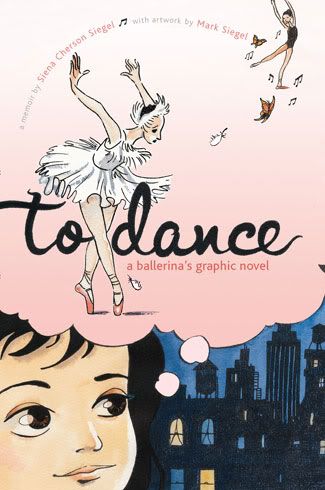
Comic Review: To Dance: A Ballerina's Graphic Novel

A slim book that I picked up at the local library, this was a book that looked more like middle grade reading than young adult but it seemed interesting and I flipped through a few pages which also seemed fairly interesting so I thought why not. I'll also admit that the next few comics I'm reviewing are rather large so I wanted a few shorter works as well in case time got tight and I needed to read something really quickly to keep the reviews here balanced. Besides, I like stories where dancing is a major focus so this kind of story seemed right up my alley.

To Dance: A Ballerina's Graphic Novel by Siena Cherson Sigel and art by Mark Sigel

 Summary: An autobiographical story of Siena Cherson Sigel growing up dancing in the 1970s and 80s, first in Puerto Rico and then at the American School of Ballet in New York City.

The Good: It's a quick and charming read that's sure to make the reader wish they did ballet (or that they could go see one soon) even though Siena mentions some of the hardships she had doing ballet. That said, a lot of sports stories focus a lot on the pain and the things the athlete has to give up for their sport (sometimes leaving the reader wondering why they keep doing the sport in the first place) but this book maintains a happy, positive tone the whole way through and it's easy to see why Siena was willing to give up other parts of her life for ballet, her love for it comes through clearly.  

The Bad: Sometimes the transitions between sections were a little rocky and it would have been nice to have even a single reoccurring minor character, very few people in the story are even named which is a bit unusual for any story. This could be explained by the fact that that story was rather short and every panel had to be important but I would have liked the story to be a little longer and give more details on various parts of Siena's life. The story felt complete but I felt like she could have kept the readers attention just as well if the book was a little longer. 

The Art: The book is in full color and the art style is a light and slightly sketchy style which I feel like I've seen in other graphic novels aimed at this age group. The art is a little simple but it works well to compliment the story and, with something as visual as dance, it adds to the story and I think makes it work much better than if Siena had tried to explain everything using just words. 

I think this book is a good example of middle grade writing that's interesting and done well enough to appeal to older audiences as well (which is why I keep reviewing it, I'm trying to find those books that are good regardless of your age). I would love to know more about Siena's life or read more stories in general that feature ballerinas, too bad that not many come to mind right off hand. 

Thursday, September 29, 2011

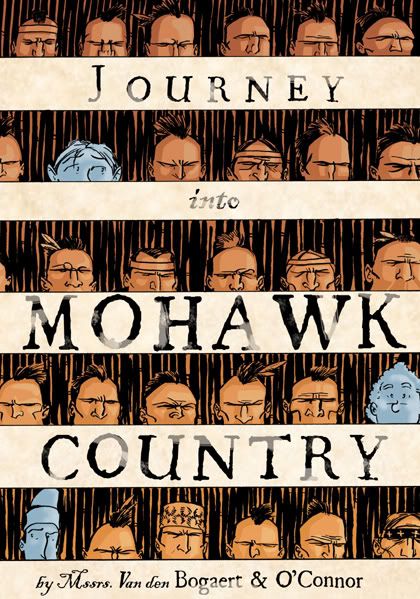
Comic Review: Journey Into Mohawk Country

Still having trouble with my google account but I've at least worked out a way to log on here, it only involves four steps and two websites which is three more steps and one more website than it should be. It's funny how much effort you're willing to put into something, sometimes you won't want to put in any effort and sometimes you'll put in tons since you know you'll like what you get in the end. Here I'm perfectly willing to walk to the local library (about 15 minutes each way for me, not bad at all) if it gives me access to more comic books yet I hate taking those extra few minutes to log into this blog. And this wasn't even the greatest comic I've read this year, just an average one, although this could be explained by just how much I love that I can even go to libraries and have the chance to read awesome and not so awesome things.

Journey Into Mohawk Country original text by Van de Bogaert and art by George O'Connor

Summary: With text taken directly from the translations of Van de Bogaert's journals, an Dutch explorer early in America's colonial history, O'Connor adds to the story with images

The Good: At this library the young adult and middle grade comics are all put in the same place and I feel like this work was aimed at middle grade readers and that I would've liked reading this back in the fifth grade when we were just starting to learn American history. Actually, all of the American History classes (and World History sadly) I've had since have always focused on the same pieces of history so it was nice to read something a little different, the Dutch colonization of America was never discussed much. It was very interesting to see a happy relationship between the colonists/traders and the Native Americans, one where both sides seemed to respect each other and be interested in each other, I only wish that's how things had continued during the rest of history.

The Bad: I'm sad that there aren't more historical comic books (either educational in nature or merely using a historical setting) for both MG and YA audiences, this book reminded me of how much I enjoy them. As for the story itself, as much as I liked O'Connor's additions to the story (I would have missed a few innuendos otherwise) there were times when he started adding in bits and I couldn't see where he had gotten the inspiration for them. At times it made me feel like I was reading two versions of the same story at the same time which isn't a good thing, basically I wish he was a little less creative in some of his interpretations.

The Visuals: The art is on the "cartoony" side but I think it would appeal to middle school kids which makes it a good thing. The art is consistent, colorful without feeling unrealistic and everything flows well. There are times when the font is hard to read so I wish they had either used a font that looks less like old fashioned handwriting or had simply made it bigger (each page was crammed full of panels so larger text could have presented a problem) but by and large it was readable and interesting to look at.

And okay book but I think that people much younger than me would enjoy it more and I think it would be a great thing for them to read so I'm happy with it. Been getting a lot of comics out of this library recently actually so I should be set for reviews for a while now, well, if I can find time to read them all that is.....

Sunday, June 26, 2011

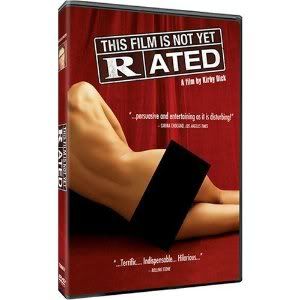
Movie Review: This Film is Not Yet Rated

While I've got a nice sized buffer for anime and books right now and a small one for comics, I don't have any for movies/tv shows so I was a bit worried this week when I realized I wasn't going to be able to get to my planned movie after all. After a bit of frantic searching on Netflix I realized that another movie I was planning on watching, This Film is Not Yet Rated, was playing so I turned that on and almost turned it off after the first few minutes which, erm, had an awful lot of censor bars for a reason (although, if the film is not rated, that's not just the title, does that mean they even needed the censor bars?). I'm simply not really a fan of sex/tons of nudity/really graphic violence in general (although it was more of the first two here) but since I've heard a number of good things about this movie I turned it back on and I'm really glad I did.

This Film is Not Yet Rated

Summary: In this documentary by Kirby Dick, he explores the shadowy MPAA's rating system, how they decide what to rate a film, how the appeals court works, discovers the identities of the mysterious raters and talks to some directors whose films were rated NC-17 and why they felt that this was an unfair rating. 

The Good: The film has a number of interviews with various directors (and one or two actors) on what made their films NC-17 rated (if they knew, sometimes the MPAA won't even tell them what they need to cut) and why they thought it was unfair and honestly, it was an awful lot of evidence that the MPAA is a flawed system. There were many examples, confirming things I had already heard, that violence is okay, sex is bad, men enjoying themselves might be okay, women enjoying themselves is bad, straight sex might be okay, gay sex is not, ect. The reveal of who the members of the MPAA board was done in a great, dramatic yet not overly dramatic fashion and really feels like a crowning moment of awesome for the film, it's almost hard to believe that the film still has a few tricks up it's sleeve after that. 

The Bad: There is a good reason that the identities of the MPAA raters aren't known, these days people will send death threats over everything it seems, although the film points out that these raters aren't the kind of people the MPAA says they are and, after seeing how everything works, that argument doesn't hold as much water as it did in the beginning of the film. The film also doesn't suggest an alternative to the MPAA, which would have been a nice, final nail in the coffin for them, but since the purpose of a documentary is to report on how things are, not necessarily how things should be, I'm not sure how well that idea would have worked in the film. 

The Audio: Almost all the audio in the movie came from either the interviews with the various directors, from the footage of the various films, or from the investigation. Even when the characters are going undercover with the secret cameras the audio is alright, although for several parts towards the end they had to use actors to re-create the audio. Still, that's hardly the director's fault and those extras bits really do help add to the movie.  
The Visuals: The film is a documentary so there are no frills or gimmicks added to the visuals, it's just video and pretty consistent in it's quality. As with the audio, there are times they use undercover cameras and the film quality is noticeably poorer but that's expected with spy cameras, if you have a camera that small then it doesn't have much room for the technology needed for a nicer picture. 


I was surprised at just how interesting this documentary was, especially since I had already heard stories about how the MPAA is sexist/homophobic/thinks violence is better than sex, and there was plenty of evidence from the various films that there is some kind of double standard going on in the industry. Personally I only use the ratings on a film to figure out how much violence I should expect ("hmmm, Zombieland is R rated, there's going to be a lot of gore in it isn't there?") but now I worry that too many people rely just on these ratings and don't check out wonderful movies because of them. So I really recommend this movie, it's on Netflix and I found it at the local college library as well so hopefully everyone else can find it as well!

Friday, May 6, 2011

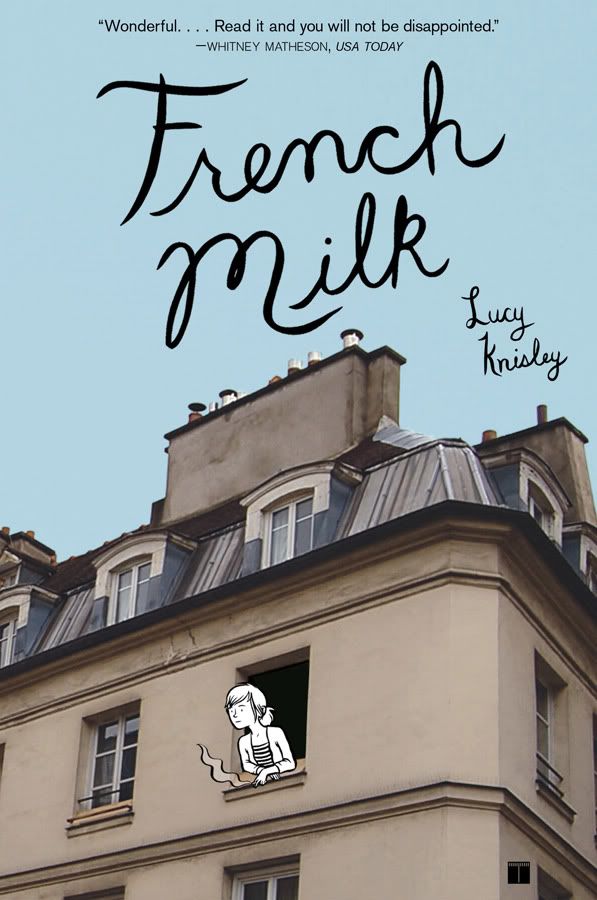
Comic Review: French Milk

Well, I had HOPED that this would be a review of the rest of the Akira manga but someone else at my school went around and snatched up all the books with a week left to go in school so I wasn't able to get to the last two books. It's a bit odd that those books were checked in all year and that someone checked out books five and six while they still had a request on book four (which I had out), I'm calling it a conspiracy until further notice.
SO, I grabbed this book at my local library simply because it had the same color cover as The Magical Life of Long Tack Sam which seemed like a good reason to pick it up. Plus I like travelogues so travelogue+comics=my kind of reading!

French Milk by Lucy Knisley

Summary: To celebrate her mother's 50th birthday, almost 22 year old Lucy and her mother decide to rent an apartment in Paris for five weeks and just take in the sights and experiences of the city.

The Good: The story flows better with pictures than if it had been all words and the entries have dates so it's easy to track their progress on the trip. It's a light read and a quick one as well (I think I read it in about a day, not that graphic novels that horribly long to read to start with) and it's not badly written at all. It's just a bit, fluffy.

The Bad: In the end, the book feels a bit shallow. Lucy complains a great deal about being stressed (understandable to an extent), not sleeping well, and missing her boyfriend a lot (but shouldn't she have expected that one?). All of that combined over the whole book made it hard to keep sympathizing with her, it makes you wonder why she even went along to Paris in the first place. Also, part of the fun of a travelogue is finding about neat little places that guidebooks don't mention and really getting a feel for the place through the writer's experience. That didn't really happen here, Lucy and her mother visit just the normal tourist destinations in Paris and it didn't feel like they or the reader learned anything new about the place during their trip.

The Art: There are a few photographs scattered throughout the book but by and large the book is told through hand drawn pictures/hand written accompanying text.  The art isn't particularly detailed, it's actually rather simple looking art, but it moves the story along and stays consistent. 


So, starting off the summer vacation with a dud, not a very encouraging thought now that I think about it but, since I've nearly gone through the libraries collection of graphic novels anyway, I'm not sure how many comics I'll be reviewing this summer anyway. Guess I'll just have to get creative as to where I'm getting my reading material then....

Friday, April 29, 2011

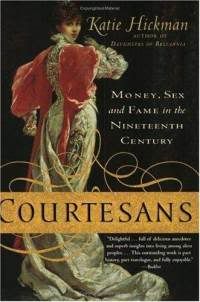
Book Review: Courtesans: Money, Sex, and Fame in the Nineteenth Century


Back in December I was finishing up reading Flapper and was thinking that I should read more nonfiction books just for the sake of reading something different. A few days later one of my friends posted on facebook that she had just read a really good nonfiction book entitled Courtesans and I thought it sounded fairly interesting myself. My local library didn’t have it so I couldn't read it over the break but my school library did so I slowly worked my way through it over about a month and I’m rather happy I did.

Courtesans: Money, Sex, and Fame in the Nineteenth Century by Katie Hickman
Can't really comment on the cover since my copy of the book didn't have a cover but I do like it, bit too much text though.

Summary: An account on the lives of five different courtesans (Sophia Baddeley, Elizabeth Armistead, Harriette Wilson, Cora Pearl, and Catherine Walters) which explores their lives and the time and place they lived in.

The Good: One complaint I had about Flapper was that the later bits of the book weren’t as structured as the first half (it would start off talking about one girl and then switch to another girl, and then another and pretty soon there would be no connection to the previous girls at all) and Courtesans didn’t have this problem. Each chapter focuses on one girl and, while it doesn’t hesitate to go into the backstory of their lovers or the people around them, the writing works its way back to them and then continues with the girl’s life. I was also hoping for this to be a feminist book and it was, discussing how it wasn’t necessarily the fact that these girls performed favors for money that shocked their lovers but the fact that they were women who were independent from men that did. The book managed to show this instead of having to explicitly come out and say this so I thought it was a very well written book.

The Bad: A time line would have been a nice bonus with the book since, by the end, I was starting to get confused with what happened when or even what time period the events were in. Not a necessity but I would have liked the book to mention dates more often so I could ground myself a bit better. Other than that, each courtesan’s story seemed to build on the one before it and all were different enough to make the book feel like five connected stories, not one story told five ways, and I’m impressed it pulled that off, it’s a very well written book.


Tomorrow and Sunday I'll be doing something a little different, instead of regular reviews I'll do a two part summary on the spring anime I've tried so far, partially because it's exam week for me right now and I'm hoping these reviews will be easier to write than my regular ones. Then I'm going to take Monday and Tuesday off for my last exams/moving back home and I'll start posting again on Wednesday hopefully. I probably won't be posting everyday this summer (mostly because I've gotten through most of my buffer now and don't have a lot of reviews yet) but I'll still try to get up four a week, I'll figure out my schedule once the summer really gets going for me. 

Saturday, February 26, 2011

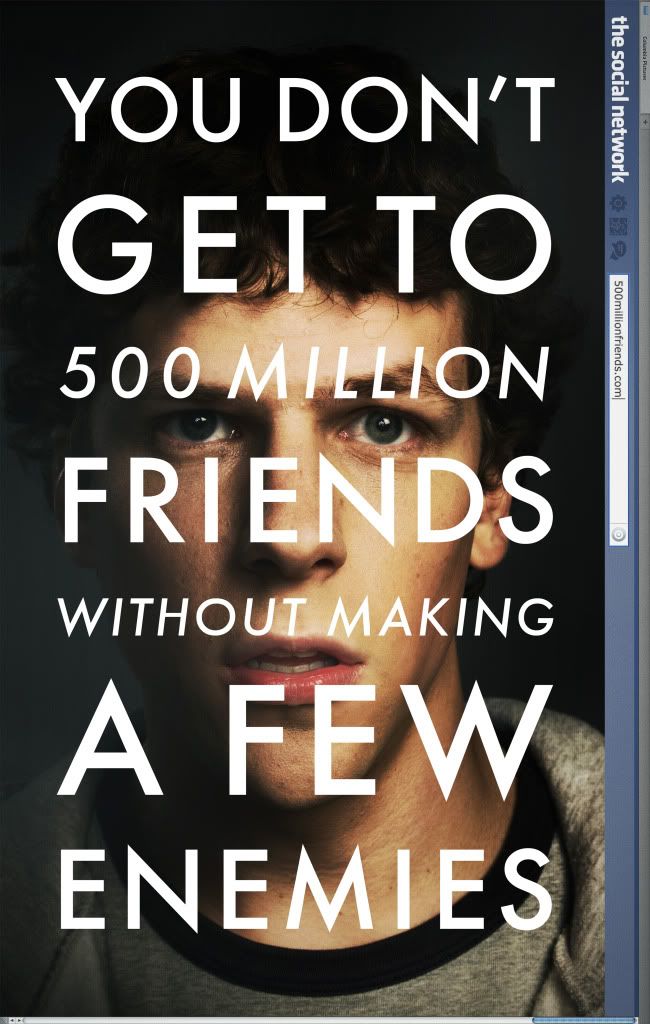
Movie Review: The Social Network

When this movie first came out I didn't have any intention of seeing it, mostly because I wasn't interested and partially because the majority of the people i saw trumpeting the movie were ones who liked Scott Pilgrim vs. The World and I didn't like that movie (ie, our tastes don't match so I probably won't like this one). But it came to school and I planned on seeing it there, until everyone else ended up being busy and it seemed to be ironic to see a movie called The Social Network by myself. So, eventually I got a copy from the library (and figured out how they organize their movies in the process!) and had a chance to form my own opinion on the movie.

The Social Network
Summary: Mark Zuckerburg is the kind of genius that can whip up a super popular website in a couple of hours while drunk. And after he does just that one night he gets noticed by some other people who need a coder to help them get their own website up and running. But Mark is a bit distracted and soon finds himself coming up with his own version of the website and getting in trouble with everyone in the process.

The Good: That was actually a really engrossing and interesting film, color me surprised in any case. It's more of a character study than anything else and the movie deftly balanced the characters grey and gray mortality. The characters actually felt like regular, flawed people and that's really hard to pull off. The movie never tried to make any of the characters be right or wrong in the arguments and settlements (and even acknowledges these questions towards the end) and I liked that a lot.

The Bad: I would love to know what really happened at the founding of facebook, I hate historical movies that aren't accurate and feel frustrated that I don't know if this was the true story or not. Other than that feeling of inadequacy on my part, found out via tvtropes that a white actor was cast for a non-white part partially because his skin tone was "ambiguous" and I really find that kind of stuff stupid. So maybe finding out the real story behind facebook would be a good idea after all...


The Music: Maybe it's because I'm a sucker for techno (properly mixed techno anyway) but I really enjoyed the music in this movie. Lots of techno and generally epic music that somehow managed to fit into the movie and I wouldn't mind checking out the soundtrack for this. I not only noticed the music (on a first watch!) but enjoyed it so yes, good music here.


The Visuals: Much like the music, I was surprised at how much I liked the look of this movie. There were a lot of long pan shots that would show the surround area, focus in on Mark and then keep moving with him. Usually a pan stops once it focuses in on the important character/object so I thought it was a really cool technique, I'll be keeping any eye out for other shows using it. I also really enjoyed the whole look to the movie. It's a little hard to describe but, it seemed like the lighting in the movie was pretty saturated yet was still dark and it just looked cool.


This is the kind of movie I'd actually recommend to a lot of people and plan on doing so. It's not action or mystery or any kind of movie I normally like but the story was well told, interesting, and made good use of it's visual medium. Don't think I'll be buying this on DVD but I'll probably rewatch it sometime and hopefully enjoy it just as much then.

Monday, December 20, 2010

Book Review: The Magical Life of Long Tack Sam

One of the first things I did back in town was go to the public library (and discover that I should've checked online to find out that Guardian of the Dead was at a different library) and I briefly browsed the comic section and came across this book. The Magical Life of Long Tack Sam is a memoir that's mainly pictures and mini comics, hence why it was in the comic section, but I picked it up since it covers Long Tack Sam's life throughout the 20th century and that really caught my fancy.

The Magical Life of Long Tack Sam by Ann Marie Fleming
Summary: Ann Marie Fleming decides to research her great-grandfather, the Chinese magician Long Tack Sam, on a whim and ends up traveling all over the world talking to dozens of people and wondering why the rest of her family has forgotten this peace of history.

The Good: The book was easy reading and the history in it was quite interesting. The 20th century was simply filled with strange and dangerous times and since the story focuses on a Chinese magician/acrobat who is traveling the western world while preforming it's a very interesting lens to look at history from. The prejudices of the time, the people they encountered and the feeling that the world marches on no matter what (like with WWII and the unrest in China) made both Long Tack Sam and to an extent Ann feel like very real people.

The Bad: I think I've mentioned it before but it's harder to review nonfiction since, well, you can't complain about the characters, the setting, or even the pacing in some cases because it's real life. I can say that Ann ended up talking to so many people (and even had so many people in her family) that that became confusing towards the end and I wish she had a list or a chart in the back to keep them straight (there was some family tree but it just showed how many guys and gals of her family were in each country and didn't give names).

The Art: Apparently this was originally a Sundance film (which makes sense considering the author/narrator says that she's a filmmaker) and I think this didn't work as well as a book. The arranging of the panels was a bit confusing at times (much more so than many webcomics I read) and the author didn't seem to have well, any artistic skill. She used a stick figure (literally, I'm not using hyperbole) to represent herself and that was really jarring considering that most of the panels were stills from the film, posters, or in a few places actual comics drawn by someone else. Visually I felt the book didn't work and, since it's an illustrated memoir this is a pretty big problem.

I wish I had seen the film version of this instead of the book since I really was interested in the story but the visuals just didn't work that well for me. I'd certainly recommend the book to anyone who likes this kind of story but not to people who like comics more than real books. It reminded me a bit of Japan Ai: A Tall Girl's Adventures in Japan (really need to get that because it was published by the now defunct Go Comi!) but Japan Ai managed to combine the images and words in a much smoother fashion.

Sunday, December 12, 2010

Book Review: In the Footsteps of Marco Polo

Even though he's a European I don't recall learning that much about Marco Polo in school. Maybe a day or two here but it was along the lines of "he went to Asia along the silk road and opened it up to foreigners but some people don't think he actually did it!"* But the guys who wrote this book, Fran and Denis, clearly knew more about him than most and loved the book Marco Polo dictated and went "hey, what if we were to try that...?"

In the Footsteps of Marco Polo


Summary: Like I said, two guys are inspired by Marco Polo's travels and go out to be the first people to retrace his entire route (they mention that some people had tried before but no one had managed to get everywhere). Takes place between 1993 and 1995 so having a memory of what was going on at the time would've been a nice thing.
The Good: I don't know much about some of the areas of the world they went to so it was fascinating to read about them for the first time. I loved the little details included in the story, like the people they met or the surprising number of places where Polo's reports matched up with what they saw over 1000 years later (and after finding out how long Polo journeyed and how many years later he told the story I'm even more impressed at how close it all was). In this kind of story (it was more of a travelogue than anything else, just travel with a history) it really is the details that make the story and make it memorable.
The Bad: There were times in the book where I felt like a section or even a whole chapter was missing or the guys would allude to something they didn't show or tell and that left me feeling frustrated. And the book had a hard time in some places for balancing the travelogue aspect with all the information about the area they were in (which was really necessary since a lot of the book takes place in the back mountains of the Middle East)
The Photography: I could tell that the photos in here were film not digital because of the grain in places but I think that's just me being a photo geek** and grain does bother me a bit in photos. But photos were all amazing, whether it was mountains, the people, or even objects they came across, each time I turned the page I had a hard time deciding if I should read the text first or stare at the photos. The book cover says that there is a made for tv movie/documentary/mini-series (wasn't sure which) and I'd love to watch that to see even more of the amazing photos.

I've only recently become interested in travelogues and memoirs so I haven't read many but, since a good chunk of the story took place in the Middle East mountains, I was reminded of Three Cups of Tea a number of times in it. Other than that I can't think of any more suggestions but In The Footsteps of Marco Polo was a nice bit of light reading with some great photos and tons of amazing people the world over.

*And I'm the kid who went to private schools too, no American school system as a convenient scapegoat here, unless American schools in general suck.
**Actually no, me being a photo geek is seeing the grain and go "someone wasn't using 100 ISO" and then realizing that 100 ISO film wouldn't work well in the places they were going, THAT'S geeky.