Showing posts with label Cassandra Clare. Show all posts

Saturday, November 17, 2012

Book Review: City of Lost Souls

Funny enough I got both this and Clockwork Prince from my library at almost the same time (which, due to the number of copies available for each/the number of holds for each I didn't expect to happen) and I read this one second because, well, I was looking forward to this one less. TMI is a series where I've slowly out-grown it as I've grown up but I keep coming back since I do like a lot of the side characters and I really hate to leave a series unfinished, especially one where I'm already two-thirds of the way done with it. Silly reasons, especially considering how many other books out there I could be reading but oh well.

The City of Lost Souls by Cassandra Clare
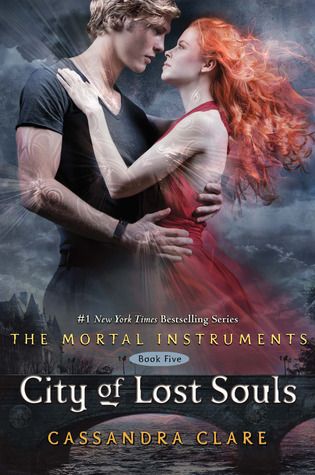

Summary: At the end of the previous book Jace (and the previously thought dead Sebastian) ha vanished and Clary discovers just to where, apparently a bond has been forged between them and let's Sebastian control Jace and is using him to help him do what their father could not. Clary charges after them while their friends left behind have their own problems to deal with and once again it seems as if the fate of the world lies partially in their hands.

The Good: The parts that revolved around the side characters (Simon, Magus, etc) I found to be a lot more interesting and there was some nice world-building in the story as well. I really do like the world Clare has created and it's surprisingly detailed, I just wish that the story had more of a chance to explore it. The most interesting side detail in there is that I *think* there was actually a cameo from a rather important character from The Infernal Devices in there (not Tessa although she's mentioned in here again, not by name and I don't consider this a spoiler since she did appear, again unnamed, for a scene way back in City of Glass). I'm mentioning this since I'm rather impressed, if I'm right then it was a very subtle and clever cameo (a quick search on tumblr says that the rest of the fandom thinks it was a cameo but is split over who it was) and I really am curious to see what happens in the next book because of those little details and the side characters. 

The Bad: Ehhhhh, as I mentioned earlier, I feel like I've outgrown a these books and a lot of it has to do with the fact that the characters haven't aged much over the years so sure I used to connect to fellow 16 year olds rather easily, these days not so much. I also feel like this book had the opposite problem of Clockwork Prince, while that story didn't have a real climax in it (and I thought needed a bit more tension) this one tried to pull an end-game climax and it was hard to take it seriously since guys, there's one more book, even if the characters succeed with their crazy, evil schemes it's clear they won't completely win. I feel like this one could've used a smaller climax to it (and then sent some of the extra over to CP?)  although this is the awkward problem that most trilogies have so I wasn't really expecting otherwise.


So, I'll be reading the last book whenever it comes out and I'll see the first movie when it comes out next August. The first trailer is out and it looks about how I expected it so so far so good. I'm just hoping that next time I won't end up reading the two books back to back, I just prefer not to read works by the same author/same series back to back and didn't have a choice this time around with all the people who had a hold on the book after me. 

Saturday, November 10, 2012

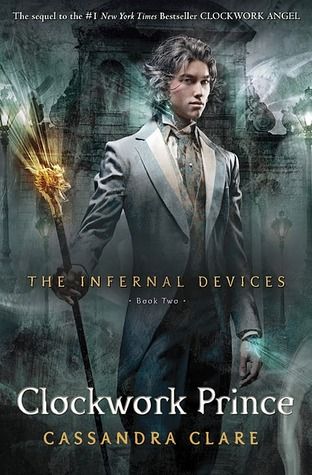
Book Review: Clockwork Prince

I think by now I am enjoying  the ID series more than TMI (even though I never quite like either as much as I want to, they're just missing some spark to draw me in completely and feel a bit flat without it) although judging how long the hold list was for both of them at my local library I think it's the opposite way around for most people. Regardless, I got a hold of both this summer (I was really doubting at one point that City of Lost Souls would come in before I went back to school) and I'll be talking about CoLS next week which is interesting since I think that had the first deliberate cross-over between the two series (aside from Magnus anyway), but more on that next week and that's only a theory of mine anyway.

Clockwork Princes by Cassandra Clare


Summary: After the fight with the Magister in the previous book Tessa feels closer to her new Shadowhunter friends but her position of safety is threatened since if they don't catch him soon all of them will be out of a place to live and more vulnerable than ever. Tessa, Will, and Jem all pitch in to help find out more about the Magister's past (and Tessa's on the side since they seem to be connected) but the more they find out the less makes sense.

The Good: The whole novel ends up being build-up and it's not as terrible as that sounds. Yes it's true that Will got the most character development out of everyone but many of the side characters got some development, if anything Tessa got the least probably so whatever is going on with her will be revealed during the climax in Clockwork Princess. I do remember complaining in Clockwork Angel that Magnus had a lot less page time than I expected and that was rectified here. He was one of the more prominent side characters and it was interesting to compare how much he's changed in the roughly hundred years between series and I do hope that he has a large role in the final book as well.

The Bad: As I mentioned in the intro, despite really trying to like these books they all still lack some "spark" that I need to get really invested in them. This series has everything that should interest me, slightly older characters than TMI, a setting which (while not new) isn't as cliched as expected, the fantasy/magic part of the setting is well thought out and has a lot of ideas in there and Clare makes good use of them (a pet peeve of mine is when there is a really interesting background detail and then the author doesn't utilize it at all, not a problem here). And despite all of that, I'm still not hooked on the series, it's just one where I'm more than content to put my name on the list at the library and read something else instead of agonizing over the wait. Another weird thing which I also can't pin down why I don't like it is how the romantic triangle is going. Tessa has ended up with the guy I wanted her to but there are hints that she doesn't like it/that it will end badly/it will just be complicated for the sake of plot* which is practically the epitome of why I don't like love triangles.


I do plan on reading Clockwork Princess next year but I'm not holding my breath for it. Well, and considering how long the line will probably be for it at whatever library I get it from that's probably a smart idea. And I am also curious how the movie for City of Bones will turn out and, barring reviews that say it's absolutely terrible, I'll try to catch that as well (although that's not until next August so that's even farther in the future).  


*normally this is the part where I make a snarky comment about how everything could be solved with an OT3 but there is an actual reason why that wouldn't work here, well, two considering that I don't expect Jem to live through the last book at this rate.  

Saturday, April 21, 2012

Book Review: Zombies vs Unicorns

Considering my overall impression of the Mars anthology was only lukewarm at best it may seem a bit odd that I decided to read another anthology immediately afterwords, the only explanation I can offer is that I'd been meaning to read this book for years (I followed Justine's blog back when she was still able to update and might have been around for the original blog post). So, knowing full well that just because an anthology is hyped well and has a lot of authors in it that I like doesn't mean that it's going to be good (I'm looking at you Geektastic) I decided to give this one a shot anyway.

Zombies vs Unicorns edited by Holly Black and Justine Larbalestier

 
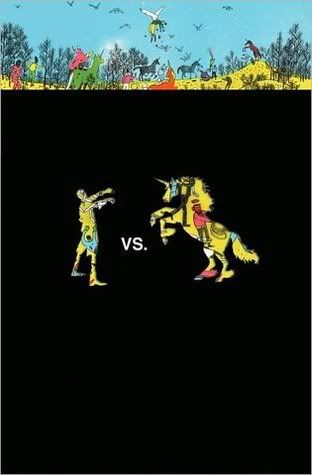
I'm curious how the paperback cover works since the hardcover book here has the black dust jacket with cut-outs of a zombie and a unicorn which can be removed to show a mural of unicorns and zombies fighting each other printed onto the book cover itself. I think the dust jacket idea is clever although I'm not that fond of the art style used for the images themselves, it's a neat idea regardless however.
 
Summary: Originating from a debate in the comments of author Justin Larbalestier's blog, she and Holly Black head up this anthology which compare zombies and unicorns with 12 stories from well known young adult authors who try to prove why their side is better.
 
The Good: I was quite pleasantly surprised to see that not every story in the anthology involved romance, I simply like a break from it sometimes, and that there were two LGTB romances in the anthology as well (oddly enough both zombies, "Love Will Tear Us Apart" by Alaya Dawn Johnson and "Inoculata" by Scott Westerfeld), a very nice change of pace overall. There are some stories in here which I’m confused if they were written to be parodies (all unicorn stories, Meg Cabot’s "Princess Prettypants" and Naomi Novik's "Purity Test")*  but they ended up being so genuinely hilarious that in the end I ended up not caring, I had fun reading them. Fun actually sums up a lot of the anthology, given my bad track record with anthologies I really wasn’t expecting much out of this one yet I enjoyed it and can see why so many other people have as well.
 
The Bad: I’m simply not a big fan of dystopias, for reasons that deserve their own post someday, and since a number of the zombie stories were set in dystopias I didn’t like them as much (which may sound harsh but as I’ve said before, it’s not plot but setting that’s the most important part of a story for me and that’s extra true with such stories like these). None of the stories were bad however, there were just some not to my taste and only about half of them stuck in my mind only a month after I read them which speaks volumes on it's own.

Probably the best anthology I've tried in the past few years but since it had been at least six months between whatever my last anthology was an the Mars one that's not as grand a statement as it sounds. Not sure if I would want a copy of my own for rereading but I'd certainly recommend this to many of my friends, it's a fun book with variety that I can see appealing to a lot of people.
 
  
*so zombies do romance and unicorns do comedy? No wonder I like unicorns better

Wednesday, August 31, 2011

And now for something different, Diversity in YA literature

Hopefully one or two people here remember that when I reviewed Huntress (YA novel by Malinda Lo) that I linked to a contest of sorts that some YA authors had set up for the summer. The goal was to get more people reading books with more diversity in them (which I'll define in a second) and then to do a short write-up on what they read in a public place for a chance to win quite a few books. I like contests and I like books, plus I was going to spend my entire summer reading anyway, so I decided why not try this out and just be more aware of what I was reading. For the contest they defined the word "diversity" as meaning:

(1) main characters or major secondary characters (e.g., a love interest or best friend kind of character) who are of color or are LGBT; or (2) written by a person of color or LGBT author.
LGTB stands for a character who is lesbian, gay, transsexual or bisexual (and even within that group of characters you're far more likely to find a character who is a gay or lesbian versues one who is trannsexual, between everything I've ever read or seen I can't think of more than ten trans characters) and I'll also be using the short hand "PoC" which stands for Person of Color (basically anyone who isn't of predominately white European ancestry, I counted biracial or Hispanic characters as PoC). 

So, to start, I'll admit that I didn't go out and look specifically for authors with names that made me think that might fit in one of those above categories since, well, the only time I ever look up an author's name is to write a review here actually (that or if the writing is bad I check to see if it's their first book). That and the fact that when this contest was announced in late June I already had a super tall stack of books to read, some of which I've finished but haven't gotten around to reviewing yet. I will link to the reviews I've already written and I'll add in more links as I finish them up although that probably won't be for another three weeks at this rate.

To start with, the book that best fit the contest's description was Malinda Lo's Huntress which not only centers around two lesbians (without gay angst! they have real reasons that being in love is a problem!) in an Asian-inspired setting (as reflected by the book's cover, this also applies to her earlier book Ash) but the Ms. Lo is from China originally and is also a lesbian. This book was also one of the strongest books I read this summer which is a great, slightly darker take on the quest story archetype with (literal) young adult characters, both of which are things that I don't find in YA literature that much and would love to see more of. I think I still prefer her earlier book Ash just a little more (re-telling of Cinderella except the protagonist is also a lesbian, it's set in the same world as Huntress but a few centuries later) but that's just personal preference, both of the books are great and I'm really happy that I found these in libraries (ie, more people have a chance to read them as well) and plan on getting my own copy as soon as I can.

Next up is two different works by Cassandra Clare, Clockwork Angel and The City of Fallen Angels, two different series about a hundred years apart but with some overlapping cast members and similar villains. One thing that bugged me about Clockwork Angel is that it seemed like how everyone was talking about how Magnus Bane (a bi warlock, who is I believe part Asian) was coming back to this prequel series so I was expecting him to have a good sized role but he appears in very few scenes and didn't really seem to be needed in them. This being the first book in a new trilogy it's highly likely that he will play a larger role later on (his role in the first series certainly got bigger as the story went on) but I'm still miffed that one of only two diverse characters in the series is being billed as an important character when they only have a bit role. As for the other diverse character, well, there's a problem or two there as well. This character is Jem (a shadowhunter, think magical police made up of only the beautiful people) who is half Chinese half British and an interesting character but he comes off feeling a bit, flat. First off, it's strange that he identifies as half Chinese half British (shadowhunters hate anyone who isn't a shadowhunter, including "mundanes" so why they would choose to identify themselves with mundane words is strange), plus, for plot reasons, it sounds like Jem doesn't look Chinese at all, which also bugs me, and finally, Jem is living in a time period where British people didn't like Chinese people yet he experiences no discrimination at any point in the book. I'm not saying that someone who is LGBT/PoC has to be discriminated against in a book for it to feel realistic but here it seems to go against the setting since it didn't happen, it really makes it feel like Jem is a token minority who is needed for the "exotic" angle of the love-triangle being set up in the book.
Thankfully I had fewer issues with City of Fallen Angels, perhaps because all the characters were ones from the earlier books in the series. Magnus is back, with a slightly larger role, as is Alec (a shadowhunter who is now in a relationship with Magnus) and Maria, a biracial werewolf (who's also a gamer girl) whom I adore, probably since she comes off to me as one of the more rounded characters in the series. So I think that City of Fallen Angels does a little better in the diversity aspect than Clockwork Angel but neither are series that I would recommend based on the diversity alone.

A bit after these two books I read A Love Story Starring My Dead Best Friend by Emily Horner (the review for that should be up Saturday) which I initially picked up because of the title, read the inside flap and then did a double take when I realized that the main character was a lesbian, being a bit cynical I hadn't expected to find two books this summer with lesbian protagonists and, while I probably would have read this book on my own anyway, the diversity challenge made me hesitate less about reading it and it ended up being my favorite book this whole summer. This story focuses so much on the relationships between the characters (platonic and romantic alike) and they were all done in such a down to earth and realistic way that I couldn't help but love this book. I'll write more about all of this in my full review but there was just something about the way the characters were written that made them feel like late high school kids who are starting to become adults that really made me love this book, it's another that's on my to-buy list for sure.

Another book that I haven't had a chance to review yet is Rosebush by Michele Jaffe which I had some, issues with, but one of the important supporting characters is a lesbian so the book gets a mention on the list. In fact, there was one section in the book about that I really liked, the main character (Jane) did some experimenting with her friend the summer before the book starts and later on in the book she regrets it since she knows that their relationship meant so much more to her friend than it did to her and that she was just using her friend. I didn't like most of the characters in this book but I did like this moment (probably because it was one of Jane's most self-aware moments) quite a bit.

And the last YA book I got to this summer that fit the challenge's requirements (I think) was Revolution (review) by Jennifer Donnelly. Like A Love Story, the story opens with a protagonist who is deep in grief over a dead loved one (in this case, a younger brother) but Andi and her mother are not dealing with this grief nearly as well so Andi ends up in Paris over her winter break where her father can keep an eye on her as she writes her senior thesis. Intially when I was putting together this list in my head I was wondering whether or not Andi's brother had been gay (there's a little line about him having a crush on Magneto but he's only ten at the time so it could easily have been non-romantic). And then I remembered Virgil, one of the people whom she meets in France whose parents are both from Tunisia. Not long after she meets him Andi asks if his whole family is-French he interrupts (she was going to say musicians) which sets an interesting tone. It doesn't feel like he resents his heritage but it does cause problems in his life (it sounds like he lives in a poor neighborhood, he mentions hate crimes at least once) and he's terrified that because of this he'll be stuck working as a cab driver forever. Basically his problems were the kind I expected to see with Jem in Clockwork Angel but never came up, his setting really had an effect on his life yet it didn't dominate who he was, a tricky juxtoposition but I thought Ms. Donnelly pulled it off well.

Finally, I was reading Anything But Typical by Nora Raliegh Baskin when the challenge was announced and I asked if disabled characters would also count. The answer was yes, although don't let that be all you read, and I honestly think they should count since I can think of about as many disabled characters in fiction (who are more than just a few cliches thrown together) as I can think of transsexual characters. Back to the story, Jason has a variant of autism and this is possibly the most sympathetic book about someone with that disorder that you will find in MG or YA literature. Jason is also the narrator and this let's the audience understand exactly what he's thinking and going through yet it's still easy to see how his actions seem strange and weird to the people around him. It's an amazing feat and incredibly well-written, thank goodness since I would hate to have a book about an autistic character and then not have the book be good enough to be worth recommending, that would be worse than not having any books to recommend at all.

Before I finish up this entry, comics! I know that the challenge didn't say anything about any other kind of media but this was some of the other stuff I read this summer. Plus, there has been a huge kerfuffle recently concerning women in comics (both as creators and characters) and, if comics are having trouble representing 50+% of the population then you can guess that things look hardly any better for minorities.

So I'm going to start off with a bit of an odd one, Fagin the Jew by Will Eisner which may have raised a few eyebrows. A couple of months back I saw a short article somewhere on the internet that called Jews "the invisible minority" which I thought was an apt description and I was thinking of that when I read the introduction to this book. Eisner says that he wrote this book because when he was a kid, all the Jews in the stories were bad (heck, I remember stories one of my religion teacher's told me about how Anti-Semitic Catholics, and I will assume some other Christian groups as well, were even a couple of decades ago) and he mentions in the afterword that Charles Dicken's even revised Oliver Twist later on to be less anti-Semitic (which is the story this one is a retelling of) but most copies today are based on the first edition. Because of that I think that yes, this is a story about someone who is a minority and written because the creator felt like this minority is being under-represented and discriminated against in all the stories they appear in, this counts in my book!

Continuing with Jewish characters I also read both volumes of The Rabbi's Cat by Joaan Sfar. Nearly every character in these books are Jewish (I do recall one or two Christian characters and a few more Muslim characters but it's a predominately Jewish cast) and many of the characters are Algerian as well (since the story is set in Algeria, some characters aren't given a nationality but it's clear that they are also African or Middle Eastern). Surprisingly enough there isn't tons of discrimination in this book (which surprised me since it's also set in the 1930s) but a lot of the story takes place in a predominately-Jewish community so it makes sense. I don't have much else to say since my favorite character was the titular cat but it was certainly an interesting read, everything willing a complete review should be up in the next couple of days.

Finally, I finished up an anthology of Native American tales (Trickster: Native American Tales) in the last few days of summer which I think also merits a mention. Given the nature of the book (and from an afterword that says how the book came about), I suspect that most, if not all, of the storytellers who worked on this anthology are Native American (I'll be looking up more about them once I get to writing a review) so that would fulfill the second requirement of the challenge. Some of the stories feature people but many more feature animals as their main characters so I'm not sure if it fulfills the character requirement but since it fulfills the other one it doesn't matter. Honestly I didn't enjoy this anthology as much as I had hoped but it's another title I'm glad that I found at a library since that means other people have a chance to read it and get exposed to different cultures (perhaps it might be better suited for the children's comic section instead of the teen section though).
 
Finally, a few shout-outs to some books I didn't get to this summer but plan on as soon as I have the time. Continuing with the comics, the manga Wandering Son by Shimura Takako just got it's first volume released in English this summer (I've seen the anime but held off from reading the manga since I knew this was coming) which I'm saving up to get. The story revolves around two transsexual kids growing up and trying to find their place in the world with some other LGTB side characters involved as well. I still prefer her other work better (Aoi Hana or Sweet Blue Flowers) but I can't wait to see the beginning of this story, especially since the anime started at a later point. Also on the list is Luna by Julie Anne Peters which I read years ago (early high school I believe, I didn't even know what a transexual person was so I knew I was missing something in the story but couldn't figure out what) which I recently discovered under my roommate's bed. I've been meaning to re-read it for a while (ever since Tamora Pierce's book Bloodhound came out which featured the only other trans character I had seen at that point) so I will certainly be borrowing that once they're done with it. Finally, if Hispanic characters count then Kit and Carmela from Wizards at War/A Wizard of Mars count for sure (one being a co-protagonist, the other being one of the best badass normal characters ever) which I've just gotten around to re-reading/on my to-read list, both of which are several years over due for it. Carmela is one of my favorite characters ever for the same reason I like Maria in City of Fallen Angels, they're closer to normal than most of the cast yet still manage to simply be very human and realistic characters which makes them interesting and incredibly likable. 


Whew, if you can believe it, this is only part one of my Diversity in YA post. I'm sure that some people, upon glancing at my "most popular posts" list on the sidebar wondered if I reviewed books at all (answer: yes, they're just my least popular reviews by far, happens when you hang out on anime forums mostly) and the fact is that books are only one kind of fiction I consume on a regular basis. So, to cover everything else (anime/manga/movies/tv shows/webcomics) I plan on posting a second post either later tonight or tomorrow. I know that if it goes up tomorrow it probably won't be eligible for the challenge (which is fine) and if it goes up tomorrow I am going to have to push my review schedule back by a day but I can make that work. The fact is that we don't just need diversity in literature, we need diversity in EV-REY-THING since this is a diverse planet, it's stupid not to reflect that. Once I get the second post up I'll link here, just check back in the evening tomorrow (EST) and it should be up by then for sure.   

EDIT 9/28: Howdy folks, time for an update! Since the deadline for the contest got pushed back a month I've taken advantage of that to read some more and let a few anime/movies play out that I hadn't had a chance to see/finish and that's why the second part of the review isn't up yet (it will be up in a day or two however). And I have a few things to add on here since I've done a good bit of reading in a month so here's a quick add on:
I did get a chance to reread Wizards at War and, as mentioned above, co-protagonist Kit is Hispanic and his sister Mela is a supporting character and a nice example of a supporting character that has become a little more important with each book they're in. Darryl, a young African-American kid who was at the center of the sixth book, returns for a quick cameo as well as two kids who I hope become more important in a later book, wizarding twins, whose names I can't seem to find at this moment, whose names suggest that they're from South-East Asia. I know this isn't a lot of characters and it might seem strange to even include the book but honestly it's hard to complain when half the cast are non-humanoid animals/aliens, makes it just a little trickier to have (Earth) diversity in there. 
Also read What I Saw And How I Lied which features a few Jewish characters in supporting roles and, since the book is set in 1947, that ends up being an important part in how the world perceives them. I won't name the characters, since it is a surprise, but I thought that since being Jewish wasn't something that was causally mentioned but something that colored all the other characters perceptions of them that they were worth mentioning here. Also, since the story is set right after WWII there are a few veterans and there was a line from one of them that I really liked. He says that he thought things would be different after the war, after all the Jews and others were horribly persecuted and their deaths had shocked the world, but yet nothing seems to be and that really reminded me of how I felt back in middle school at times. You go through world history, learn about all these terrible things and you (or at least I did) think to yourself "well clearly this all was wrong and we're not doing it now so everything is better" and it's so painful to learn that no, many things haven't been fixed even if people have known they were wrong for years and so I just really liked that line, it made the character human to me.
Had a chance to read some more manga as well and found another Jewish character (I am slightly spooked by just how often they are showing up on this list) in Adolf by Osamu Tezuka. I've only had the chance to read the first volume but the story starts off by saying it's the story of three Adolfs, clearly the first is the dictator of Germany but the other two are two boys living in Japan, one who is half Japanese half German (whose German father is a member of the Nazi party and forbids him from playing it), the other is a Jewish boy who is all German and resents his classmates for treating him differently even though he is born and raised in Japan. Since the half German Adolf is about to be sent off to Germany to join Hitler's Youth I wonder if his biracial nature is going to come into play later on, I expect it to and I'm curious about how some other Japanese characters will continue to be important once the story changes locations again.  
Finally, I've also had a chance to read Journey Into Mohawk Country which is a comic book which takes all it's text from the journals of Van den Bogaert, a Dutchman in New York in the 1600 or 1700s who is exploring the countryside and attempting to create new trade agreements with the local Native Americans. I was rather glad for my fifth grade history class so I recognized the names of the various tribes (abet I had to pronounce all of them to figure out what they were, the spelling is quite different from the way they are today, he deals with members from some of the Iroquois League) and honestly I think it would be a book that fifth graders would be interested to read after their history class. While all the main cast are Dutch (Bogaert and his two companions, they were traveling through so many territories none of the Native Americans were with them the whole time) all of the supporting characters were Native American and Bogaert portrays them in a very honest manner, he seemed to be very interested in the way they lived their everyday lives.

THAT should cover all the books and comic books then, here's what I have written so far for part two (only had enough time to cover the anime section since I wrote a lot about each title) but I hope to finish the rest, erm, soon, think I need to deal with homework first.


Thursday, July 28, 2011

Book Review: City of Fallen Angels

Well it's a bit odd for me to review a book in the middle of a series without first covering the other books but stranger things have happened on this blog. Actually, this book's existence is odd, the author had already completed a triology (the first three books in this series) and was going to write a spin-off comic book about one of the side characters and when that didn't pan out she started writing it as a companion novel and realized that it was actually a three book story, not a one book one. So now she's writing two series at once which seem to still be fairly popular, if the waiting list for the books at my local library is any indication (think I requested this book in late April and got it mid-June, I was about 14th in line and the book had been out for a little while at that point). Because of all of that, I would not recommend starting with this book if you want to read the series (and honestly, who starts with the middle book in a series anyway?) but if you're already familiar with the first three and are wondering if this book is worth checking out then here's a review for you.


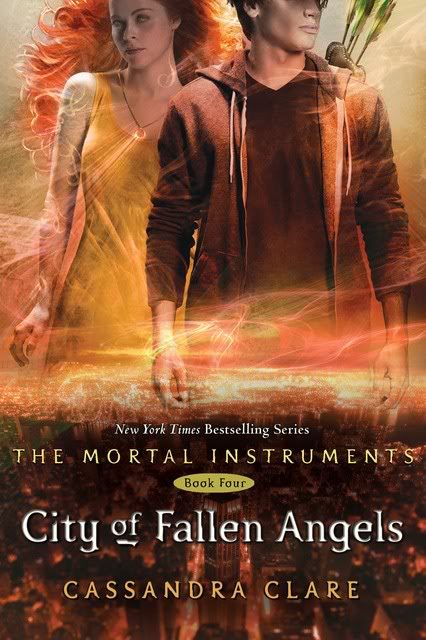
City of Fallen Angels by Cassandra Clare


Continuing with the same style as the past three books there isn't much to say about this one, except that Clary's obviously photoshopped green eyes (they're much more noticeable in person) are really creeping me out.

Summary: The cast from The Mortal Instruments returns and, after the chaotic events at the end of The City of Glass, some things are returning to normal and a new normal is being created for others. Clary begins to train as a shadowhunter, Jace has horrible nightmares that slowly begin to control him and Simon deals with having two girlfriends at once. Guess whose the main character in this story?

The Good: Having Simon as the narrator (well, most central character to this book, it's a third person narration) is actually a good thing since he’s snarky, a pretty nice guy, usually easier to sympathize with than the other characters and he’s outsider so he’s more in the loop than anyone else (as odd as it sounds, he hangs out with a wider variety of people than almost any other character). The book serves to further widen their world, even if almost no new characters are introduced, and it brings in one character from The Infernal Devices but does so in such a way that people who haven’t read The Clockwork Angel won’t be confused. People who are already fans of the series will love this book, it hardly feels like it's been two years since the last book came out, and people who like YA urban fantasy with plenty of romance will like this series as well, this book in particular isn't stronger than any of the other books but it isn't weaker than them either. 

The Bad: While trying to stay as spoiler free as possible I shall say this about the ending, I think they killed the wrong villain. It seems as if they killed off the much more interesting (and probably more powerful) villain so it's disgruntling that the characters will now (presumably) have to spend the next two books killing off the other villain (which also probably could have been avoided). Simon’s love triangle was also resolved awfully fast, incredibly conveniently as well, and yet the two girls (Isabella, shadowhunter who likes going out with downworlders who her parents would never approve of and Maria, a bi-racial werewolf in Luke’s pack who initially hated Simon for being a vampire) acted rather out of character for the whole thing*. In the end, it feels like this book wraps up neatly and everything is going fine and then oh hey guys, you forgot something, let’s watch it cause problems for two more books! At this point I'm just not sure how this is the start of a multi-book story, if the characters were smart this would have been a nice, one-off side adventure.
 
While I'm happy that my favorite side characters reappared after all (Mangus, Maria, I'm not that fond of the main cast) and I do think I liked this book more than Clockwork Angel I found myself yelling at the ending which isn't a good sign. I don't yell at stories when I don't want them to end or when it's a cliffhanger (I read manga/webcomics, I deal with cliffhangers on a daily basis), I yell when the characters do something dumb and I thought they were clever enough to think ahead. I will probably try the next book, just to see if my guess about the villain is correct, but I just don't find myself liking these books as much as when I first read them back in high school.   


*it’s true that I wanted the other pairing to happen but I do really think that Isabella contradicted herself, by saying it was okay for her to be non-exclusive but Simon couldn't (bit of a weird gender-flip take on that one actually, yes she does explain herself but it seems like a bit of a stupid excuse). And Maria was surprisingly mellow when an old flame of hers came back to town (in order to make this all really complicated) and this is despite the fact that she hasn’t gotten much more mellow since she was introduced, there hasn’t even been enough time for serious character development.

Wednesday, July 6, 2011

Book Review: Clockwork Angel


Before I left school, probably when I was procrastinating on studying, I glanced through the catalog of the library near my home and discovered that they had both of Cassandra Claire's new books and requested both of them, good thing since I was 15th in line for City of Fallen Angels and about sixth in line for this one. For whose who aren't familiar with the series, this is the start of a new series, The Infernal Devices, and is set in the same world as her other series, The Mortal Instruments, but over a hundred years earlier in Victorian times. Since there are a couple of long-lived characters in this series there is a small bit of crossover but I don't think that someone needs to have read/even know the general gist of TMI to read this one (also, not abbreviating that again, that's just awkward).

Clockwork Angel by Cassandra Clare
In a rather nice touch, this cover looks similar to the covers for the first series (one of the major characters against a backdrop of the city) but has a few differences (like the character being in parallel and not having their face obscured). I like the color scheme a lot although I do wish it was Tessa on the cover (I'm assuming this is Will on the cover) instead since the story is told mostly through her point of view for this book.

Summary: Tessa, a girl from the US who is now on her own, finds herself traveling across the pond to Victorian England in search of her brother but instead discovers a world of magic with warlocks, vampires and werewolves all at each others throats and constantly wary of Shadowhunters, the humans who keep the peace. Tessa alerts the Shadowhunters to an underground plot to create an army of clockwork monsters to overthrow them all and must come to terms with the idea that she herself is not quite human.

The Good: The story has a good sized cast and all of them get at least one good scene and there is a surprising number of badass normals, many more than in The Mortal Instruments. Another nice improvement is that, while part of the conflict is wrapped up at the end of this story, it feels very much like a series instead of a few books with the same big bad creating new problems each time (although I may feel differently by the end of the series). There is a sequel hook at the end of course (several actually) but even with those I would be content to read this as a stand-alone book. 

The Bad: From the way the book is written it seems rather clear where the love triangle is going (one character has a death flag and the other is a narrator at times, either one would be a big clue) and that begs the question, why write a love triangle in the first place anyway? True I’m not a huge fan of love triangles, and I would prefer the pairing I don’t believe is going to happen, but it still bothers me. I was also sad that Mangus Bane, who was a fairly important side character in The Mortal Instruments (and it seemed like the author hinted that he would have a large role here was well) had a very tiny role and he was also the only non-straight character in the entire work which was also sad. Sure there often aren’t a lot of LGTBQ characters in period works but nothing says that you can’t have them, plenty of other authors have found ways to work those kinds of characters in.


I didn't enjoy this book as much as I hoped it would, especially since I saw about a million, fangirlish reviews for it (yes it was THOSE reviews that helped motivate me to start this blog) and didn't find anything about this book to be extra-special/special enough for me to remember it and suggest it to friends. Perhaps I'll like the series better after another volume (ie, after the character development kicks in)  but for the moment I'm not holding my breath. 


Also, forgot to say this earlier but, I'm NOT going to post a movie review tomorrow since I just haven't had any time to watch anything, still catching up with anime I missed while I was gone. I will post something new tomorrow to make up for it and things will go back to normal Sunday, sorry for all the weirdness!

Tuesday, January 4, 2011

Book Review: Geektastic: Stories from the Nerd Herd


This is a review I probably should have written earlier since it’s going to be much harder now. Which isn’t to say that Geektastic is a forgettable book, it’s just hard to remember each and every story in the anthology (so thank you to the reviewer on Amazon who critiqued each story, really helped me out there). I did read all the stories in there but instead of reviewing each one I’ll write about the anthology as a whole and bring up the ones that illustrate my points.

Geektastic: Stories from the Nerd Herd by Holly Black and Cecil Castellucci
 I like this cover quite a bit because, no those aren't the characters on the cover (although that interpretation would work in a few cases) but those are supposed to be based off of all the authors. After each story each author has a quick bio with their 8-bit avatar next to them so you can figure out whose who. Neat idea and very unique.

Summary: Various authors write about nerdy people, pursuits, and some stories that don’t seem very nerdy at all.

The Good: When most people think about something that could be called a geeky activity they probably think of online gaming, Dungeons and Dragons, or comic book reading. Some of the authors here thought outside of the box so we had stories about a baton twirler and star-gazing (which people would probably call geeky, it’s just not on the top of their list) as well as stories about LARPing and Quiz Bowls. I enjoyed all of those stories partially because of the settings but mainly because those were also the stories with the best written characters (well, the female lead in “The Stars at the Finish Line” came off as a bit tsundere but with all the anime I’ve seen that hardly bothers me anymore).  Of those authors I was only familiar with one of them (Garth Nix, who also wrote my favorite story “The Quiet Knight”) but I’ll keep any eye out for these others in the future.

The Bad: I was really disappointed by this anthology to be completely honest. I had fairly high hopes for it (after all, if you don’t like one story then you go read another one by a different author) and all the authors were being as nerdy as you can imagine in their blurbs for it. But I barely connected with any of the stories and found myself yelling at the book more often than not. No you will never find a one hundred plus group of Jedis and Klingons fighting in a con with the 501st stepping in to mediate (believe me, I go to anime cons where the maturity level is lower and that would never happen there). What was up with the story about the guy, the money, and the crazy ex on a train? I thought this was nerdy fiction, not, well, whatever the heck that was, altered sense of perception fiction? And why oh why was there romance in almost every story? In a regular YA anthology I wouldn’t expect to find romance in every single story yet I did here, why? The way I see it, geeks simply don’t care about romance quite as much as everyone else, so why did eight stories focus on romance and another four have a strong romantic theme in it? Combine that with a lot of clichés (the afore mentioned Jedi/Klingon fling, “girl becomes geek and finds happiness” story, “I met someone online but there’s a problem” story happened twice) plus four that I just didn’t get and I really did not like this anthology.

The Art: Yes, I get to talk about artwork here since between every story there was a short comic done by either Hope Larson and Bryan Lee O'Malley and these comics were by far my favorite parts of the book. I enjoyed O’Malley’s more (surprising since I really didn’t like Scott Pilgrim that much) and nearly every comic of his had me giggling while agreeing at how true it was. Larson’s comics were also amusing but they didn’t connect with me as much as O’Malley’s did. I still enjoyed them more than most of the stories in the book and wish the two of them had put out an entire book of just nerdy comics instead.

One final comment on the book, since I think I already made my opinion on it clear, why no anime/manga fans? Oh sure we have one character mention Ranma ½ once (people, there were other manga in the 1980s/90s besides Ranma, but that’s actually a rant for another review) and another say that they received an anime-esque picture but that was it. And I think that sums up what I thought about most of this book, these authors just don’t get the 2000 onwards nerdom. Sure we have Trekkies and other old school fans (heck, my school has a jedi club) but you also a new generation of Whovians, a constantly changing group of otaku, gamers who play tabletop and video games, LARPers, and half a dozen other subgroups of nerds (my school also has a Quidditch team and funny enough I didn’t see any traditional fantasy/sci-fi reading geek stories in here). These authors, geeks though they may be, came off as unknowledgeable of what geeks are really like and who wants to read something by someone who has no idea what they’re talking about?