I don't watch much BL but I actually do like a number of BL stories, I just don't find many of them (same goes for GL but not straight romances oddly enough). So I was interested when this show was announced for the spring season and, after first checking that there wouldn't be any sex scenes in it (I don't like hentai of any kind, no matter what genders are involved), tried it and was pleased that I actually liked it, despite having some issues with parts of it.
Sekaiichi Hatsukoi (World's Greatest First Love)
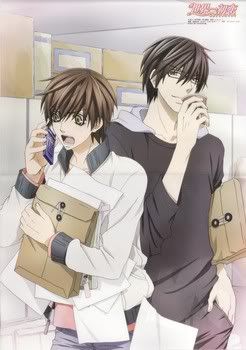
Summary: Ritsu Onodera is a jaded 25 year old who, after getting his heart broken in high school, wants nothing whatsoever to do with love and doesn't really have time for it anyway. He's busy switching to another publishing company (after becoming annoyed at all the rumors that he was only successful at his old job because his father was the company owner) where, to his horror, he realizes that he is now an editor for shojo manga instead of being placed in the company's literature department. And, as if his problems couldn't get any worse, then he realizes that his new boss is his ex-boyfriend from high school and the one who broke his heart in the first place.*
The Good: Surprisingly enough, the story does not drop the manga maing aspect from the story as soon as Ristu and Takano's conflict is set up (it takes up at least half of the story overall) which is nice since the story does go into a lot of detail about how manga gets made. People who hate BL but want to know how a manga is made probably won't like this (they should give Bakuman a try instead) but for people who don't mind the BL it's a surprisingly informative story. As for the characters, most of them are likable (or at least sympathetic) and it's nice to see older characters in a story. Another plus is that, while most of the characters fall under the if it's you it's okay trope, one of the characters is gay and is perfectly okay with the fact he's gay which is (sadly) unusual in BL manga aimed at female readers. Finally, that two of the three couples manage to figure things out and be happy together in a very short amount of time, which is again unusual, which sadly leads us to the problem of the first couple.
The Bad: It's very common to have one (or both) people in a romance hate each other at first and slowly grow closer which is what the story is aiming to do with Ritsu and Takano but, even taking all the misunderstanding between the two of them into account, it's just very hard to root for a couple where one member (Takano) doesn't know the meaning of the word no and harasses Ritsu on a fairly regular basis (Ritsu does give off mixed signals but no still means no regardless of circumstances). Takano is even shown to be a fairly good guy but sexual harassment isn't a good thing at all and Hatori (from the second couple) also comes off as a controlling boyfriend which again, isn't a good thing. The anime actually cut out (or at least made it much less obvious) that there are two rape=love instances (one for each of those couples) and it's really hard to justify recommending a series that has such big problems such as these.
The Audio: There's nothing really special about the opening or closing themes here, they are catchy but they also only focus on the first couple instead of all three. The voice acting is also fairly average, solid but nothing special, except for the episode preview after the credits. At that point Ritsu starts reading off definitions for words in the publishing industry and does so so quickly that the subtitles can barely keep up, it must've taken a number of takes each time to get all of that in one breath (even if he usually gets cut off before he's done). So make sure to watch the previews twice, once for the images and once to actually read all the text.
The Visuals: This anime was produced by Studio Deen who, to put it nicely, is not know for their artistic skill. There isn't a ton of action in the show to start with but many other shows take advantage of that to put more budget into detailed scenery (such as AnoHana), the backgrounds here are a bit bland as well. There are only two faces for the guys (I have nicknamed them "the seme face" and "the uke face"^) but that problem comes from the original manga, not the anime staff as much (the rare female characters also tend to look a lot alike).
When I was double checking how to spell names for this series I was reading though the character page on tvtropes and was amazed at just how many misunderstanding there were between Ritsu and Takano and got rather annoyed when I realized that their relationship could have gone completely differently then. Why couldn't the manga-ka have written a story where the guys have a healthier relationship and fall in love, then I could easily recommend this story to people! I do really like the third couple (even though neither the second or third couple get nearly as much screen time as the first) and that couple even shows that the manga-ka can write outside of the normal stereotypes, I want more of the please!
Currently the show is streaming on crunchyroll.com (for those who want to try it) and I think it stands a fair chance of getting picked up my RightStuf/Nozomi since they already licensed both series of the manga-ka's other work, Junjo Romance (which I haven't seen since I know it has sex scenes, which was also the whole reason why I asked about that in the first place). The manga was set to be published by Tokyopop under their BLU imprint but Tokyopop fell before the first volume could be released, although I have heard that DMP is looking at the series to see if they could bring it over instead (final note, tvtropes has also informed me that, while the first and third couple are in the manga, the second couple is from a series of light novels by another author based on the series, sounds like there are no fan translations of said series at this time).
*Since I'm going to mention all three couples I'll list them here, Ritsu and Takano (the main couple, both manga editors), Chikai and Hatori (the first is a manga-ka, the second is another editor) and Kisa and Yukina (the first is yet another manga editor, they're all in the same department, and the second is a bookseller).
^because, even when the couple is of the same gender, one character (apparently) must look more masculine while being more forward/aggressive and the other must look more feminine and be more emotional and passive.
Reviews of books, manga, anime, tv shows, movies, and webcomics. If it has a plot then I have something to say about it.
Showing posts with label how things work. Show all posts
Monday, July 11, 2011
Sunday, June 26, 2011
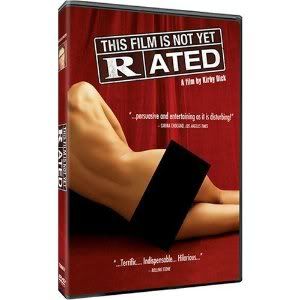
Movie Review: This Film is Not Yet Rated
While I've got a nice sized buffer for anime and books right now and a small one for comics, I don't have any for movies/tv shows so I was a bit worried this week when I realized I wasn't going to be able to get to my planned movie after all. After a bit of frantic searching on Netflix I realized that another movie I was planning on watching, This Film is Not Yet Rated, was playing so I turned that on and almost turned it off after the first few minutes which, erm, had an awful lot of censor bars for a reason (although, if the film is not rated, that's not just the title, does that mean they even needed the censor bars?). I'm simply not really a fan of sex/tons of nudity/really graphic violence in general (although it was more of the first two here) but since I've heard a number of good things about this movie I turned it back on and I'm really glad I did.
This Film is Not Yet Rated
Summary: In this documentary by Kirby Dick, he explores the shadowy MPAA's rating system, how they decide what to rate a film, how the appeals court works, discovers the identities of the mysterious raters and talks to some directors whose films were rated NC-17 and why they felt that this was an unfair rating.
The Good: The film has a number of interviews with various directors (and one or two actors) on what made their films NC-17 rated (if they knew, sometimes the MPAA won't even tell them what they need to cut) and why they thought it was unfair and honestly, it was an awful lot of evidence that the MPAA is a flawed system. There were many examples, confirming things I had already heard, that violence is okay, sex is bad, men enjoying themselves might be okay, women enjoying themselves is bad, straight sex might be okay, gay sex is not, ect. The reveal of who the members of the MPAA board was done in a great, dramatic yet not overly dramatic fashion and really feels like a crowning moment of awesome for the film, it's almost hard to believe that the film still has a few tricks up it's sleeve after that.
The Bad: There is a good reason that the identities of the MPAA raters aren't known, these days people will send death threats over everything it seems, although the film points out that these raters aren't the kind of people the MPAA says they are and, after seeing how everything works, that argument doesn't hold as much water as it did in the beginning of the film. The film also doesn't suggest an alternative to the MPAA, which would have been a nice, final nail in the coffin for them, but since the purpose of a documentary is to report on how things are, not necessarily how things should be, I'm not sure how well that idea would have worked in the film.
The Audio: Almost all the audio in the movie came from either the interviews with the various directors, from the footage of the various films, or from the investigation. Even when the characters are going undercover with the secret cameras the audio is alright, although for several parts towards the end they had to use actors to re-create the audio. Still, that's hardly the director's fault and those extras bits really do help add to the movie.
The Visuals: The film is a documentary so there are no frills or gimmicks added to the visuals, it's just video and pretty consistent in it's quality. As with the audio, there are times they use undercover cameras and the film quality is noticeably poorer but that's expected with spy cameras, if you have a camera that small then it doesn't have much room for the technology needed for a nicer picture.
I was surprised at just how interesting this documentary was, especially since I had already heard stories about how the MPAA is sexist/homophobic/thinks violence is better than sex, and there was plenty of evidence from the various films that there is some kind of double standard going on in the industry. Personally I only use the ratings on a film to figure out how much violence I should expect ("hmmm, Zombieland is R rated, there's going to be a lot of gore in it isn't there?") but now I worry that too many people rely just on these ratings and don't check out wonderful movies because of them. So I really recommend this movie, it's on Netflix and I found it at the local college library as well so hopefully everyone else can find it as well!
This Film is Not Yet Rated
Summary: In this documentary by Kirby Dick, he explores the shadowy MPAA's rating system, how they decide what to rate a film, how the appeals court works, discovers the identities of the mysterious raters and talks to some directors whose films were rated NC-17 and why they felt that this was an unfair rating.
The Good: The film has a number of interviews with various directors (and one or two actors) on what made their films NC-17 rated (if they knew, sometimes the MPAA won't even tell them what they need to cut) and why they thought it was unfair and honestly, it was an awful lot of evidence that the MPAA is a flawed system. There were many examples, confirming things I had already heard, that violence is okay, sex is bad, men enjoying themselves might be okay, women enjoying themselves is bad, straight sex might be okay, gay sex is not, ect. The reveal of who the members of the MPAA board was done in a great, dramatic yet not overly dramatic fashion and really feels like a crowning moment of awesome for the film, it's almost hard to believe that the film still has a few tricks up it's sleeve after that.
The Bad: There is a good reason that the identities of the MPAA raters aren't known, these days people will send death threats over everything it seems, although the film points out that these raters aren't the kind of people the MPAA says they are and, after seeing how everything works, that argument doesn't hold as much water as it did in the beginning of the film. The film also doesn't suggest an alternative to the MPAA, which would have been a nice, final nail in the coffin for them, but since the purpose of a documentary is to report on how things are, not necessarily how things should be, I'm not sure how well that idea would have worked in the film.
The Audio: Almost all the audio in the movie came from either the interviews with the various directors, from the footage of the various films, or from the investigation. Even when the characters are going undercover with the secret cameras the audio is alright, although for several parts towards the end they had to use actors to re-create the audio. Still, that's hardly the director's fault and those extras bits really do help add to the movie.
The Visuals: The film is a documentary so there are no frills or gimmicks added to the visuals, it's just video and pretty consistent in it's quality. As with the audio, there are times they use undercover cameras and the film quality is noticeably poorer but that's expected with spy cameras, if you have a camera that small then it doesn't have much room for the technology needed for a nicer picture.
I was surprised at just how interesting this documentary was, especially since I had already heard stories about how the MPAA is sexist/homophobic/thinks violence is better than sex, and there was plenty of evidence from the various films that there is some kind of double standard going on in the industry. Personally I only use the ratings on a film to figure out how much violence I should expect ("hmmm, Zombieland is R rated, there's going to be a lot of gore in it isn't there?") but now I worry that too many people rely just on these ratings and don't check out wonderful movies because of them. So I really recommend this movie, it's on Netflix and I found it at the local college library as well so hopefully everyone else can find it as well!
Labels:
documentary,
how things work,
modern day,
movie,
nonfiction
Subscribe to:
Posts (Atom)