Showing posts with label bones. Show all posts

Monday, September 29, 2014

Anime Review: Captain Earth

It's a fact that if you stick a Bones mecha show in front of me I'm going to watch it, there are several different general styles to how various creators approach mecha shows and I just rather like Bones approach. It's never just a war or a soldiers life for them, it's about the people who end up having to do these crazy things and a lot of self-discovery, this sounds pretty great to me especially since I know that budgets usually don't allow for down-and-out robot punching fests every single episode! And in case anyone reads this review and wonders at a few of the name choices, apparently Bones enjoyed having "The Tempest" and "Hamlet" references in another show so much they added in a number of A Midsummer Night's Dream ones here, although most of them are surface, name-only references without any deep, thematically related connections.


Captain Earth


Friday, January 25, 2013

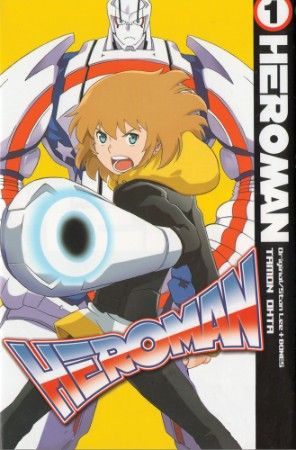
Manga Review: Heroman (volume one)

Another manga that I won in a contest recently, this time Alexander Hoffman of Manga Widget was giving away a few volumes of various Vertical Inc series and I obviously ended up with the first volume of Heroman. I was familiar with the title thanks to the anime (which I think technically came first) but held off watching it back then since people were predicting that it would get picked up and dubbed fast and I prefer to watch shows set in the US with dubs. Well, no license yet (it's still streaming on Crunchyroll for those interested) so there's no point in waiting any longer and I've never read any of Stan Lee's works, although I would love to know how much of the writing here is his or if he provided the basic plot points and scenarios and if someone else is responsible for adding in the details and putting it all together.


Heroman (volume one) by Stan Lee, Bones, and Tamon Ohta


Summary: Joey Jones is a sweet, hardworking boy who lives with his grandmother and is decidedly not one of the cool kids at school. It seems that even getting his hands on a transforming robot and helping save the town several times over isn't helping with that but it's certainly catching the eye of the girl he likes.  

The Good: While formulaic the story did manage to move at a much quicker pace than I was expecting and it was nice to see that the girl Joey is crushing on, Lina, already seems to like him back (especially since it's more common for it to take the girl a while to notice the nerdy guy in American fiction). The side characters get a reasonable amount of screentime and I was impressed at how well the story makes the eponymous Heroman feel, well, not just like a robot, especially since he doesn't talk at all. 

The Bad: This book just didn't grab me at all. The pacing seems a bit odd, like it's trying to cram in down time for the characters while still moving the plot forward as fast as it can and it's a balancing trick that doesn't quite work. Also, after a full volume of characters, many of which with a lot of page time, I just can't care about any of them since they all still feel so flat. Even Joey, who fares better than the rest of the cast, is still only a mash of character traits without any reasons behind them to make me care. This could obviously change quickly depending on how the story progresses but, well, after this volume I have no motivation to pick up the next one. 

The Art: Man, Joey has one of the most feminine looking designs for a guy I've seen in quite a while, heck if he was a girl that might've made the series a bit more interesting since that would have been a little more different. Regardless, there's nothing really special about the art here. It has a nice level of detail and that artist (whom I think is Ohta but I'm not 100% sure) knows how to use screentones well so everything looks fine, but it just doesn't have that special thing that makes the art stand out and grab me. In that respect it feels rather generic, maybe it works better in the anime where it's full color.


So a 2.5 out of 5 for this volume and I'll probably take the anime off of my to-watch list now as well (or at least file it under "if you and a friend really need something to snark at this might work" which isn't a good place to be filed). Maybe this would work better for a younger audience who hasn't seen every story trope out there done to death already, there's no age rating on it but I'd say it's probably 10+ or maybe 12+, but that's not me so I guess this series just isn't for me.  

Tuesday, December 20, 2011

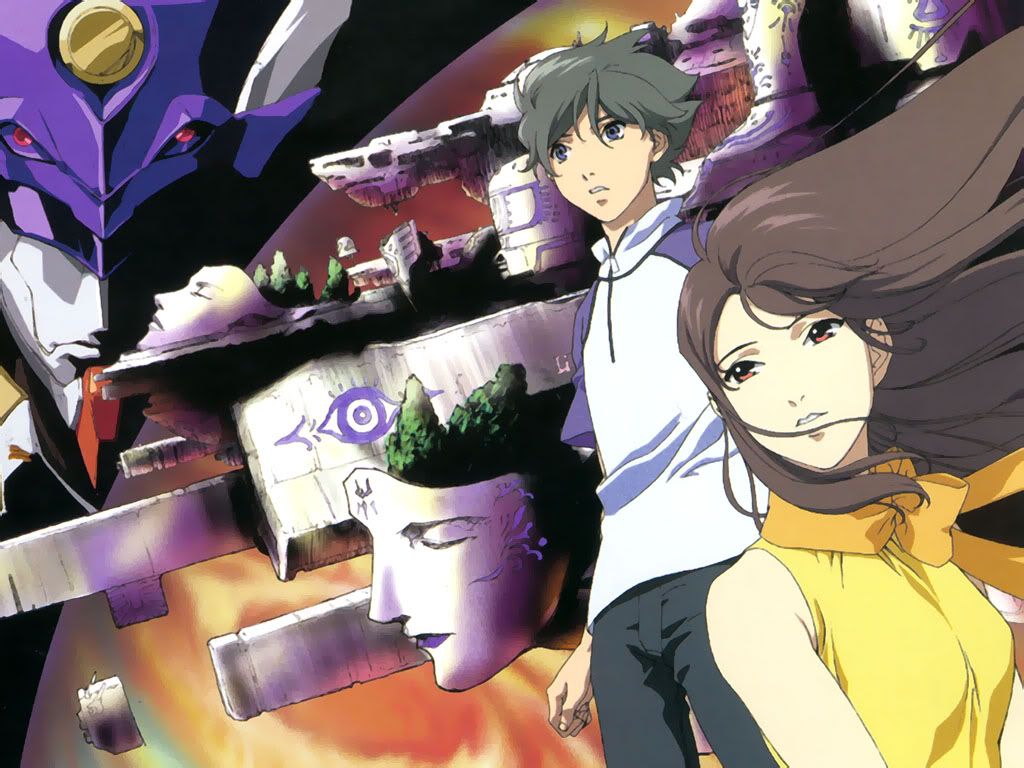
Anime Review: RahXephon

Earlier in the year one of the people in my local anime club brought this in to show for Fantasy Night (yes I know, we have a very hard time figuring out what genre things belong to) which we ended up watching and I enjoyed the first three episodes so I asked if I could borrow it some time and he loaned to to me right there. Awesome, I tried out NGE earlier in the year but wasn't so keen on it so I was really curious about how much I would like this series, I've often heard it described as "Eva but with music and happy" which sounded like an interesting change and even three episodes in it had proven to be way more symbolism heavy than Eva ever was.

RahXephon

Summary: As far as Ayato Kamina knows, it's 2015 and Tokyo is the only part of the world that's still around after a mysterious barrier surrounded the city and enclosed it years ago. This isn't the case however and as he escapes to the outside world Ayato realizes just how much of his life has been a fabrication.

The Good: I was disappointed when Neon Genesis Evangelion did not have as much symbolism and such as I was lead to believe and I was happily surprised to see just how much RahXephon did have. I love it when a scene has multiple meanings for me to puzzle over and there were many things in this show that were only shown or implied instead of outright told and I liked that, it worked well with the series. The ending also surprisingly worked well, if it hadn't had the very last scene I would have been really unhappy with it but the writers took pity on the fans and threw in that extra scene. Overall I found the writing to be really good, I nice mix of everyday life and of the important matters going on behind the scenes and the story seemed to explain all of it's background without the need for extra media so kudos to the writers for this one.

The Bad: I felt like things started becoming a bit too complex by the end of the story and at points it was hard to tell what was going on. In addition, several characters either reappear or have their backstory fleshed out and I was skeptical at just how much they had changed in that time which bothered me. Unless a story spends a lot of time following a character and fleshing them out this often bothers me but it did bother me regardless. It was also a bit hard at times to keep dates and character relations (as in, who is related to whom) straight but I suspect that that was deliberate on the anime's part.

The Audio: For a show that uses music as a major theme I didn't really notice much music (either as background or produced by the characters) until very late in the show and I was listening very carefully for it. Once the musical symbolism gets going it's there all the time but I do wish it had been incorporated a little more heavily into the early parts. Didn't really care for the ending theme but I loved the opening theme, both the melody and the lyrics and now it's probably one of my favorite OPs.

The Visuals: The show is nearly a decade old so the colors aren't as vivid as something produced today but honestly that doesn't detract from the series, there's plenty of strange imagery on screen and interesting designs to make the series visually interesting. It's not so much the artistic talent that went into the show but just what was on the screen that was so interesting, lots and lots of symbolism that wouldn't work quite so well in an all print (or all audio) medium. It's a show where it makes sense that it was produced as a show and that does mean the show has succeeded on at least one level.

So the next time someone tells me that NGE is filled with symbolism and it's soooo deep I'm going to make them watch this series instead (or Utena but that comparison doesn't work quite as well). I plan on getting the series someday, it does sell really cheaply everywhere online but I'm less than thrilled that it's in two stack pack sets. Not quite as bad as my Moribito set but I guess I'll also have to make plans to deal with that when I get the set.

Thursday, October 20, 2011

Fall Anime 2011 Reviews: Part two!

For those who missed it, I did update the first post with my thoughts on Last Exile: Fam (what I'm most disappointed about with it is just how much the fandom for it is complaining, about having a predominately female cast, possibly a yuri hint or two, a bit of fanservice and it's not like the original show didn't have most of that as well) this post should cover everything else I've tried so far this season. Looks like I'll be watching more shows than I planned on which makes me pretty glad that I'm not watching much non-anime stuff right now (Doctor Who is done, Project Runway is almost done, My Little Pony is starting up again but that's not a bit thing, might finish up Legend of the Seeker on Netflix soon), although I do have some older anime titles I'm trying to finish up now as well, balancing all of this and school work could get tricky soon....

Persona 4
In case anyone is worried that I suddenly forgot how the alphabet goes yes I know this should have gone before Phi Brain but I only tried out this show a couple of days ago and didn't want to mess with my previous post any more than I had. In any case, I've never played any of the Persona games so I went in with only a basic knowledge of the plot and managed to keep up and understand everything pretty well. Yu Narukami is sent to live with his uncle and cousin in a small town as his parents work overseas (weird, I thought it was standard for anime characters to live at home by themselves), awkwardly meets some people, accidentally discovers his can now phase through tvs and ends up fighting some monsters with his new friends. The pacing bothered me more than anything else, it felt really choppy in the first episode (as if they were just showing the cut scenes from the game and cutting out the game play parts, I had a similar problem with Toganu no Chi last year) but the pace in the second episode seemed much smoother and felt like a better speed. I've seen some people worried about how the studio is going to compress a 80+ hour game into a bit under 11 hours but I'm going to remain optimistic for the moment. In the US this is being simulcast by Sentai/Section 23 through their site, The Anime Network but it looks like they're using the hulu player so you can also watch it that way. 

Sekaiichi Hatsukoi 2
Starting pretty soon after the first season left off, Ritsu is still working for the manga publishing magazine Emerald and he's now in a supervisor position so there's even more work for him now. More importantly, it seems that in two episodes Ritsu and Takano have made at least as much (if not more) progress than they did in the entire first season, I was rather impressed since I was expecting the story to continue the "will-they-or-won't-they?" story to the very end. Also happy to see they're still censoring out the sex scenes (which is just because I don't like porn of any kind that much*) although I'm sure the hardcore fujoshi fans aren't so happy. The visuals are still below average, this is a Studio Deen work so that shouldn't come as a surprise to anyone and I haven't really noticed the music that much. Next week the story is switching to one of the side couples so fingers crossed that it continues to improve on the first season.
The second season of Sekaiichi is streaming on crunchyroll and you can watch the first season there as well. 

Squid Girl 2 (Shinryaku Ika Musume!?)
Squid Girl also continues more or less where the first season left off but after four episodes I'm just not loving it as much as I liked the first season. I remember that I marathoned a good chunk of the series the first time and maybe that's what I need to do now to get back into the show. It has the same set-up as before, three sketches in each episode, but only one or two of them have felt really funny to me, some were a bit amusing and others just fell flat, the humor just doesn't feel as creative anymore. The show is taking a break in the upcoming weeks (to give the stations that started late a chance to catch up) so maybe a little break is what I need. 
Like it's predecessor, Squid Girl is streaming on crunchyroll.

Tamayura~Hitotose~
I didn't watch the original Tamayura OVAs when they came out since I saw mixed reviews about them but decided to try out the tv series for a few reasons. While I normally have no interest in the cute girls/boys doing cute things kind of plot this was a story about cute girls doing photography, my thing, which was interesting and the show is being directed by Junichi Sato who did the series composition for Croisée in a Foreign Labyrinth this past summer and I really enjoyed that show so I thought I would give it a try. Tamayura just didn't work for me however, while Croisée managed to have a "healing" feeling by being a very low-key, character growth oriented show it felt like Tamayura was trying too hard to capture that same feeling and came off feeling forced to me. Maybe if this series got licensed I would give it another chance but for the moment I'm not going to follow fansubs for any series I don't completely adore.

UN-GO
The other noitaminA show this fall (funny enough, the same two studios, Production IG and Bones did both the shows for the summer block and the fall block, this is Bones' show) and it's adapted from Ango Sakaguchi's post WWII mystery stories, this time set in the near future after a war. Shinjurou Yuuki is "the defeated detective" since it always seems like he makes incorrect deductions and he's accompanied by his assistant, and by far the strangest element in this show, Inga. While the mystery was nothing special (I honestly think it's harder to do a mystery in a visual medium and in serial mediums, keep meaning to write a blog entry on that) I did like how the surrogate audience character was NOT the detective's assistant for once and that she could be an interesting character later on. I didn't really like how Gosick turned out but I've never been able to find out how much of the ending was Bones and how much of the ending was the original work so I'm hoping I'll like a story that's almost all Bones a bit more.
UN-GO is streaming for multiple countries on crunchyroll.

So there you have it, 10 shows, 2 I'm dropping, 8 I hope to follow and who knows, I might even try out Fate/Zero later on when I have the time. Not now though, apologies that this entry is up so late but this week has been crazy for me and tomorrow's entry might be up really late (like, a whole day late) as well. Fingers crossed that everything will go smoothly tomorrow but I'm not counting on it.

*believe me, I've seen hardcore yaoi before, although there's a bit of a story behind that one.

Tuesday, September 27, 2011

Review: No. 6

Sorry this is so late tonight, partially because I've had a busy day but mostly because my school email account (which was my google account) but got updated(?) and it's making logging into blogger really tricky. Trying to fix this but it could be a few days and I might just have to go yell at the tech services at my school for this problem, since I think it's a problem on my end, but hopefully I'll at least be able to put up the second diversity post in a few days.
Anyway, to the review! The noitaminA timeslot has had a lot of original works this year (there will be four and a half-ish original works) but both of the summer shows were based on exisiting works, in the case of No.6 it was based on a nine volume young adult series published in Japan (not a light novel, no pictures and a bit higher up on the vocabulary scale I'm told). I'll be blunt, I've read summaries/partial translations of all the novels now (I actually read the bit for the final two after I saw the last episode which covered them so I went into that unknowing) and I really prefer how the novels went. It seems like this was the first time this director has directed and entire series (instead of just an episode or a unit) and it seemed to show.

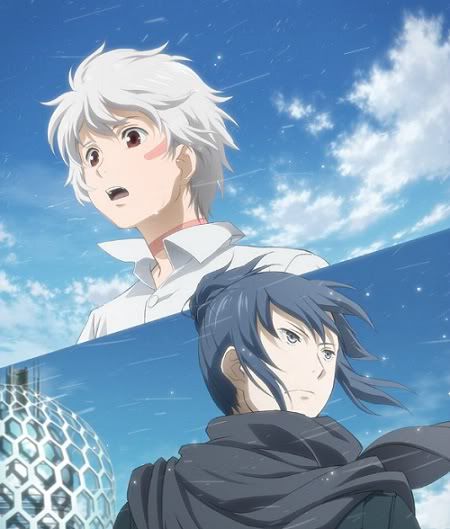
No.6

Summary: After a global war decimates most of the planet, Sion lives in one of the few remaining cities, No.6, where he is an elite, chosen based on his test scores when he was young to become one of the leaders of the city. But one night Sion leaves his window open and the young escaped criminal Nezumi (literally mouse/rat) spends the night in his room and Sion befriends him. Soon afterwords the city discovers what happened and Sion is stripped of his position. Life is quiet for the next few years when the story starts there are some mysterious deaths in the city which intrigue Sion and Nezumi has reappeared as well.

The Good: No.6 is has a classic looks-like-utopia-but-is-really-a-distopia set up and reminded me of both The Giver and Brave New World, two really good books in the genre. And, as much as I complain about the changes from the novels, there was one change that the anime made that was for the better, making Nezumi and Sion meet-up with the old man in the cave before the final arc, in the novel that happened during the final arc (the novel readers all agree that that didn't make much sense to start with). Also, since this seems to have been the intention, I must congratulate Atsuko Asano, the original author, for writing what is possibly the most ambiguous relationship between two characters ever. If you like BL then you'll probably see Sion and Nezumi as a couple, if you aren't so sure then you'll just see their relationship as a bromance, I have yet to find two people who have the exact same view of their relationship and my own opinion on it changes depending on what part of the story I'm thinking about, I don't think I've ever seen a relationship that has had me thinking about it quite that much.    


The Bad: The pacing had some issues and, in a series this short with so much source material to adapt, that spells problems. The pre-timeskip part took too long, one episode early one (I believe it was episode 4) was 90% filler that never had an actual impact on the story and the final episode combines the final two volumes, sort of anyway, the strange bits were all the anime's doing (basically both versions got to the same end point, minus the epilogue, but the anime took a much different route to do it). That's not a good plan and it cut out quite a bit of the explanations, I found myself having to explain some details to anime readers that the novel had explained quite clearly early on, and sadly it also cut down on the conversations between Nezumi and Sion which are vital for their character development. That was an understandable change but there were times when it seemed like the characters were acting differently than how they had in the novels.

The Audio: I've seen a lot of people either love or hate the music in this show for reasons I didn't quite get (apparently it sounded 80s ish at points?) but aside from a few tracks (such as one that had been used in the trailers) none of the music really stood out to me. I did like the opening song because of the way it sounded happy at first but sounds creepier each time you hear it (much like the city No.6) although I haven't been able to find lyrics for it. I have been able to find lyrics for the ending song which I didn't like as much and again, a lot of people found the lyrics to be incredibly sad but I didn't think so. I did like the few instances when Nezumi sang which unfortunately does bring us to a problem. Nezumi is an actor, in the books he's supposed to have an androgynous voice to start with (and have an incredible range) but here he sounds quite male which made a few scenes awkward. It was a nice voice ( Yoshimasa Hosoya was the voice actor) and the acting was good, it just didn't exactly work the way it needed to.

The Visuals: noitaminA shows in the past seasons have shown that just because the shows have a low episode count (ie, not as much to stretch the budget across) doesn't necessarily mean they're good but here we have Bones and the show looked very good. There was a lot action, very few still shots if I recall correctly, and lots of detail in all of the backgrounds. It was a very clean looking show, although there were one or two more "artistic" scenes involving Sion that I didn't like as much but only a couple of scenes in 11 episodes still means it is a very good looking show.

So, for the third season in a row it's the noitaminA show I like less that's been licensed and I just don't know if I want to buy and rewatch this series. It was good in many places but when it was bad it was really bad, honestly I wish the novels were licensed since I enjoyed those overall. I suppose in the end it will just determine on how much the show costs but, since it's a Section 23 release, it might be a while before the show it at a price level I'm willing to pay. Those who want to check out the show (and are in the US/Canada) needn't worry about that however, it's still streaming for free over on crunchyroll and if you have a paid account it looks quite nice in HD.

Monday, July 18, 2011

Anime Review: Gosick

The one anime that carried over from the winter season for me and one where I was really curious about the setting, 1920s Europe with mysteries? Mmmm, sounds like fun, although I was rather annoyed when there wasn't a single bit of 1920s fashion or architecture in the entire show, and this show reminded me that there aren't that many mystery anime actually. Quite a few horror anime have a mystery element to them (such as Ghost Hunt) but normally this genre only shows up once every two or three seasons and normally it's mystery plus another genre. Gosick isn't just a mystery show itself, if anything I would call it a drama with a lot of mystery cases in it and an odd genre shift in the end. Also, I do mention events relating to the final arc of the story but I try to refrain from actual spoilers so any huge spoilerphobes might not want to check out the footnotes this time.

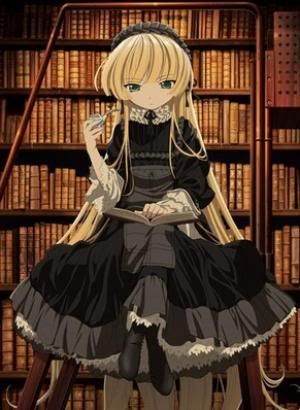
Gosick

Summary: Set in 1924, Saubure (a fictional country located next to France), Kujo is a student from Japan who is having a hard time making friends since the superstitious locals are convinced that he looks like "the reaper who comes in the spring" from legend. One day when browsing in the library he comes across Victorique, a doll-like girl who seems to live in the library and he slowly becomes friends with this young, genius detective who is seen as even more of an outsider than he is.

The Good: Towards the middle of the series the story finds it's feet, the mysteries become a little more complex, the characters begin to work really well with each other and the overall plot of the story is revealed. In short, once the series hit its stride it becomes a really interesting story that manages to balance a number of different subplots without becoming too confusing. Victorique, and to a lesser extent Kujo, goes through a huge amount of character development and their relationship, which is the real heart of the story, also goes through a tremendous amount of change which is a real joy to see.

The Bad: There appears to be just one reason why the story was set in the 1920s and that was to reference both of the World Wars and make WWII an important plot point. The viewers are well aware that WWII started in 1939 but the original author, well, might not have. If it's an alternate history it's dumb and if it's real history then it's doubly stupid and not just because of the historical inaccuracies* but because the characters never give any reason for why they're starting this war in the first place. There's nothing to be gained, no one to fight, it's hard to tell if the people even support the idea (some do but I honestly thought they were brain-washed at points) and considering that this war is sorta-kinda supposed to be the culmination of the entire show these are all really big problems. The beginning had problems too (such as mysteries that could be solved before the witness was even half-way done explaining the mystery and some pacing issues^) but that part of the story got better, the beginning of the final arc works very well but then logic, common sense and a basic knowledge of history fly out the window and leave a mess in a completely different genre than the story started in.

The Audio: The series has one opening song and two closing ones and the first closing song is the strongest out of the three of them. There is simply something about the beginning of the song (quiet vocals and instrumental and then the instruments rise up before falling back to the same level as the vocals again) that makes it such a dramatic song. An instrumental version of the song was used at one point during the show and, IMO, should have been used more often. The opening was alright but there was a rather amusing discovery that if you swap the opening with the opening of Gurren Laggan the images still match up with the pace of the song well. As for the voices, Cordelia had the same kind of slightly husky quality to her voice that Victorique has, a nice touch, and Victorique thankfully has a bit of a deep voice, not the ultra cute moe moe one you would expect from her size/appearance. In the books she is described as having the voice of an older woman and, while that isn't quite accurate here, her voice still seemed like a very good match.

The Visuals: As mentioned in the opening paragraph, there is very little in this series to visually suggest that it's even set in the 1920s instead of the Edwardian or Victorian eras (which makes me even more suspicious that this setting was chosen soley because it was situated between the two world wars). Someone at Bones however had the brilliant idea of doing all the visuals in the era-appropriate Art Deco style (which I adore) and it makes for one of the more distinctive openings of the year. Other than there, all of the visuals were consistently good but it simply doesn't have the kind of action and fluidity one normally expects out of a Bones work, which is odd since this was done by the same team that did Heroman a year earlier. It's true that the series doesn't have a lot of action but the show still feels like an odd choice for Bones.


Once the story really got going, and the mysteries got better, I really did like this series but the last two episodes just left a terrible taste in my mouth. It's strange, I like how that final arc started out but then it just went bonkers and, with the final light novel coming out soon, I hope someone posts spoilers to compare the two. At this point I honestly don't know if I want to buy it, this just feels like the kind of show that would get licensed over here, since I did like so much of it and I can pretend that the last two episodes don't exist but I just don't know. For the moment however it is streaming on crunchyroll if anyone wants to check it out, no harm in trying the series out at least!  


*now, if this is an alternate history, I've never been a big fan of the "oh a couple of things did go differently in history but when the story starts everything is the exact same as it is in our world. Once the main characters get involved however THEN stuff goes crazy" trope, it's just illogical (one of my bigger complaints about the Temaire series). But if Gosick IS set in our world, hooooo boy. In 1925, the start of World War II in this version, it was apparently one of the most stable interwar periods and a full 15 years before events culimated in the invasion of Poland. It's mentioned in the show that Saubure is allied with Germany, which certainly wouldn't have had the resources at the time (Hitler hadn't even written Mein Kampf yet, and they never explain who or what they're fighting, there's no explanation for how Japan apparently gets bombed or where the scenes involving Kujo were (I've seen people speculate Manchuria, which was my first thought, or somewhere in Russia which would match the weather better).
^the pacing issue seems to come from the anime combining the novels and the short stories and not doing them in the correct order. From what I've heard (so this could be wrong, anyone who knows more feel free to speak up), Kujo has already met Avril, Victorique and Grevil by the time the first volume starts and then the Queen Berry arc, the first anime arc, happens. Chronologically however the short story that introduces Avril came first and one major problem for Kujo hinges on whether or not he believes that Victorique is a real person (instead of being "the golden fairy in the library," another local supersition). In the anime this is the second arc and, after seeing Victorique run all around the ship with Kujo and the other characters (plus interacting with them) it's hard to believe even for a second that she's not real and the whole arc feels pointless. A shame since otherwise it would have been nice and, for people debating whether or not to continue the series, it doesn't make a good case for doing so.